
Last updated November 2, 2026
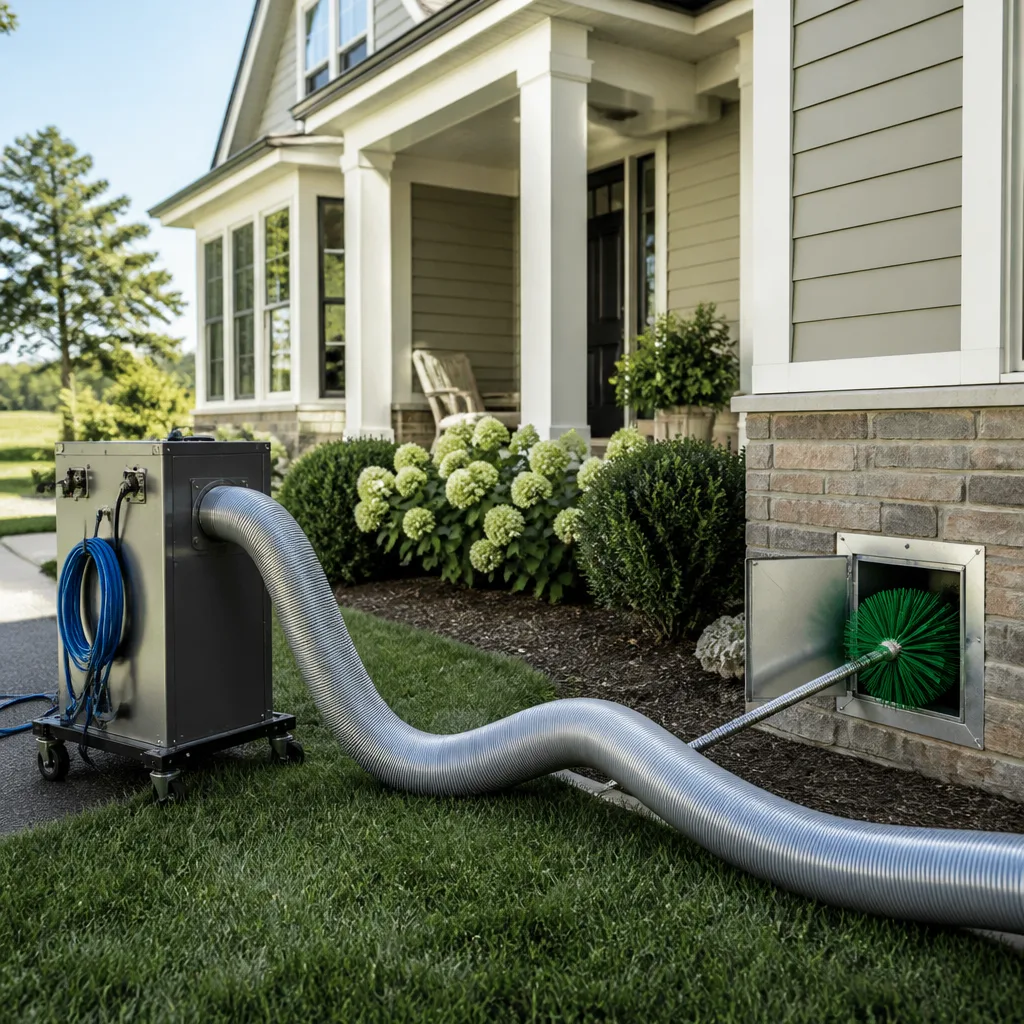 Whole-home duct cleaning
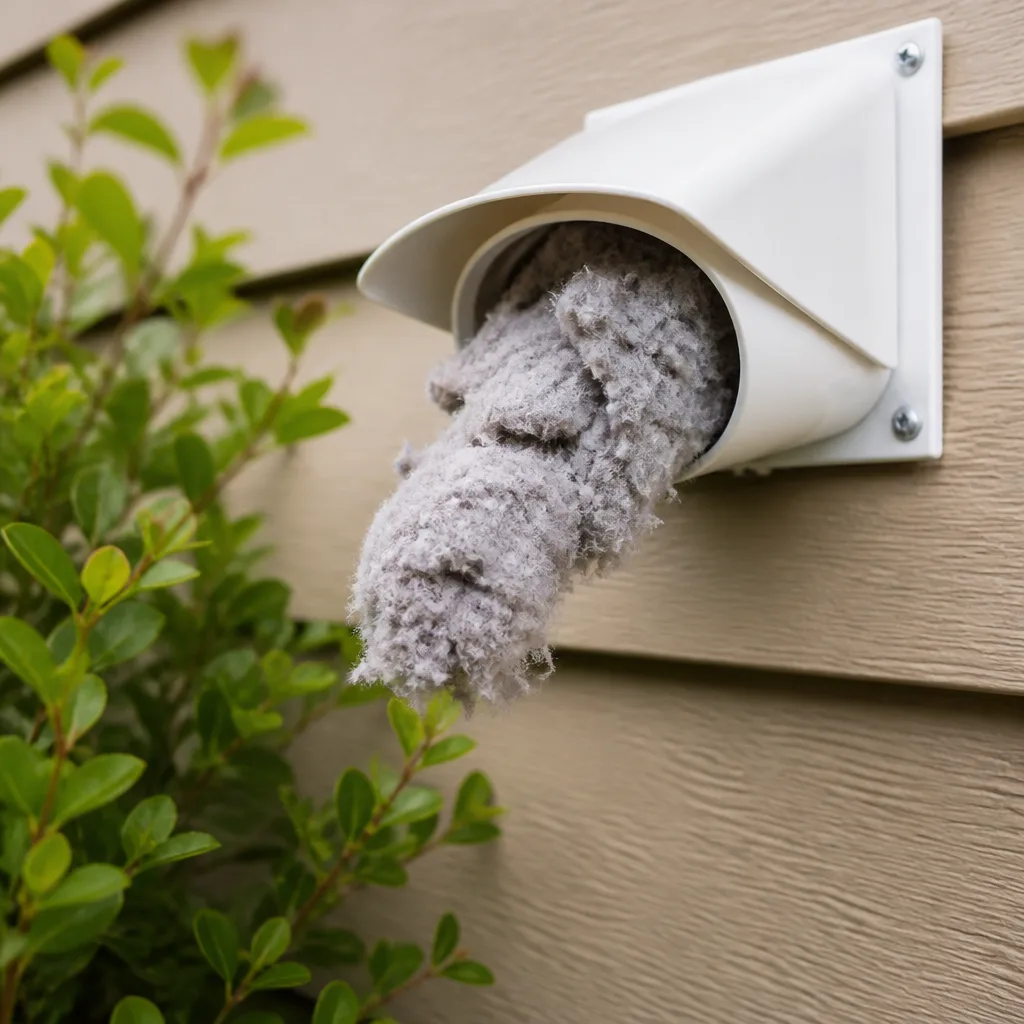 Dryer vent cleaning
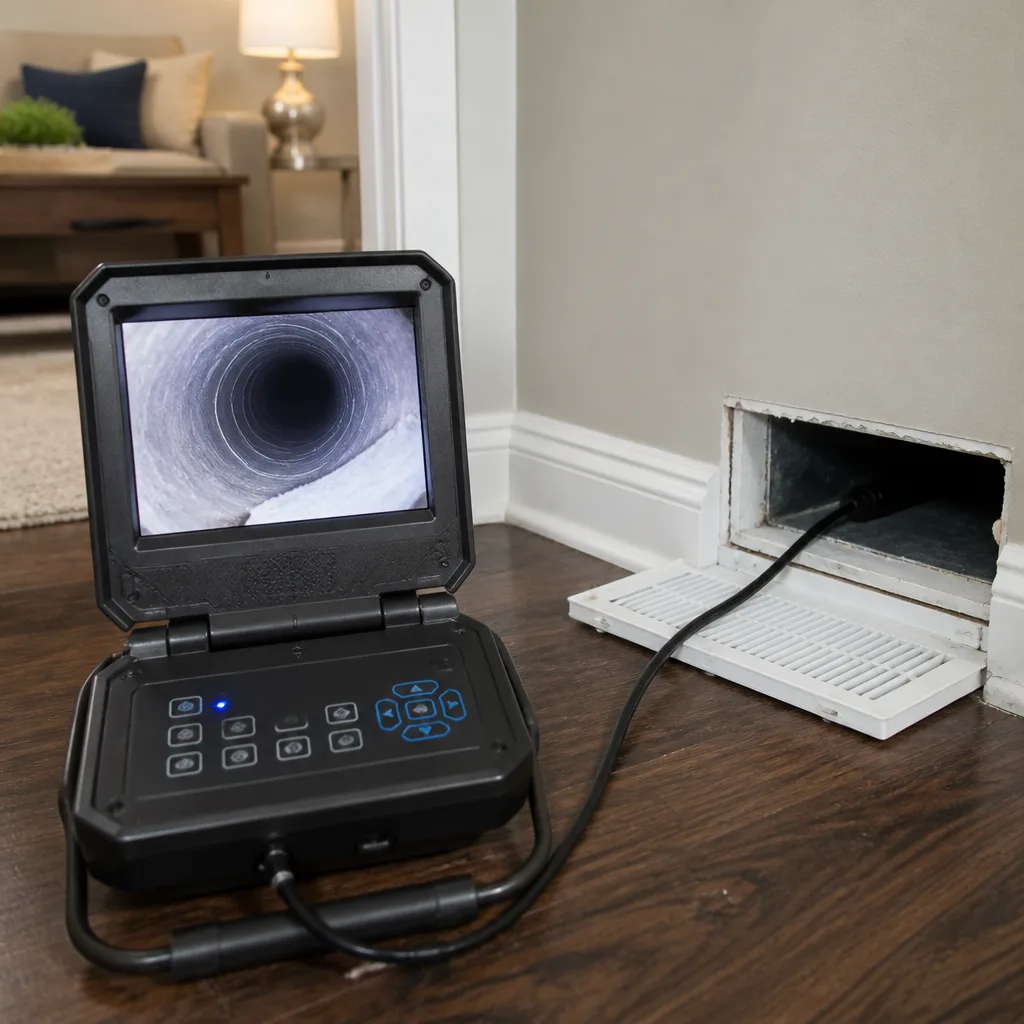 Camera inspection
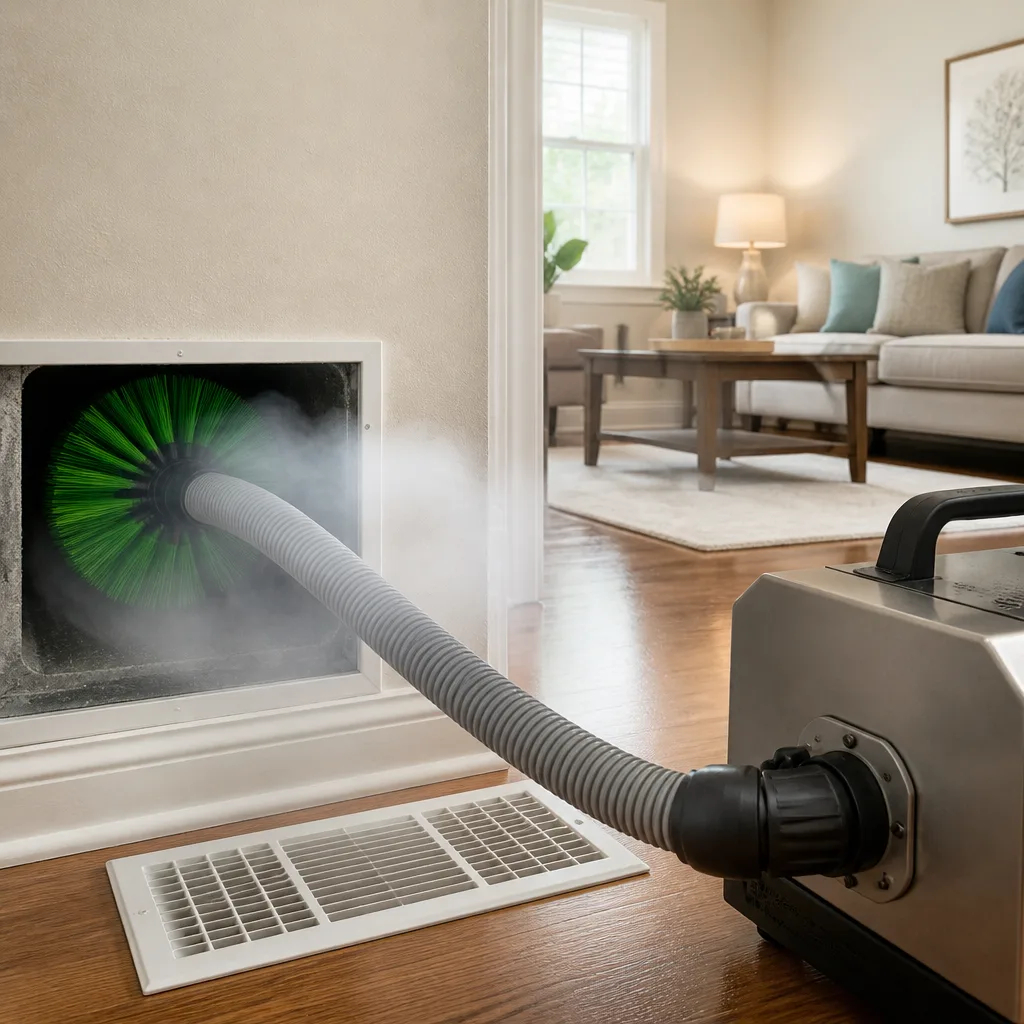 Sanitizing & deodorizing
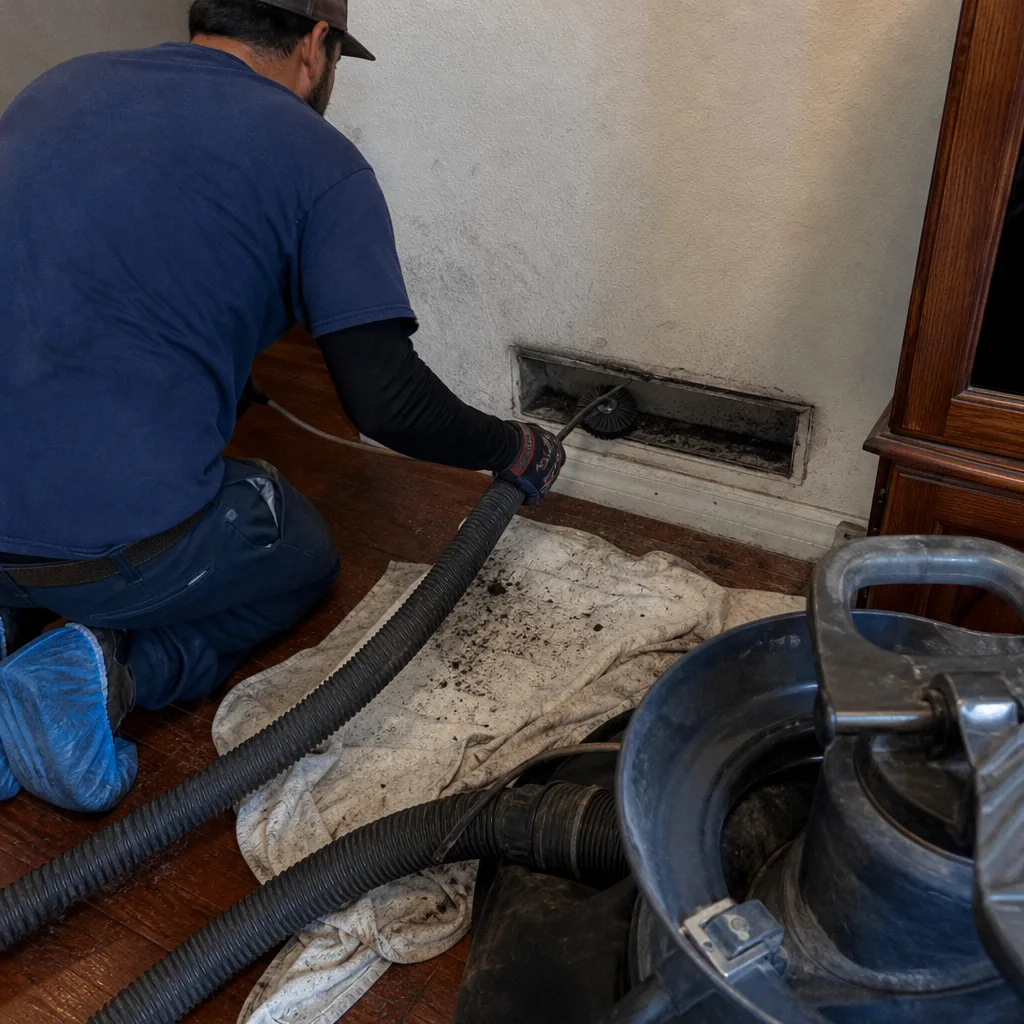
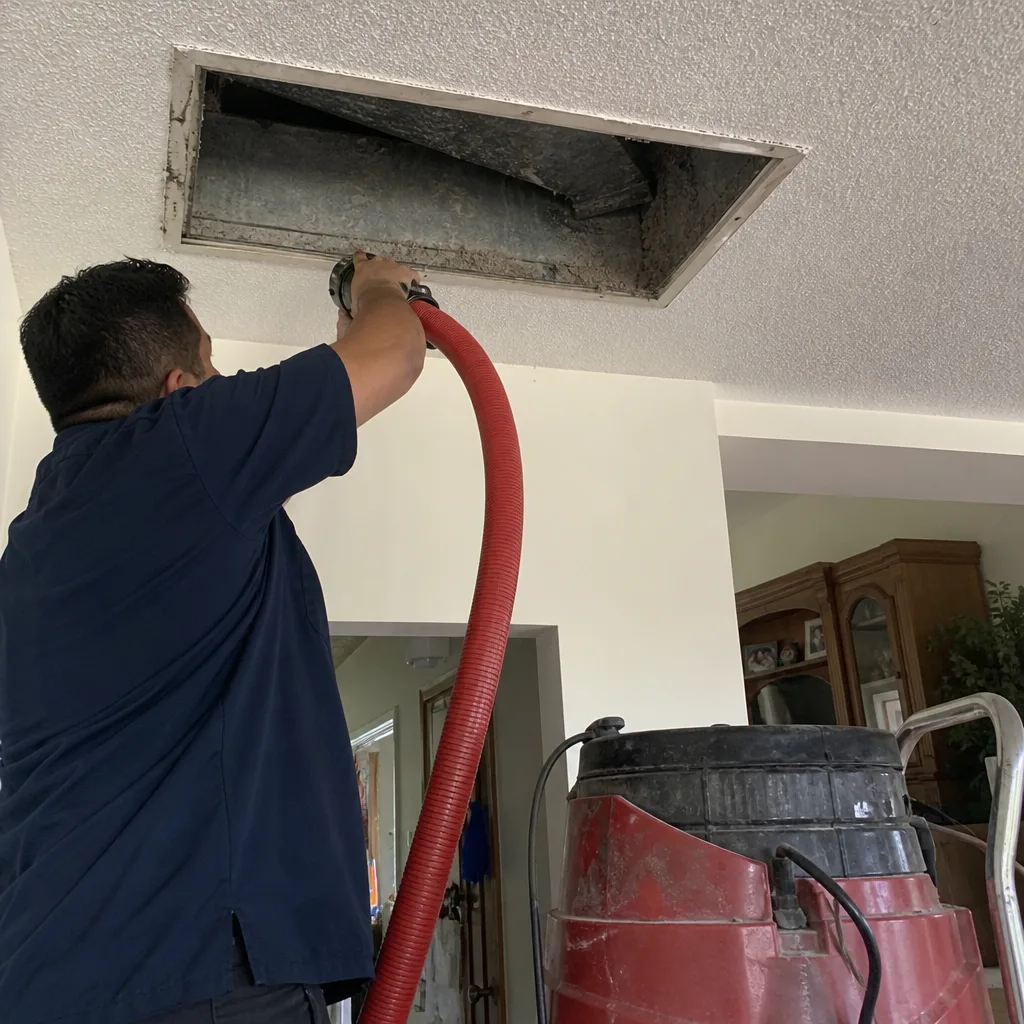
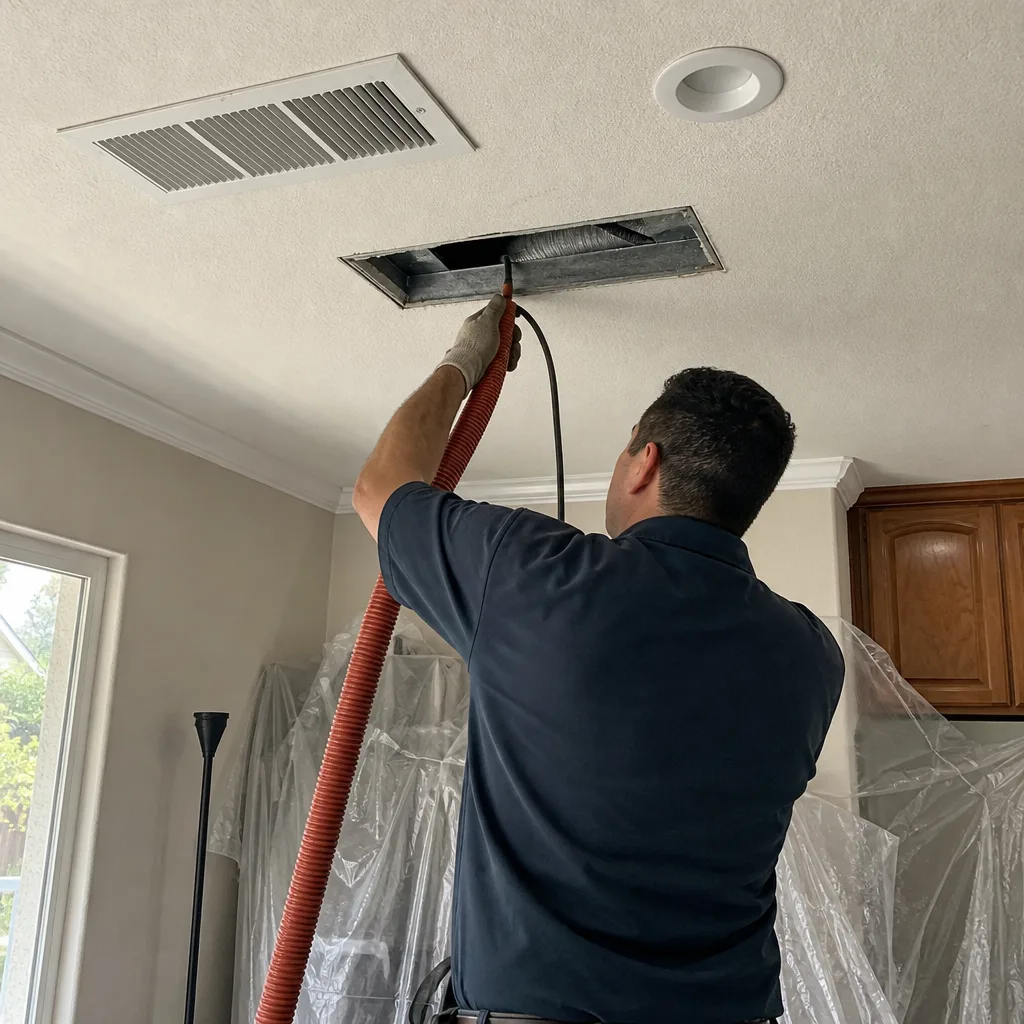
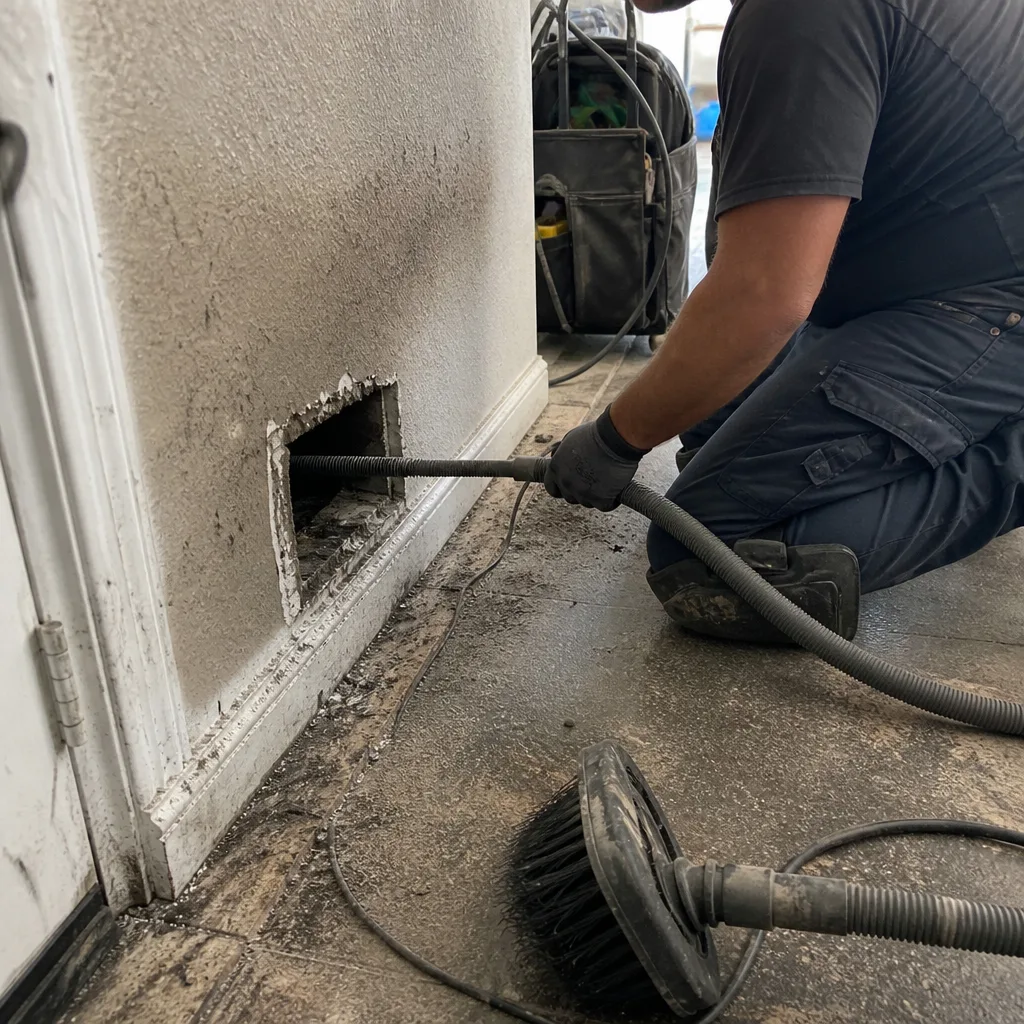
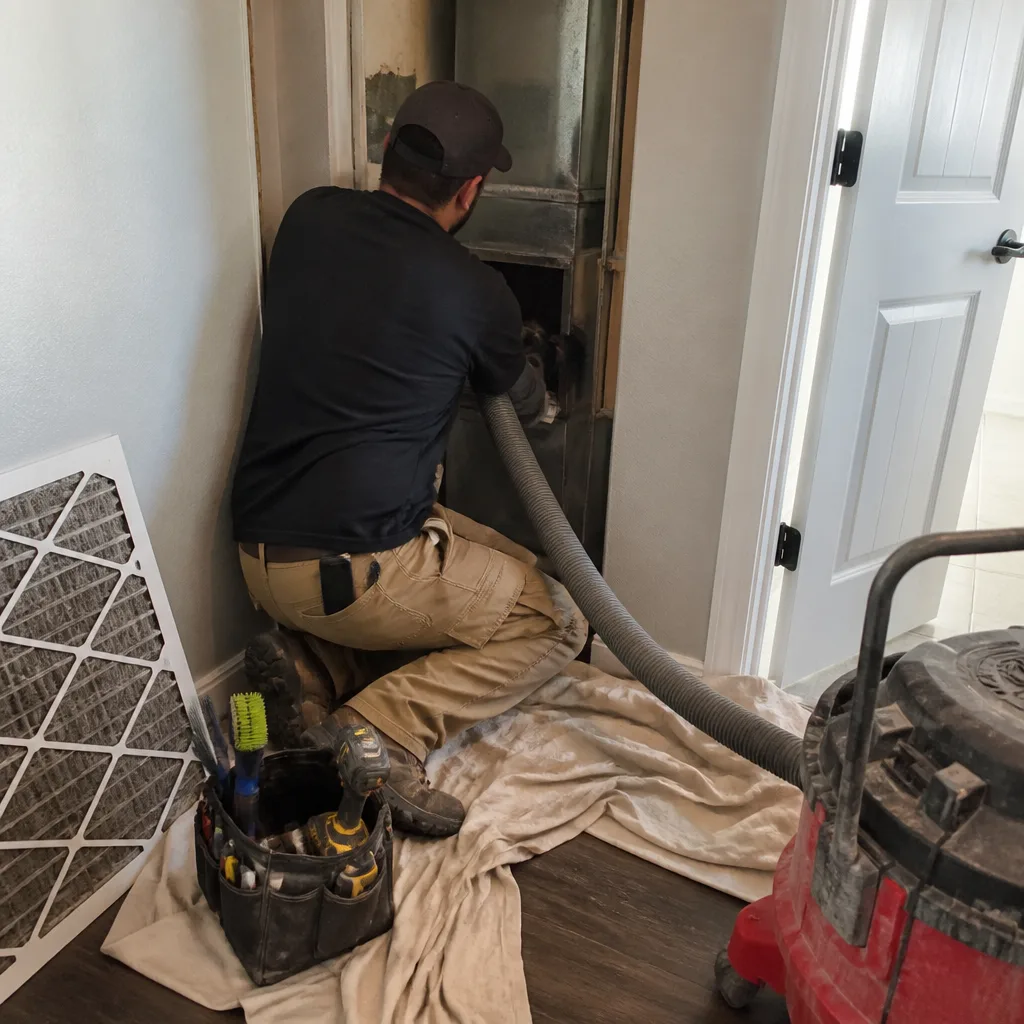
Whole-system duct and dryer vent check with before-and-after photos - you see exactly what came out of your vents
That "$99 whole-house special" is a bait ad - the real number appears once they are in your hallway, or the "clean" is a shop-vac at the register. We photograph the inside of your ducts before and after instead.
Air Duct Cleaning Maintenance Checklist for Rancho Cordova Homeowners
A filter change reminder on your phone isn’t a maintenance plan – it’s the bare minimum. Rancho Cordova homes running AC for five or six months straight accumulate debris at a rate that makes a once-a-year checklist review genuinely inadequate. By the time August heat settles over the Sacramento Valley, most systems we inspect are already carrying months of compounded buildup inside the supply and return lines. This guide lays out what actually needs checking, when to check it, and how to tell professional-level results from a surface-level job. We’ve built this checklist around what degrades ducts here specifically: long cooling seasons, wildfire smoke events, and the fine particulate load that comes with living near Highway 50 and the industrial corridors along Sunrise Boulevard.
Styles & brands we work with
- Whole-home duct cleaning
- Dryer vent cleaning
- Camera inspection
- Sanitizing & deodorizing
Quick Answer
An effective air duct maintenance checklist for Rancho Cordova homeowners includes six core tasks: replacing the HVAC filter on a schedule matched to your system and air quality, wiping down supply registers and return grilles monthly, inspecting visible duct runs for sagging or damage each spring and fall, logging AQI spike events to determine whether cleaning needs to happen ahead of schedule, checking the dryer vent connection and exterior termination twice a year, and having the full duct system professionally cleaned with Air Duct Cleaning services on a cycle that reflects actual accumulation rather than a fixed calendar date. Most homes in Rancho Cordova with heavy AC use need professional cleaning every two to three years, with visual inspections in between.
Table of Contents
- Why Standard Duct Checklists Fail Rancho Cordova Homes
- Understanding Rancho Cordova’s Air Quality and HVAC Run Cycles
- The Monthly Duct Maintenance Checklist
- The Seasonal Deep-Check: Spring and Fall Inspections
- AQI Logging: Using Wildfire Season Data to Schedule Cleaning
- Dryer Vent Checks: The Part Most Checklists Skip
- Signs Your Last Duct Cleaning Was Incomplete
- Common Mistakes to Avoid
- When to Call a Professional
- Frequently Asked Questions
- The Bottom Line
Why Standard Duct Checklists Fail Rancho Cordova Homes
Most duct maintenance checklists circulating online are written for a national audience. They assume a balanced climate, moderate run times, and air that behaves predictably. Rancho Cordova breaks those assumptions. Summer temperatures routinely sit above 95 degrees, and your HVAC system responds by running near-continuously from May through October. That means six months of air movement through the same ductwork, pulling in whatever the outdoor environment delivers.
What does that environment deliver? Dust from the open fields around Mather and Rancho Cordova’s eastern edges. Pollen from valley oaks in the spring. Particulate matter from traffic on Highway 50 and Sunrise Boulevard. And during wildfire season, smoke that carries fine particles measured in the PM2.5 range, which penetrate deep into building interiors. The standard advice to check your filter every 90 days falls apart under those conditions. Many homes here need filter replacement every 30 to 45 days during peak summer, especially if anyone in the household has respiratory sensitivities.
A useful checklist for this city has to account for what actually accumulates in the ducts, not what a template assumes. That’s the difference between maintenance theater and maintenance that protects equipment and air quality. We’ve seen systems in Rancho Cordova with six months of visible interior coating that a homeowner would never have caught because nobody told them to look beyond the filter slot.
If you’re just starting to understand what duct cleaning involves, our guide to Air Duct Cleaning in Rancho Cordova explains the full process, equipment standards, and what a legitimate service should include.
Understanding Rancho Cordova’s Air Quality and HVAC Run Cycles
Before any checklist makes sense, it helps to understand the two variables that drive duct soiling in this region: how long your system runs and what it’s pulling through the return side. Both are more intense here than in most of the country.
Run cycles in Rancho Cordova follow a predictable but demanding pattern. Spring brings temperature swings that cycle the system on and off. Summer is the heavy hitter: continuous operation during daylight hours, often into the evening. Fall shifts back to intermittent use, and winter sees the furnace running on cooler mornings and evenings. Each of those cycles isn’t just about temperature control. It’s about how many cubic feet of air pass through your ductwork per day, per week, per season. Every cubic foot carries whatever particles made it past the filter.
The filter itself is the first line of defense, and its capacity to keep doing that job often gets overlooked. A one-inch fiberglass filter catches larger debris but does almost nothing for fine particles. Pleated filters in the MERV 8 to 13 range capture more, but they load up faster in this environment. Once a filter is saturated, airflow drops and unfiltered air begins bypassing around the edges. That’s when the inside of your ductwork starts collecting a film that no amount of filter changes will remove afterward.
Homeowners with whole-home air quality systems have another layer to maintain. If you own Honeywell or Aprilaire equipment, the ductwork interacts with those components directly. A clogged Aprilaire media filter or an ignored humidifier pad changes pressure dynamics through the entire duct system, and that can pull debris into areas that would otherwise stay cleaner. We service these systems alongside ductwork precisely because the relationships between components matter.
The Monthly Duct Maintenance Checklist
Monthly tasks are about observation more than action. You’re looking for changes week to week: more dust than usual on registers, a subtle mustiness when the blower first kicks on, a return grille that’s collecting a gray film faster than it used to. These are early signals. Catching them early is the difference between a routine cleaning and a system that’s been quietly loading up for a year.
- Check the filter. Don’t go by the calendar. Pull the filter, hold it up to a light. If you can’t see light through it, replace it, regardless of how long it’s been installed. In Rancho Cordova summers, that can mean replacing every 30 days even with a quality pleated filter.
- Wipe down visible supply registers. Use a damp cloth to remove the dust that accumulates on the register face and the immediate metal collar behind it. This dust isn’t just cosmetic. It’s what’s being blown into your living space every time the system cycles.
- Check the return grille for buildup. The return side is where air enters the system. If the grille has a visible coating of gray dust or pet hair, that material is either heading into the ductwork or already there. Vacuum the grille face and wipe behind the louvers.
- Listen for changes in airflow sound. A system that’s suddenly louder, or that has developed a whistling at certain registers, may be signaling a blockage or a developing duct separation. You don’t need to diagnose it. You just need to notice it and note it.
- Run the blower briefly after dusting or vacuuming major renovations. If you’ve done construction, sanding, or heavy cleaning, let the system circulate for 15 minutes afterward, then check the filter again. Fine dust from drywall or flooring work can overwhelm a filter in days, not weeks.
These five tasks take about fifteen minutes total. The point isn’t to be exhaustive. It’s to build a habit of looking at the system before problems become expensive or airborne. Homeowners who do this consistently are the ones who catch issues early and avoid emergency calls.
The Seasonal Deep-Check: Spring and Fall Inspections
Twice a year, the checklist expands beyond filter slots and register faces. Spring and fall are transition seasons in Rancho Cordova, which makes them the right time to inspect what the previous season did to the system and prepare for the next one. Spring preps for the AC season. Fall preps for heating mode and assesses wildfire season impact.
Spring Inspection: Pre-Cooling Season
Before the first sustained heat wave, walk the portions of your duct system that are visible. In most Rancho Cordova homes, that means the attic, crawlspace, or garage runs. Look for obvious physical problems: flex duct that’s sagging more than a few inches between supports, connections that have pulled loose at register boots, or kinks where a duct has been bent around a framing member. This is also the time to check for signs of moisture intrusion, which can happen after winter rains.
If your system includes Honeywell or Aprilaire components, now is when you replace the water panel in the humidifier (if equipped) and check the Aprilaire filter media. A saturated or expired media filter forces the blower to work harder and changes the pressure profile throughout the duct system.
Fall Inspection: Post-Summer and Wildfire Season
After the last 100-degree day, assess what summer did. Run the fan only and check for any burning-dust smell when the system starts. That’s often the first sign of significant interior coating on the heat exchanger or electric coils. Check all visible ductwork again for sagging, since summer heat in uninsulated attics can soften flex duct and cause it to droop. Note any registers that show significantly more dust accumulation than others; uneven buildup often points to a specific branch of the system pulling in debris or leaking into the attic.
Fall is also the natural time to evaluate whether professional cleaning is warranted. If wildfire smoke drifted through Rancho Cordova for more than a few days, or if the system ran heavily all summer with a mediocre filter, the interior of the ducts has likely collected enough material to justify a cleaning call. For a deeper look at what’s involved in that process and what to expect, see our guide to Air Duct Cleaning in Rancho Cordova.
AQI Logging: Using Wildfire Season Data to Schedule Cleaning
Here’s the part that separates a Rancho Cordova-specific checklist from a generic national one: logging air quality events. The Air Quality Index, or AQI, is the metric that tracks particulate pollution. During wildfire season, Sacramento County regularly sees AQI numbers in the unhealthy range, and Rancho Cordova sits downwind of several major burn zones depending on the year.
Concrete smoke events matter for your ducts because the fine particulate in wildfire smoke behaves differently than ordinary household dust. It’s finer, it penetrates standard filters more readily, and it carries a distinct odor that lingers in duct interiors. A single bad smoke week can coat the return side of a system with more fine material than three months of normal operation. If that material isn’t removed before the next heating season, the smell and the particulate load get baked in every time the furnace runs.
How to log this: keep a simple note on your phone or in a paper calendar. When the AQI in Rancho Cordova exceeds 100 for more than 48 consecutive hours, mark it. When it exceeds 150 for any stretch, circle it. At the end of the season, add up the episodes. One or two moderate events probably don’t justify early cleaning. Three or more, or a single stretch where the AQI stayed above 150 for a week, is a strong signal to schedule professional duct cleaning even if you’re not “due” by the calendar.
This approach turns maintenance from a fixed schedule into something responsive to actual conditions. It’s how we’ve advised homeowners in Rancho Cordova to think about their ducts for years, because it matches what we see inside the systems we clean after smoke season.
During a professional cleaning, one of the standards that matters is containment. Equipment from Abatement Technologies provides HEPA-level filtration during service, which means dislodged particulate is captured at the source rather than redistributed through the home. That standard matters most after wildfire seasons, when the material being removed is exactly what you don’t want stirred back into the living space.
Dryer Vent Checks: The Part Most Checklists Skip
A duct maintenance checklist that ignores the dryer vent is written by someone who sees “duct” and thinks only about HVAC. The dryer vent is a duct, and it’s the one that poses a fire risk when neglected. Lint accumulation inside the vent line is a documented residential fire hazard, and the rate of accumulation depends on usage, dryer type, and vent run length. Rancho Cordova homes with longer vent runs, common in slab foundations where the dryer sits away from an exterior wall, are at higher risk because lint has more distance to settle and compact.
Twice a year, add these checks to the same maintenance window:
- Pull the lint screen and inspect beyond it. The screen catches larger lint; fine lint passes through and settles inside the vent line. If you can see accumulation on the screen housing or inside the duct opening, the line itself has more.
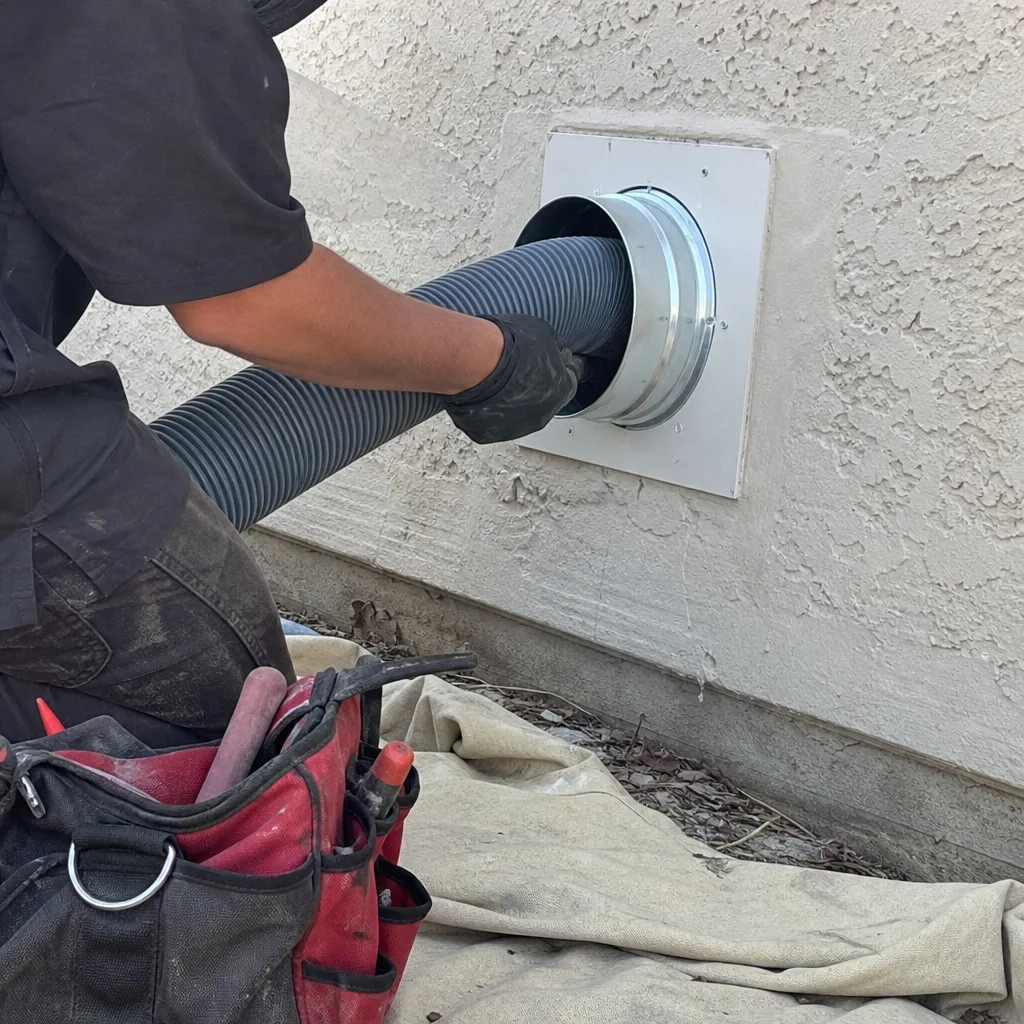
- Check the exterior termination. Go outside and look at the vent hood. It should open freely when the dryer runs and close when it stops. A stuck-open flap invites birds, rodents, and outside debris. A stuck-closed flap creates backpressure that accelerates lint settling.
- Time the drying cycle. If a full load of towels now takes 70 minutes when it once took 45, that’s not a dryer problem. It’s a vent airflow problem, which means it’s a lint accumulation problem. This is the single most common early warning sign homeowners in Rancho Cordova miss.
- Check for moisture around the dryer area. Condensation on walls behind the dryer, or a musty odor in the laundry room, suggests the vent line is partially blocked and moisture is being forced out through connections rather than out the termination.
Professional dryer vent cleaning uses specialized equipment to push and pull lint out of the entire line, not just the accessible section. Our Dryer Vent Cleaning in Rancho Cordova service treats this as a fire-safety issue, which is what it is. Lint is fuel. A blocked vent is ignition territory. If you haven’t had this line cleaned in two years or more, add it to the next professional visit.
Signs Your Last Duct Cleaning Was Incomplete
Not all duct cleanings are equal. This is an industry where the equipment and the effort vary widely, and Rancho Cordova is served by a range of operators. If you paid for a cleaning and want to know whether the work was thorough, here’s what to check after the technician leaves, and in the weeks that follow.
What a properly cleaned duct interior looks like: the metal surfaces should be visibly clean to the touch, or close to it. Not polished, not brand new, but free of the gray or brown film that had accumulated. Supply boots and register openings should be free of visible debris. The return drop, where air enters the system, should show no clinging dust. If the technician shows before and after photos, the difference should be obvious, not subtle. If they don’t offer photos, ask. Companies that clean with professional-grade equipment like Rotobrush or Nikro systems can typically show you the before and after of the exact ductwork in your home, not stock images.
Signs the job fell short:
- Registers blow visible dust within the first week after cleaning. Some settling is normal; a visible plume is not.
- You can still see coating on interior surfaces when you remove a register and look inside with a flashlight.
- The technician spent less than an hour on-site for a full system. A legitimate cleaning of a typical Rancho Cordova home takes two to four hours, depending on system size and accessibility.
- No containment was used. Cleaning without HEPA-level capture stirs material into the air and lets it resettle throughout the house. Companies that use Abatement Technologies filtration or similar containment show a commitment to actually removing material, not relocating it.
- Damaged ducts found during inspection were ignored or glossed over. A thorough cleaning includes noting problems that need Air Duct Repair in Rancho Cordova, because a cleaning is the natural time to identify them.
If you’re evaluating a cleaning company for the first time, one of the strongest questions you can ask is what equipment they run. A company using purpose-built duct cleaning platforms, like Nikro or Rotobrush systems, is operating at a different level from someone with a shop vac and a rotating brush attachment. The equipment doesn’t guarantee results, but it’s a reliable signal of whether the operator invested in the ability to do the job properly.
Common Mistakes to Avoid
- Treating filter replacement as the entire maintenance plan. A filter catches what it can catch. It doesn’t clean what’s already in the ducts, and it doesn’t address return-side buildup, register coating, or dryer vent lint. A filter is one component of a larger system, not a substitute for system care.
- Scheduling duct cleaning on a rigid calendar without considering actual conditions. “Every three years” is a decent default, but a home that endured a bad wildfire season in Rancho Cordova may need cleaning after one year. The calendar is a fallback, not a rule.
- Believing a low-priced coupon cleaning will address years of buildup. Duct cleaning has a well-earned reputation for bait-and-switch pricing. Some operators advertise a low flat rate, then upcharge per vent or per trunk line once they’re inside. Legitimate companies quote one flat price per system before work begins. If a quote sounds too low to cover real equipment and real labor, ask what’s actually included.
- Ignoring the dryer vent because it’s not part of the HVAC system. It’s a duct, it carries heated air, and it collects material that burns. The failure to clean it has different consequences than dirty HVAC ducts, and some of those consequences are measured in structure fires.
- Using high-MERV filters without checking system compatibility. Thicker, denser filters capture more particles, but they also increase static pressure. Some blower motors, especially in older Rancho Cordova homes with retrofit systems, can’t handle the restriction. This can shorten blower life or reduce airflow enough to cause coil freezing during summer.
- Waiting for a smell or visible problem before investigating. By the time you notice a burning-dust smell when the furnace first fires up, or see dust blowing from registers, the ducts have been dirty for a while. The point of a maintenance checklist is to catch the problem before it announces itself.
- Assuming a new home means clean ducts. Construction debris, drywall dust, and sawdust routinely end up inside ductwork during the building process. Even a well-built new home in the developments around Rancho Cordova can have ducts that were never cleaned after construction. If you’ve never checked, it’s worth a look.
When to Call a Professional
Some maintenance tasks are squarely homeowner territory. Others are not. Call a professional when you see visible mold growth inside the ductwork, when a vent line has separated and you can’t easily reattach it, when the system is blowing visible dust every time it runs, or when the dryer vent has gone more than two years without a proper cleaning. Duct interiors are not a safe place for homeowners to improvise with household tools, and the materials involved, including accumulated debris and insulation, are better handled with containment equipment. Duct Cleaning Rancho Cordova offers free estimates in Rancho Cordova. Call (877) 752-4148 to schedule an inspection. We’ll tell you honestly whether the system needs work, and if it does, we’ll quote one flat price per system before any work begins.
Frequently Asked Questions
Most homes in Rancho Cordova need professional air duct cleaning every two to three years under normal conditions, but that interval shortens significantly if the home experienced wildfire smoke exposure, heavy summer AC use with basic filters, or recent construction. Homes with pets or residents with allergies may also warrant more frequent cleaning. A visual inspection is the most reliable way to determine whether accumulation has reached the point where cleaning is warranted.
Yes, because the filter protects the equipment, not the ductwork. Even a well-maintained filter allows fine particles through, and those particles accumulate on the interior surfaces of supply and return lines over time. Once that coating forms, it stays there until removed mechanically. Regular filter changes slow the accumulation but don’t stop it.
Look for visible dust blowing from registers when the system starts, a gray or brown coating visible inside the duct when you remove a register and shine a flashlight in, persistent musty or dusty odors when the blower runs, or significantly more dust settling on furniture in one season than in previous years. Any of these is a signal worth investigating with a professional inspection.
Check for visible improvement in the interior surfaces you can access with a flashlight, confirm that the registers and boots were cleaned and not just the trunk lines, and ask for before-and-after photos if they weren’t provided. A legitimate cleaning of a typical Rancho Cordova home takes at least two hours; a 45-minute job is a red flag.
Yes. These whole-home systems add filter media and potentially humidifier components that affect airflow and pressure through the ductwork. If the Aprilaire media filter is loaded, or the Honeywell system’s pre-filter is clogged, the entire duct system experiences reduced airflow, which can accelerate particle settling inside the ducts. Service those components according to manufacturer intervals, and have them checked during any professional duct service.
Wildfire smoke carries fine particulate matter that penetrates standard HVAC filters and settles inside the ductwork, where it creates a persistent odor and potential respiratory irritant. Multiple smoke events in a single season, or any stretch where the AQI in Rancho Cordova stayed above 150 for several days, is a strong argument for scheduling a professional duct cleaning before the next heating season. The material left behind by smoke doesn’t dissipate on its own.
The Bottom Line
Rancho Cordova homes demand more from their duct systems than the national average, and the maintenance approach should reflect that reality. A checklist built around actual conditions here, long AC run cycles, wildfire smoke, valley dust, longer dryer vent runs, will catch problems before they become expensive or unhealthy. The monthly tasks are simple observation. The seasonal checks are about looking where problems begin. The AQI log is about responding intelligently to what the environment throws at the system. And the professional cleaning, when it’s warranted, is about restoring the system to a baseline that filters alone can’t achieve. For homeowners who want the full scope handled properly, from cleaning to repair to dryer vent safety, call (877) 752-4148 for a free estimate. We’re the team that Duct Cleaning Rancho Cordova home owners trust when the job needs to be done right the first time.
Written by the team at Duct Cleaning Rancho Cordova, serving Rancho Cordova since 2013. Explore more guides & resources on keeping your home’s air system running clean.
See the difference
 Before
 After
 Before
 After
 Before
 After