
Last updated November 2, 2026
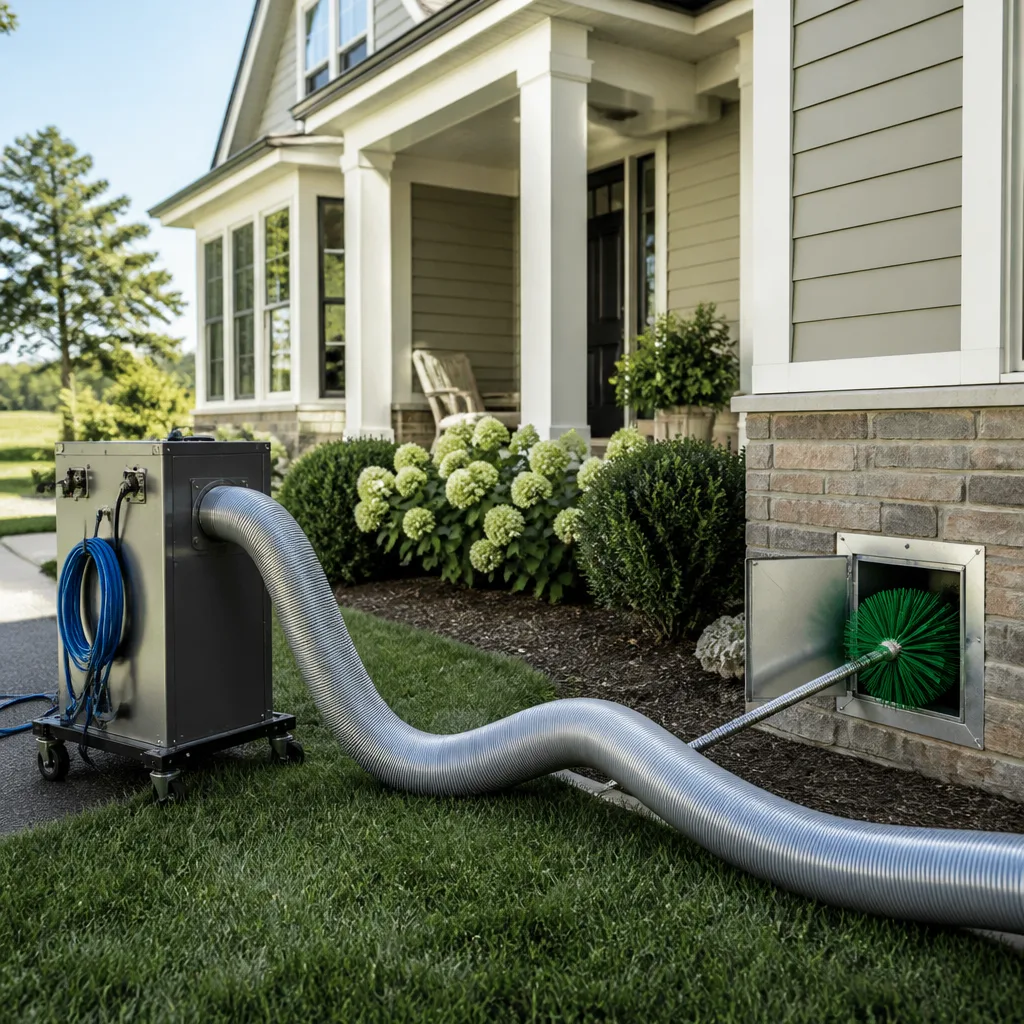 Whole-home duct cleaning
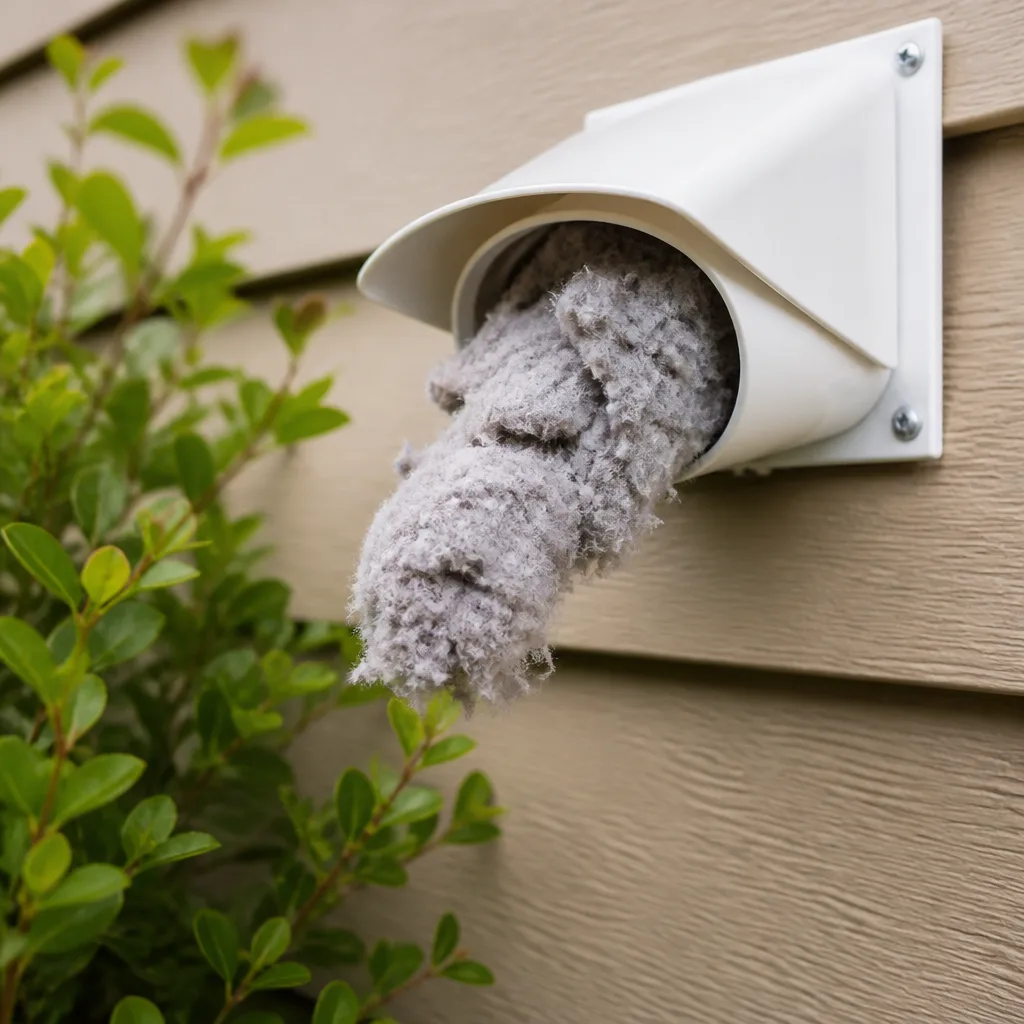 Dryer vent cleaning
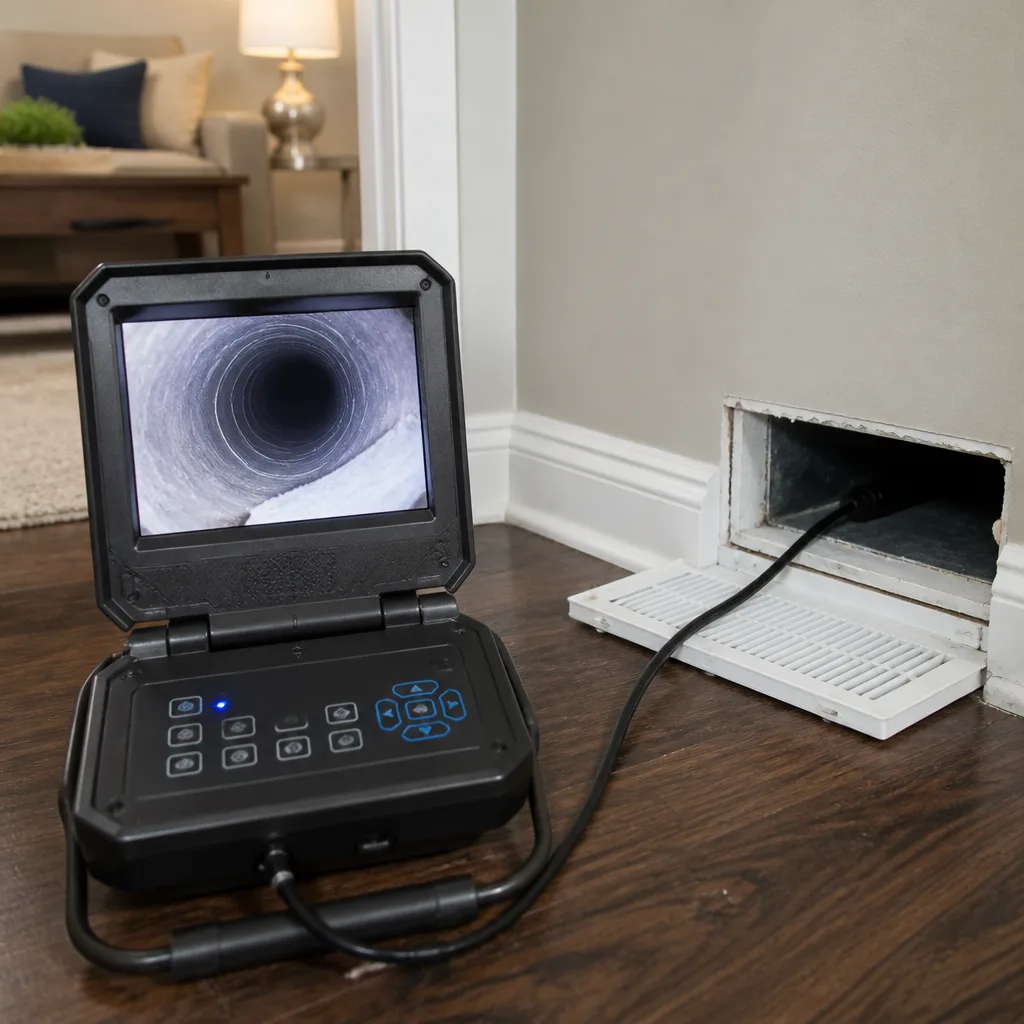 Camera inspection
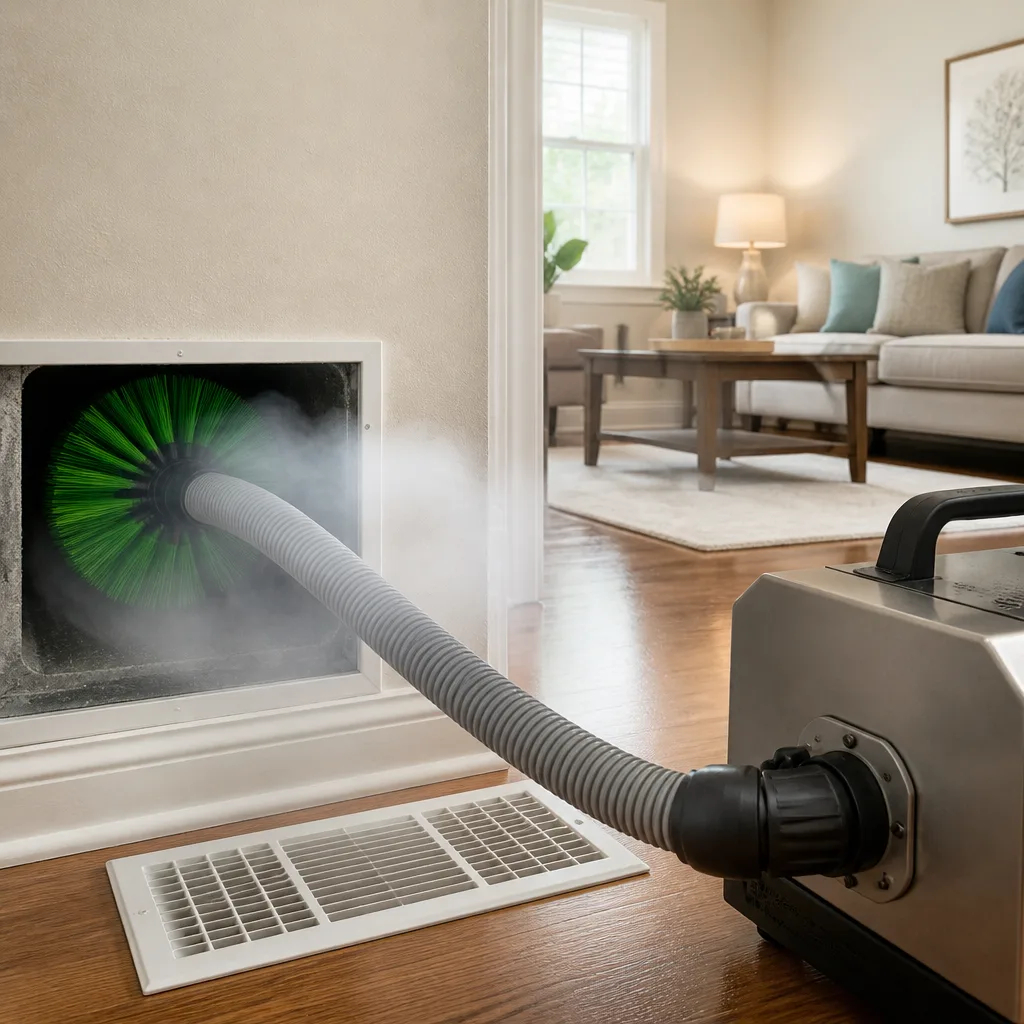 Sanitizing & deodorizing
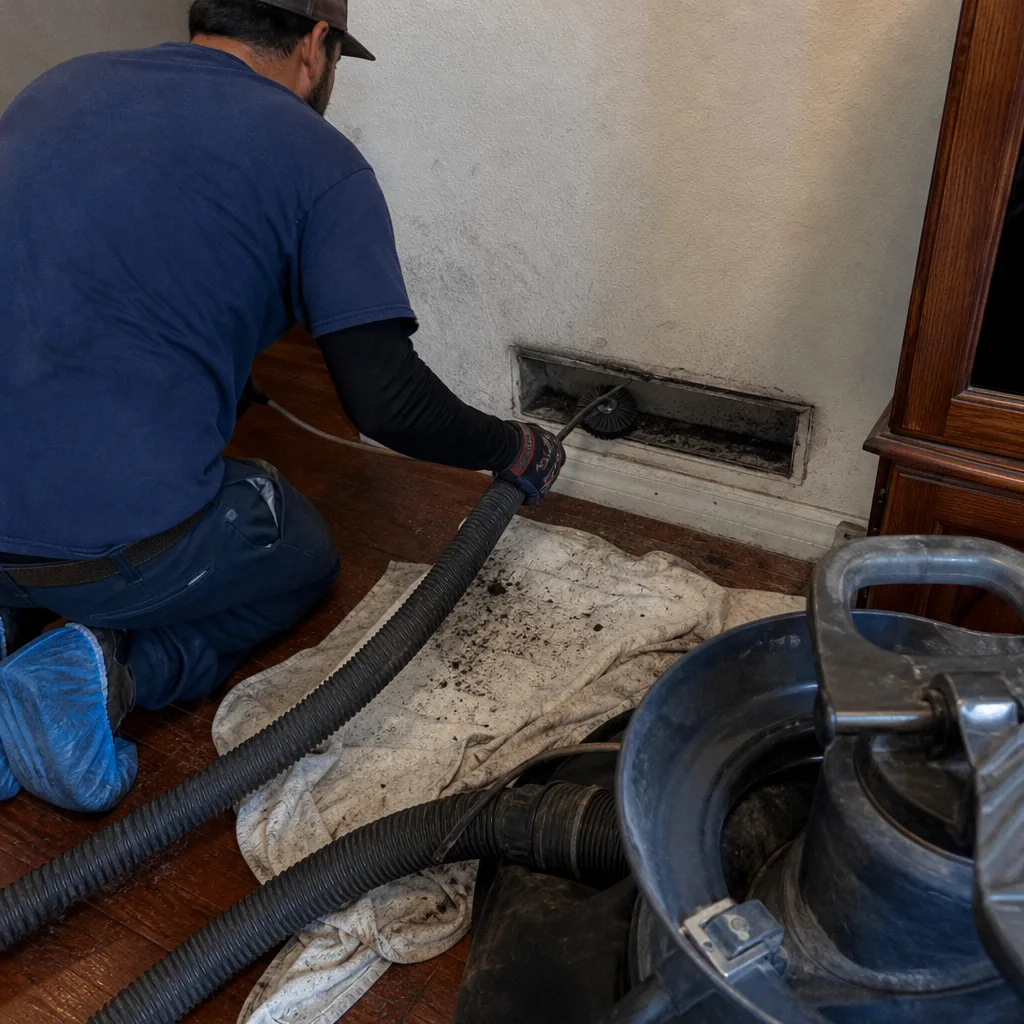
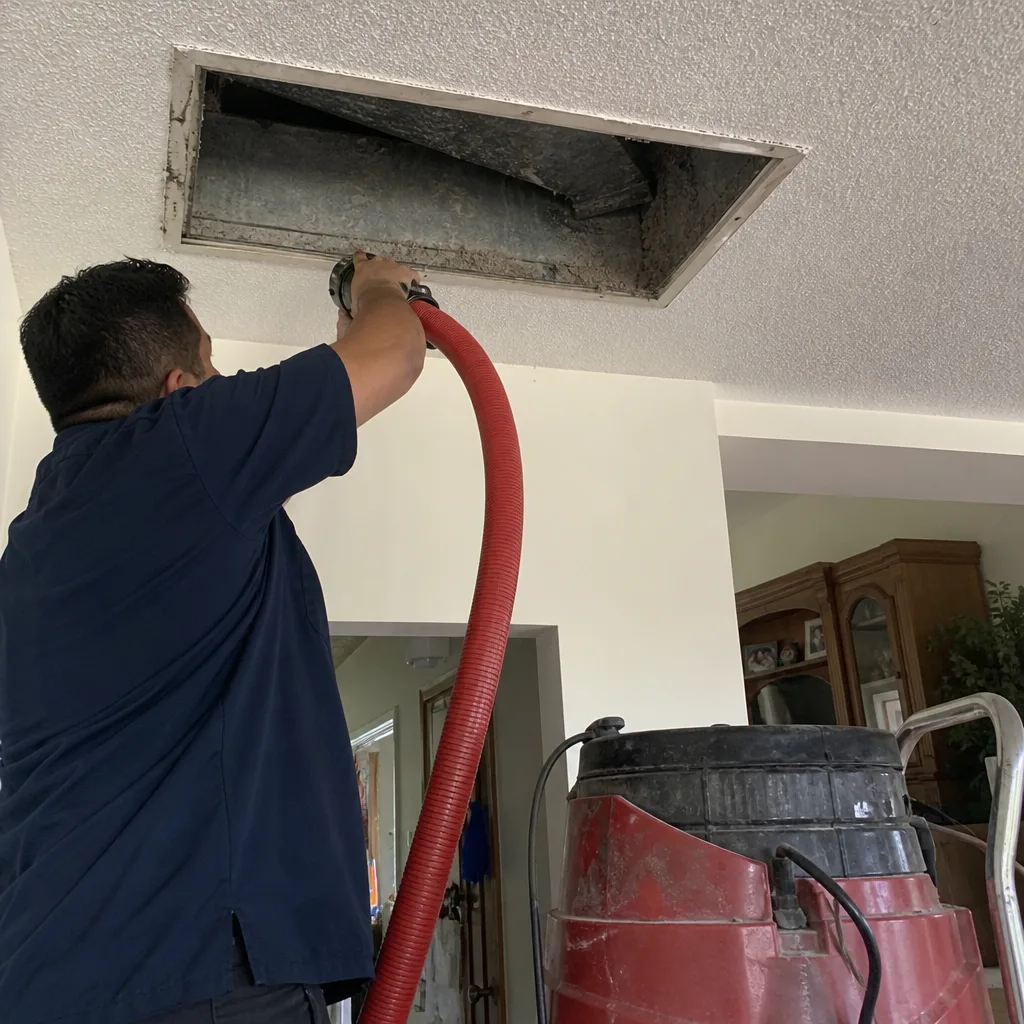
Whole-system duct and dryer vent check with before-and-after photos - you see exactly what came out of your vents
That "$99 whole-house special" is a bait ad - the real number appears once they are in your hallway, or the "clean" is a shop-vac at the register. We photograph the inside of your ducts before and after instead.
Air Duct Cleaning Permits, Codes & Inspections in CA: What You Need to Know
Ask ten homeowners in Rancho Cordova if air duct cleaning requires a permit, and nine will confidently say no. For cleaning alone, they’re right. But here’s the counterintuitive part: the moment a technician reattaches a disconnected duct section, seals a breach with mastic, or replaces a crushed flex run, you’ve crossed an invisible line from maintenance into repair territory. In California, that line is where building code and Title 24 energy standards wake up, and most homeowners don’t realize they’ve crossed it until a home inspector flags it during resale or a utility rebate gets denied. This guide draws that line clearly, section by section, so you know exactly what requires paperwork, what doesn’t, and what to ask your Air Duct Cleaning services contractor before anyone touches your ductwork.
Styles & brands we work with
- Whole-home duct cleaning
- Dryer vent cleaning
- Camera inspection
- Sanitizing & deodorizing
Quick Answer
Standard air duct cleaning does not require a permit anywhere in California, including Rancho Cordova and Sacramento County. However, duct repair, sealing beyond minor touch-up, replacement of duct sections, or dryer vent rerouting can trigger mechanical permit requirements under the California Mechanical Code and Title 24 energy standards. Homeowners should ask contractors to document any incidental repairs in writing, because undocumented duct modifications can create insurance claim problems and resale disclosure issues later. In short: cleaning is permit-free, but repair and replacement live in a regulated world, and knowing where that boundary sits protects you from code violations you didn’t know you were creating.
Table of Contents
- Cleaning vs. Repair: Where California Draws the Permit Line
- California Mechanical Code: Sections That Actually Apply to Ducts
- Title 24 Energy Standards and Duct Sealing Requirements
- HERS Verification: What It Is and When It Gets Triggered
- Sacramento County Amendments: Local Rules That Change the Game
- Dryer Vent Installations: A Separate Permit Category Entirely
- Documentation, Insurance, and Resale: Why Paperwork Matters
- Common Mistakes to Avoid
- When to Call a Professional
- Frequently Asked Questions
- The Bottom Line
Cleaning vs. Repair: Where California Draws the Permit Line
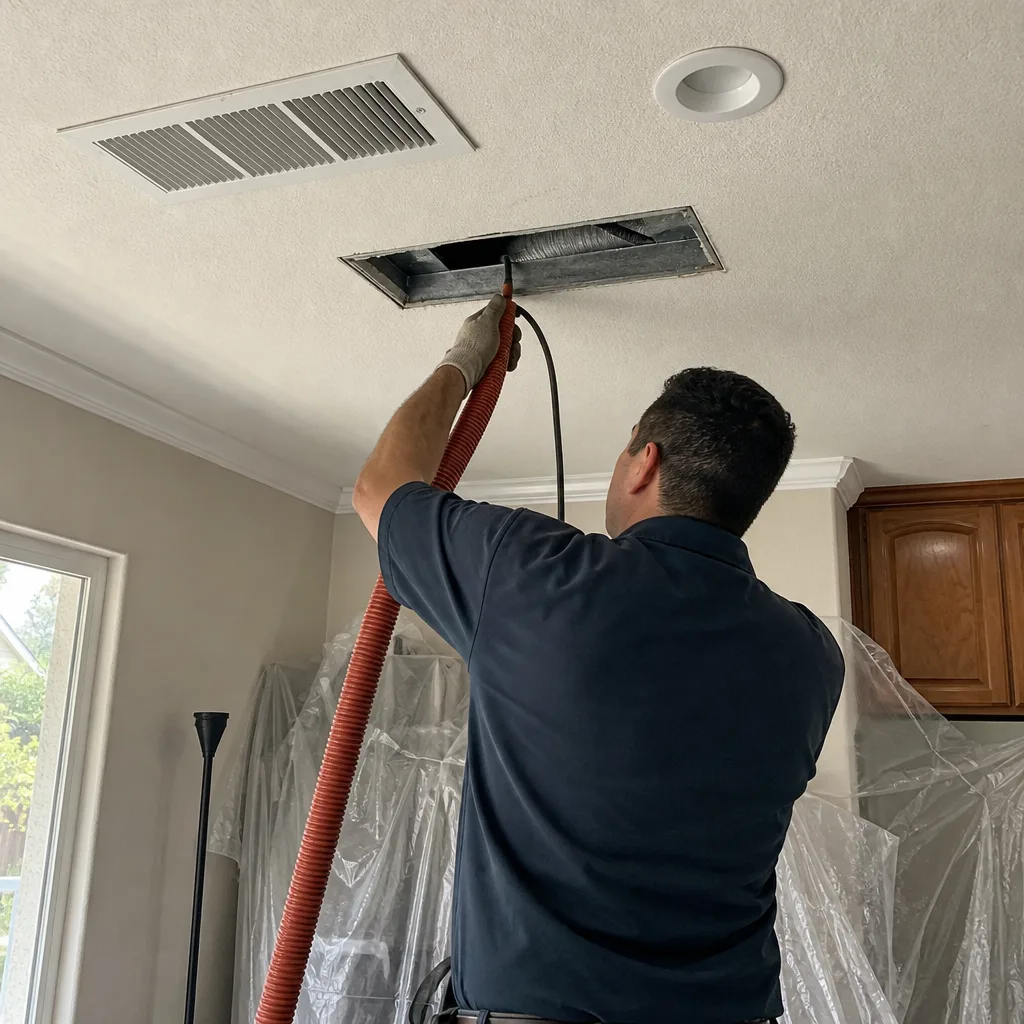
The California Mechanical Code (CMC), which every city and county in the state adopts with local amendments, doesn’t regulate cleaning as construction. Cleaning removes accumulated dust, debris, and microbial growth from the interior surfaces of existing ductwork. It changes nothing about the system’s configuration, materials, or performance characteristics. No permit. No inspection. No HERS testing. Our Air Duct Cleaning in Rancho Cordova service operates entirely within this maintenance category, using professional-grade equipment to remove what shouldn’t be there without altering what should.
Repair is different. Under the CMC, repair includes reattaching separated duct sections, replacing damaged flex duct, sealing leaks with mastic or tape beyond minor touch-up, replacing registers or grilles that affect airflow, and modifying duct runs to resolve airflow problems. Each of these changes the system physically. California considers that construction work, and construction work requires a mechanical permit from the local building department, which in Rancho Cordova means the city’s Building and Safety Division.
Here’s the line in practical terms:
- Cleaning: Brushing, vacuuming, and air-washing interior duct surfaces.
- Cleaning with minor debris removal: Removing a register to clean behind it and reinstalling the same register. Still maintenance.
- Reattaching a disconnected duct: Repair. Permit territory.
- Sealing a visible gap with mastic: Repair. Permit territory.
- Replacing a crushed or torn flex duct run: Repair, and potentially more than a simple permit if the replacement changes duct sizing or routing. Permit territory.
- Cleaning that requires cutting an access panel into the duct: The cut itself is a modification. Most professional cleaning avoids this, but if it becomes necessary, ask whether the contractor treats the patch as a repair. It should be documented.
In our experience across Rancho Cordova and the greater Sacramento area, we’ve seen homes where a previous “cleaning” included well-intentioned but undocumented repairs. Ducts were re-taped, flex runs were replaced, and none of it appeared in any permit record. The homeowners didn’t know anything was wrong until one of two moments arrived: a home inspection flagged the unpermitted work, or an HVAC contractor quoted a replacement and found the existing modifications didn’t match any approved plan. Both are expensive conversations.
The smart approach is simple. Ask your duct contractor, before work begins, whether anything they plan to do crosses the cleaning-to-repair line. If it does, insist that the repair work is documented. A contractor who knows the difference between maintenance and construction is one who respects the code enough to tell you the truth.
California Mechanical Code: Sections That Actually Apply to Ducts
The California Mechanical Code isn’t some abstract document that only engineers read. It’s the enforceable rulebook for every mechanical system in your home, and it contains specific sections governing ductwork installation, materials, clearance, and modification. Understanding which sections apply helps you spot when a “simple repair” is actually a code compliance issue.
The CMC adopts and amends the Uniform Mechanical Code (UMC) for California. Duct-related provisions live primarily in Chapter 6, which covers duct systems, and Chapter 5, which covers exhaust systems. When a contractor replaces a flex duct run during a repair, Chapter 6 governs what materials are acceptable, how joints must be sealed, and what support spacing is required. Install the wrong material or skip the sealing, and the work fails code even if it functions well enough for a while.
Key CMC provisions that matter to homeowners include:
- Duct material requirements: California restricts certain materials in duct construction, particularly in return air plenums. Building cavities can’t be used as ducts unless specifically rated for that purpose.
- Joint sealing standards: Every joint in a duct system must be sealed with approved mastics or tapes. The days of gray fabric duct tape are long gone, and code enforcement in Sacramento County specifically looks for improper sealing during inspections.
- Flex duct limitations: Flexible duct has maximum run lengths, minimum bend radii, and specific support requirements. A sloppy flex replacement that looks fine visually can violate all three.
- Access requirements: Ducts serving certain equipment must remain accessible for service, which is why proper access panel installation matters.
- Clearance to combustibles: Ductwork near furnaces, water heaters, and dryer exhaust terminations must maintain specific clearance distances.
What does this mean for a homeowner who just wanted ducts cleaned? It means that when repair work happens, the person doing it should know these sections well enough to avoid creating a violation. A contractor who primarily cleans ducts but also offers repair, as we do through our Air Duct Repair in Rancho Cordova service, is accountable to the same code sections as a full HVAC contractor. That’s the standard we work to, because duct work that violates Chapter 6 becomes your problem, not the contractor’s, the moment they drive away.
Title 24 Energy Standards and Duct Sealing Requirements
California’s Title 24, Part 6, Energy Standards represent a separate regulatory layer from the Mechanical Code, and this is where duct work gets genuinely complicated. Title 24 regulates energy efficiency, and because leaky ducts waste enormous amounts of conditioned air, Title 24 cares deeply about duct sealing.
When does Title 24 apply to duct work in Rancho Cordova? Any time a permit is pulled for HVAC system work, duct replacement, or certain types of repair that affect system performance. If your duct repair is substantial enough to require a mechanical permit, Title 24 energy compliance documentation generally rides along with it. That means duct leakage testing may be required before the work is signed off.
The numbers are specific. Title 24 sets maximum duct leakage rates for newly installed or substantially modified duct systems. In climate zones like Sacramento’s (Climate Zone 12 with hot, dry summers and cool, damp winters), the baseline requirement for new ducts is that leakage shall not exceed 6% of system airflow. When ducts are sealed and verified, that number tightens further. For repairs, the standard is less absolute but still real: any duct section that is replaced or opened must be sealed to meet the same leakage standard as new work.
Why does this matter for a cleaning customer? Because a technician who reattaches a separated duct section without properly sealing the joint has just created a Title 24 violation that might be invisible for years. The system will leak conditioned air into the attic, the homeowner will pay higher utility bills, and if the home is sold, a thorough home inspector with a duct leakage tester could flag the problem and delay or derail the sale.
Rancho Cordova’s climate makes this especially relevant. Our summers regularly push past 100 degrees, and winters bring cold morning starts in the 30s. Every cubic foot of conditioned air that escapes through a poorly sealed duct joint is a cubic foot you paid to heat or cool and never felt. Title 24 exists precisely because California decided leaky ducts are a statewide energy problem, not just an individual comfort problem.
Professional duct cleaning equipment, like the Rotobrush and Nikro systems we operate, is designed to clean without creating new leaks. Abatement Technologies filtration gear contains the particulate we dislodge, preventing it from entering living spaces. But if we find pre-existing leaks during a cleaning, which happens regularly in older Rancho Cordova homes, we document them and discuss Air Duct Cleaning Troubleshooting: Common Problems and How to Fix Them and other repair options with the homeowner. That conversation includes the permit question when it applies.
HERS Verification: What It Is and When It Gets Triggered
HERS stands for Home Energy Rating System, and in California, a HERS rater is the third-party verifier who confirms that Title 24 energy compliance measures were actually installed and perform correctly. Think of HERS as the enforcement arm of Title 24 for residential duct work.
When does HERS duct verification get triggered? Primarily in three scenarios:
- New construction or major renovation: Any new home or substantial remodel with HVAC work requires HERS verification of duct sealing and leakage rates.
- Permitted duct replacement: If a permit is pulled to replace a significant portion of a home’s duct system, HERS duct leakage testing is typically required as a condition of final inspection approval.
- Utility rebate programs: SMUD and other California utilities that offer rebates for duct sealing or HVAC upgrades require HERS verification before issuing rebate payments.
What does the HERS rater actually do? For duct work, the rater typically uses a duct leakage tester, which pressurizes the duct system and measures how much air escapes. The result is compared against the Title 24 maximum allowable leakage. The rater also visually confirms that sealing materials meet code and that access requirements are satisfied.
Here’s the practical implication for homeowners. Minor duct cleaning never triggers HERS. Minor repair with a permit might or might not, depending on scope and local building department policy. But here’s what most people don’t know: if a contractor performs and documents duct sealing work without HERS verification, and that work later becomes part of an insurance claim or resale disclosure, the absence of verification can become a problem. Insurance companies scrutinize repairs for code compliance. Homebuyers’ inspectors look for evidence that energy work was done to standard.
In our Air Duct Repair in Rancho Cordova work, we tell homeowners plainly when a repair is substantial enough that HERS verification would be appropriate if they choose to pull a permit. We don’t pull permits on behalf of homeowners for simple repairs, but we never hide the requirement. Running a duct system in Sacramento County without acknowledging Title 24 is like driving with broken taillights: you might not get caught today, but the consequences compound the longer it goes unnoticed.
Sacramento County Amendments: Local Rules That Change the Game
Every California jurisdiction adopts the state model codes with local amendments, and Sacramento County, including the city of Rancho Cordova, is no exception. These local amendments can change what needs a permit, what fees apply, and what inspectors look for during final approval.
Rancho Cordova operates its own Building and Safety Division separate from Sacramento County, but the two are closely aligned because the city historically contracted with the county for building services and maintains compatible code interpretations. The practical effect for homeowners is consistency: what Sacramento County’s building department considers a minor repair is generally what Rancho Cordova considers a minor repair.
Specific local considerations that affect duct work in Rancho Cordova:
- Mechanical permit thresholds: Sacramento County and Rancho Cordova both require mechanical permits for duct modifications that go beyond like-for-like component replacement. Replacing an identical flex run may qualify as minor repair under some interpretations, but changing duct size, routing, or material type consistently triggers permit requirements.
- Inspection scheduling: The city’s Building and Safety Division generally schedules mechanical inspections within a few days of request, but flex duct work often requires a visual inspection before the duct is covered or connected. Planning ahead matters.
- Title 24 documentation: Rancho Cordova enforces Title 24 compliance documentation for permitted HVAC work, including duct sealing verification. Homeowners should expect compliance forms as part of any permitted duct repair.
- Owner-builder considerations: California allows homeowners to act as their own contractor for their primary residence, including pulling permits for duct repair. Few homeowners do, but it’s legal, and some choose this route for small, well-defined repairs.
The neighborhood context matters too. Rancho Cordova’s housing stock ranges from mid-century homes along Coloma Road and Folsom Boulevard to newer subdivisions near Anatolia and Sunridge Park. Older homes are far more likely to have duct systems that have been modified multiple times over decades, often without permits, sometimes using materials that wouldn’t pass code today. When we clean ducts in an original-1960s Rancho Cordova home, we expect to find Air Duct Cleaning Warning Signs: A Rancho Cordova Homeowner’s Reference Guide and other evidence of previous repairs, and we document what we see because it helps the homeowner understand what they actually have.
The takeaway is straightforward: local amendments don’t change the fundamental cleaning-versus-repair line, but they influence how the line gets enforced, what inspections cost, and how quickly things move. Homeowners who understand this don’t get surprised by a permit requirement at the worst possible moment.
Dryer Vent Installations: A Separate Permit Category Entirely
Dryer vents live in a different regulatory world than HVAC ducts. The California Mechanical Code regulates both, but dryer exhaust systems are governed by Chapter 5, which covers exhaust systems generally, while HVAC duct work lives in Chapter 6. The permit implications diverge significantly.
Installing a new dryer vent, rerouting an existing vent, or extending a vent through a roof or wall penetration all require a mechanical permit in most California jurisdictions, including Rancho Cordova. The work involves cutting into the building envelope, which triggers not just mechanical code but potentially structural and fire-resistance requirements as well. A dryer vent that penetrates a wall or ceiling is an opening in a fire-rated assembly, and that opening must be properly sealed and protected.
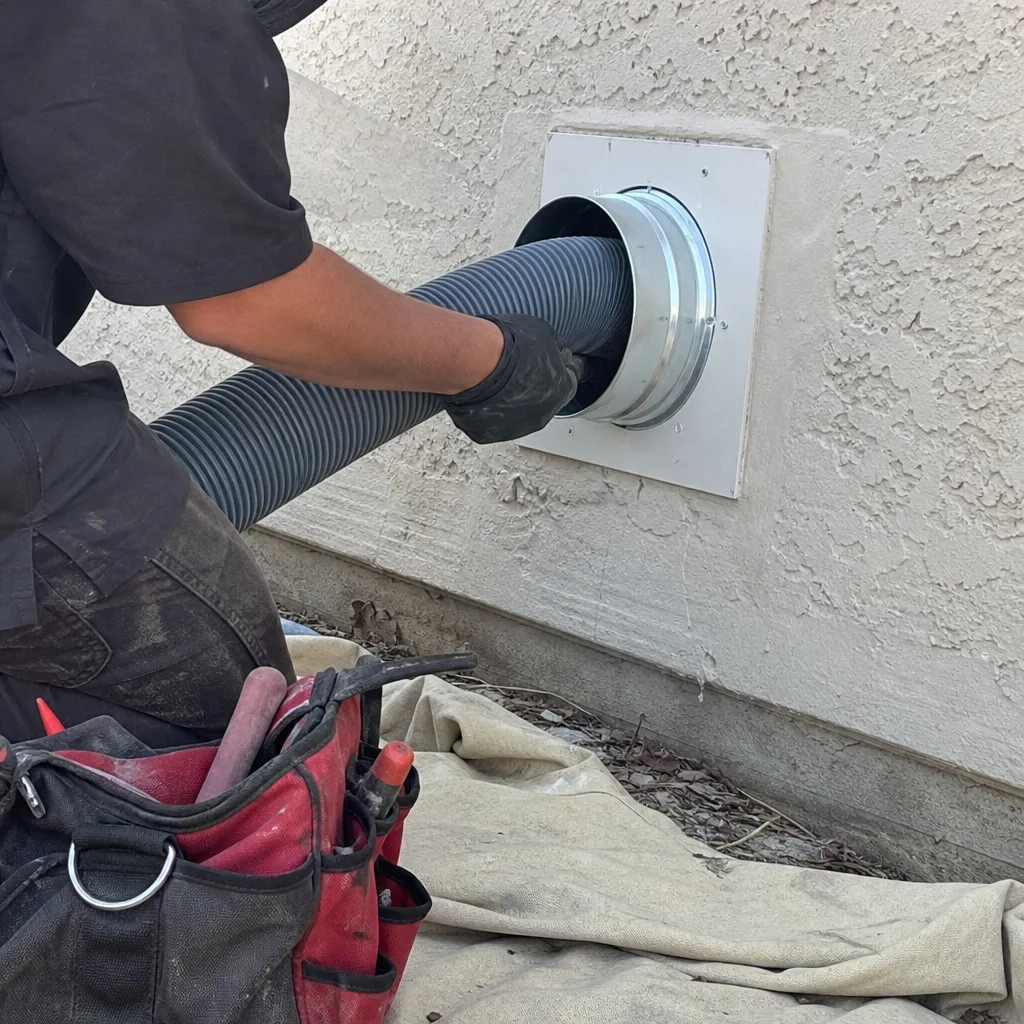
What about dryer vent cleaning? Cleaning an existing dryer vent does not require a permit. Our Dryer Vent Cleaning in Rancho Cordova service removes accumulated lint from existing vent pipes, which is a maintenance function, not a construction function. No permit, no inspection, no code compliance paperwork. The work is fire-safety-focused: lint accumulation is a leading cause of residential dryer fires, and cleaning the vent is the single most effective preventive measure a homeowner can take.
But the moment a cleaning reveals problems that require repair, the picture changes. A crushed vent section that needs replacement crosses into permit territory. A vent that terminates in the wrong location, such as into an attic or crawlspace instead of outdoors, is a code violation that a cleaning won’t fix; correcting it means rerouting, which means a permit. A vent made from vinyl transition duct, which California prohibits for dryer exhaust, must be replaced with rigid metal or approved flexible metal, and that replacement is regulated work.
In practice, here’s what we tell Rancho Cordova homeowners: if the vent is intact and just needs cleaning, no paperwork is involved. If the vent needs modification of any kind, expect a permit conversation. Dryer vent fires are preventable, and the prevention starts with proper installation and diligent cleaning, not with improvising fixes to a system that’s wrong from the start. The fire-safety stakes make this a place where doing it right matters more than doing it fast.
Documentation, Insurance, and Resale: Why Paperwork Matters
Permits and code compliance don’t just matter for avoiding fines. They matter when insurance companies investigate claims, when home inspectors examine a property for sale, and when title companies ask for disclosure of known defects. Undocumented duct repair work creates risk in all three arenas.
Insurance implications are the least understood. Standard homeowners policies cover sudden and accidental damage, but many insurers now ask about prior repairs and maintenance when processing claims involving HVAC or duct-related issues. If a water damage claim traces back to a disconnected or poorly sealed duct, the insurer may ask who worked on the system and whether the work was permitted. Unpermitted work doesn’t automatically void coverage, but it can complicate a claim and give an insurer grounds to dispute coverage if the work is found to have contributed to the loss.
Resale implications are more direct. California sellers must disclose known material defects and unpermitted work. If you know a previous duct contractor reattached a duct section without a permit, you’re obligated to disclose that when you sell. Buyers’ home inspectors in Rancho Cordova routinely check duct systems, looking for visible non-compliance like improper flex duct support, unsealed joints, and materials that don’t meet code. A flagged duct issue doesn’t necessarily kill a sale, but it almost always becomes a negotiation point, a repair request, or a price concession.
What should homeowners do? Here’s the step-by-step approach we recommend:
- Before any duct work, ask the contractor to document everything they plan to do. If the scope includes any repair, ask whether it crosses into permit territory.
- If repair work is done, request written documentation describing what was repaired, what materials were used, and whether a permit was required. Keep this document with your home records.
- If the work was substantial enough to require a permit, get the permit. The cost is modest compared to the resale and insurance complications of unpermitted work.
- If you inherit a home with questionable duct work, have it evaluated. A professional cleaning with visual inspection will document what’s actually there, which is the first step toward understanding whether prior work was done properly.
This documentation habit extends to things like cleaning records, which can support better indoor air quality discussions and show prospective buyers that the system was maintained. We provide before-and-after documentation from our cleaning work, and for dryer vent cleaning, we recommend keeping records because it demonstrates fire-safety diligence, which some insurers now ask about on new policies or renewals.
The broader principle is simple: in California, the absence of documentation is its own kind of liability. A duct system that works fine but has no paper trail invites questions you don’t want to answer during a claim or a sale. Our Duct Cleaning Rancho Cordova home is built on the principle that homeowners deserve clarity about what’s in their ductwork and what’s been done to it, and that clarity starts with honest documentation.
Common Mistakes to Avoid
After years of working in Rancho Cordova homes, these are the mistakes we see most often when duct work and code issues collide:
- Assuming all duct work is the same. Cleaning is maintenance, repair is construction, and replacement is a bigger deal yet. Treating them as interchangeable is how homeowners end up with unpermitted work they didn’t ask for. Ask your contractor to define the scope in writing before work begins.
- Letting a contractor do “minor fixes” without documentation. Reattaching a duct or sealing a gap might seem trivial, but it’s the kind of thing that surfaces later in home inspections. Insist on written documentation of any repair, no matter how small it looks.
- Skipping permits on substantial duct replacement. We understand the temptation to avoid permit fees and inspection hassle. We’ve also seen homes where unpermitted duct replacement created Title 24 compliance gaps that cost far more to correct later than the permit would have cost originally.
- Ignoring dryer vent code compliance. Dryer vents that terminate in attics or crawlspaces, use vinyl transition duct, or have blocked termination screens are code violations that also create fire hazards. Cleaning won’t fix a code violation; modification will, and modification needs a permit.
- Failing to keep records of duct work. Cleaning records, repair documentation, and before-and-after photos are all evidence of due diligence. Without them, a resale or insurance conversation becomes your word against an absence of proof.
- Hiring based on price alone. The cheapest duct cleaning quote often comes from someone who doesn’t understand the cleaning-versus-repair line or doesn’t care. That’s how you end up with improper repairs done by a technician who was never qualified to do them. Professional-grade equipment, like the Rotobrush and Nikro systems we operate, and clear scope documentation cost a little more and protect you from a lot.
- Not asking “what’s in the truck?” Duct cleaning quality varies enormously based on equipment. A shop vac attached to a hose is not a duct cleaning system. Ask what equipment the contractor uses. If they can’t name it, that tells you everything.
When to Call a Professional
Some situations are clearly DIY-adjacent; none of them involve duct work. We’re glad to say that plainly. If you don’t know whether your ducts are leaking, or whether a repair crosses the permit line, or whether a dryer vent run is code-compliant, the right move is to get a professional evaluation. That’s particularly true if you’ve noticed a musty smell when the HVAC runs, if some rooms never reach the thermostat setpoint, if your energy bills have crept upward without explanation, or if your dryer takes more than one cycle to dry a normal load. These are signs of duct system problems, and diagnosing them accurately requires equipment and experience, not guesswork.
We also recommend a professional evaluation before you sell a Rancho Cordova home. A duct system inspection with documented cleaning and repair history removes the most common inspection surprises. If you’re buying, the same logic applies: know what you’re getting before you commit. Duct Cleaning Rancho Cordova offers free estimates in Rancho Cordova and the surrounding Sacramento area. Call (877) 752-4148 to schedule an evaluation. We’ll tell you what’s in your ductwork, what condition it’s in, and what any of it means for permits, codes, inspections, or your home’s resale value.
Frequently Asked Questions
No. Air duct cleaning is a maintenance activity that removes accumulated dust, debris, and contaminants from existing ductwork without altering the system, and the California Mechanical Code does not require a permit for maintenance work. Call (877) 752-4148 if you’d like an evaluation of your system before you decide.
Duct repair requires a mechanical permit in Rancho Cordova when it involves reattaching separated duct sections, replacing damaged flex duct runs, modifying duct routing or sizing, adding new registers, or performing any work that changes the system’s configuration rather than maintaining it. The city’s Building and Safety Division interprets this consistently with Sacramento County’s approach.
Yes. When duct work is performed under a mechanical permit, Title 24 energy standards apply, and duct sealing must meet specific leakage limits that are verified by HERS testing in most residential applications. Unpermitted duct sealing work may not meet these standards and can complicate resale and insurance matters.
No. Cleaning an existing dryer vent is maintenance and does not require a permit. However, installing, rerouting, or significantly modifying a dryer vent system does require a mechanical permit, and dryer exhaust systems are regulated separately from HVAC ducts in California’s Mechanical Code.
Document what you know, then have the work evaluated by a professional who understands California code requirements. In many cases, a permit can be pulled retroactively for work that was done correctly. If the work doesn’t meet code, corrective work under a proper permit is the path forward. The key is not to ignore it: undisclosed unpermitted work becomes a resale disclosure obligation and a potential insurance complication.
A professional evaluation with visual inspection will identify visible issues like improper flex duct support, unsealed joints, non-compliant materials, and improper dryer vent termination. We document what we find during our cleaning evaluations in Rancho Cordova, including photographs, so you have an accurate picture of your system’s actual condition. Call (877) 752-4148 to schedule an inspection.
The Bottom Line
Air duct cleaning in California doesn’t require a permit, and that’s worth knowing. But the more valuable knowledge is understanding where cleaning ends and regulated work begins. Duct repair, sealing, replacement, and dryer vent modification all come with permit obligations under the California Mechanical Code and Title 24, and those obligations follow you into insurance conversations and home sales. The protective move for any Rancho Cordova homeowner is simple: hire a contractor who can explain the cleaning-versus-repair line clearly, document everything in writing, and use professional equipment built for the work. For more guides & resources, explore our blog. When documentation and code awareness are handled correctly, your duct system is just a duct system, not a future headache.
Written by the team at Duct Cleaning Rancho Cordova, serving Rancho Cordova since 2013.
See the difference
 Before
 After
 Before
 After
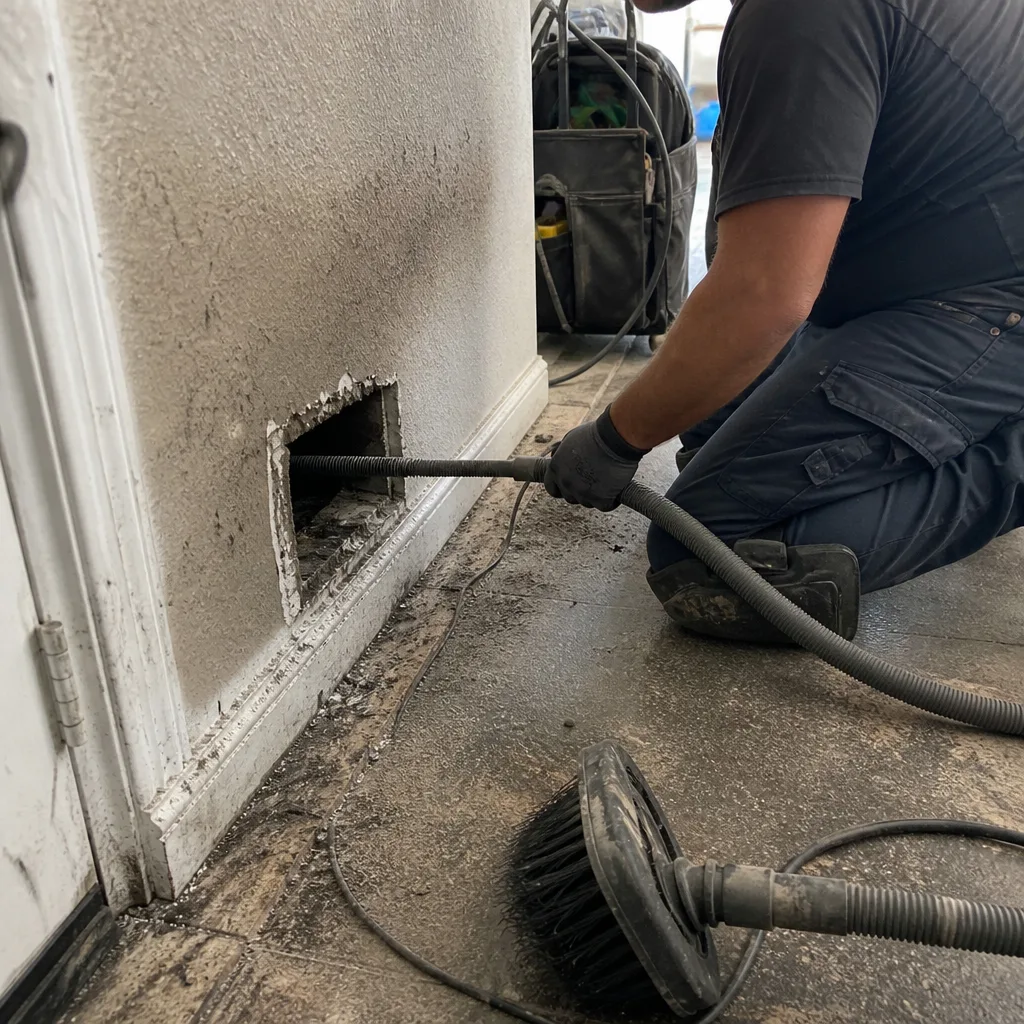 Before
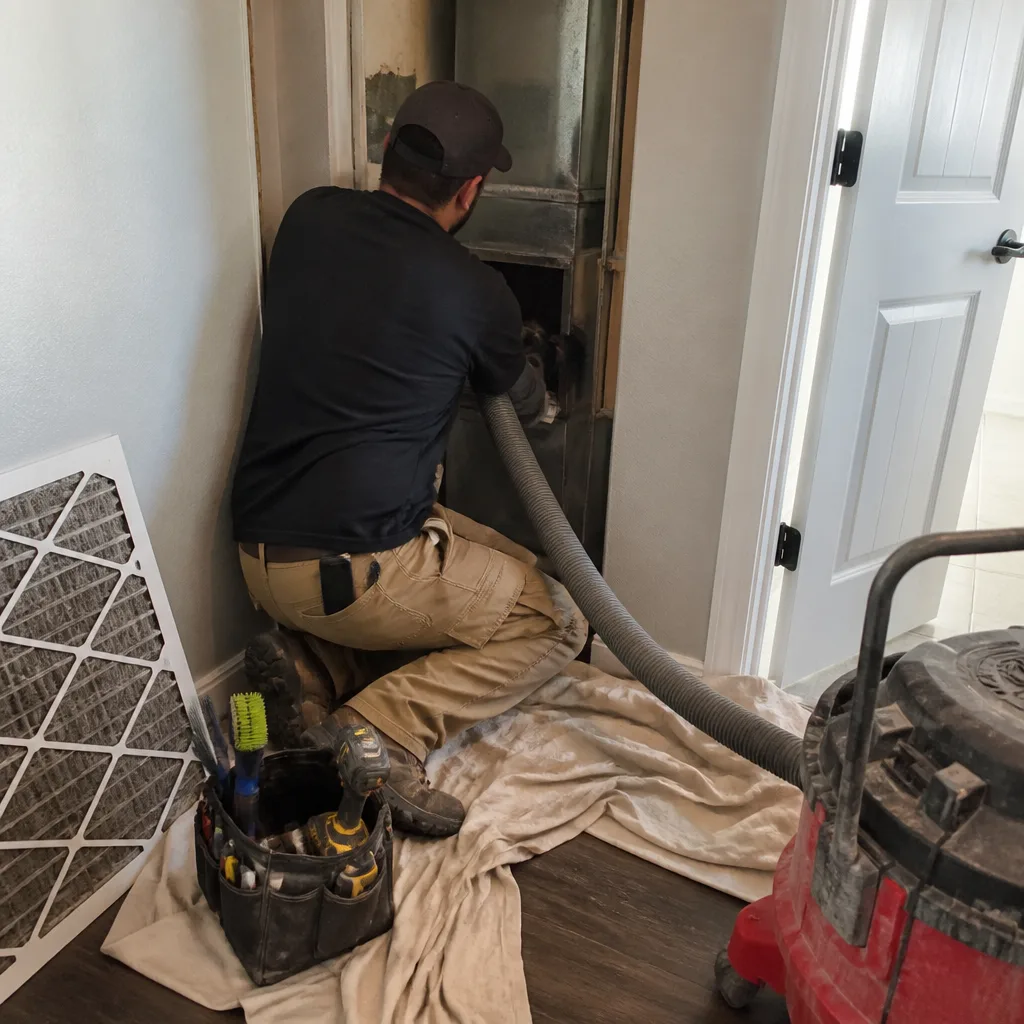 After