
Last updated November 2, 2026
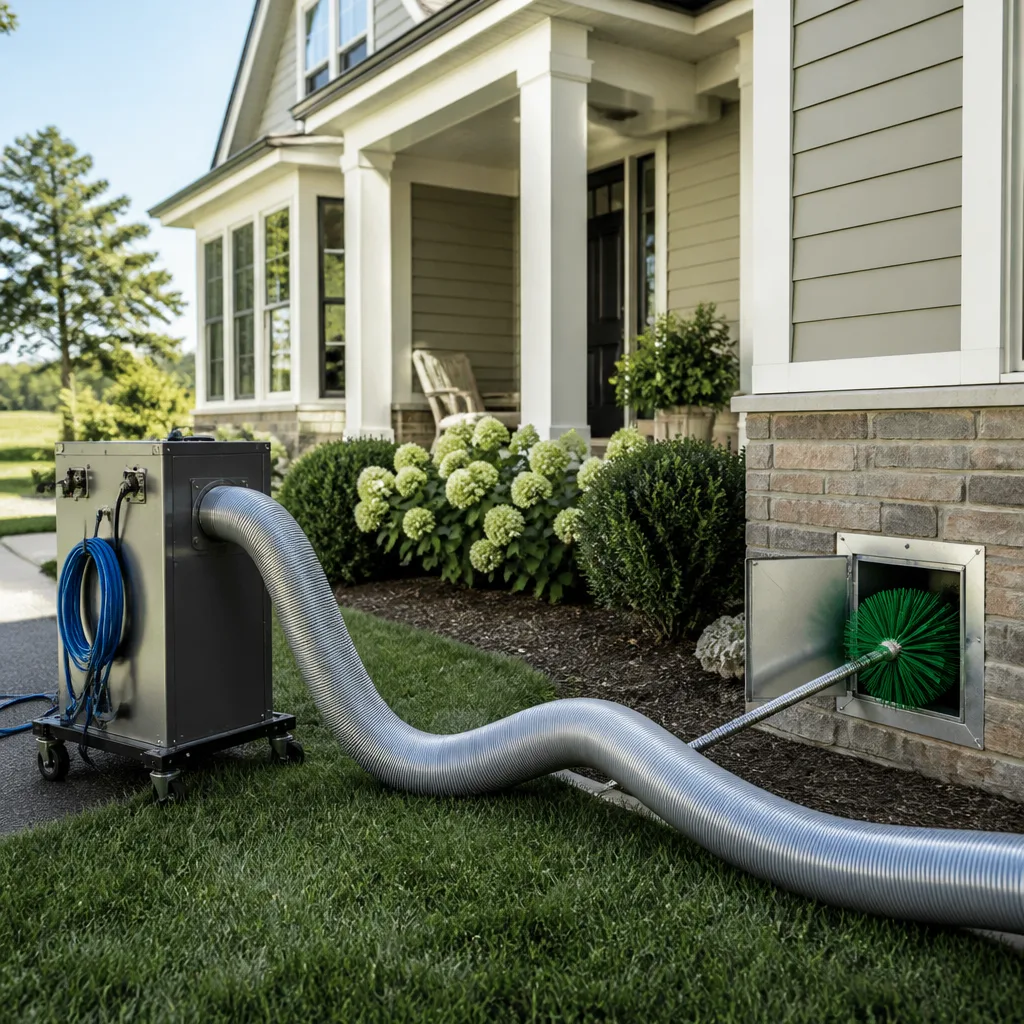 Whole-home duct cleaning
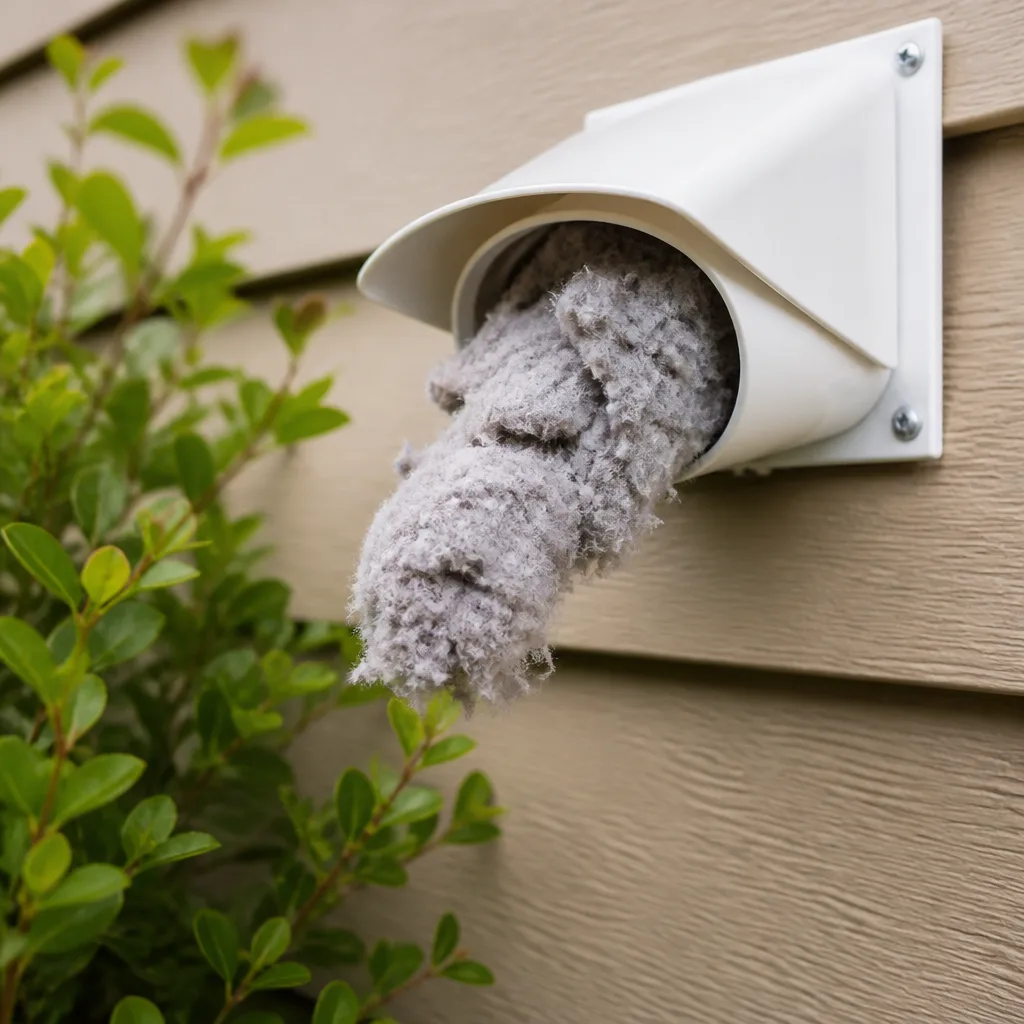 Dryer vent cleaning
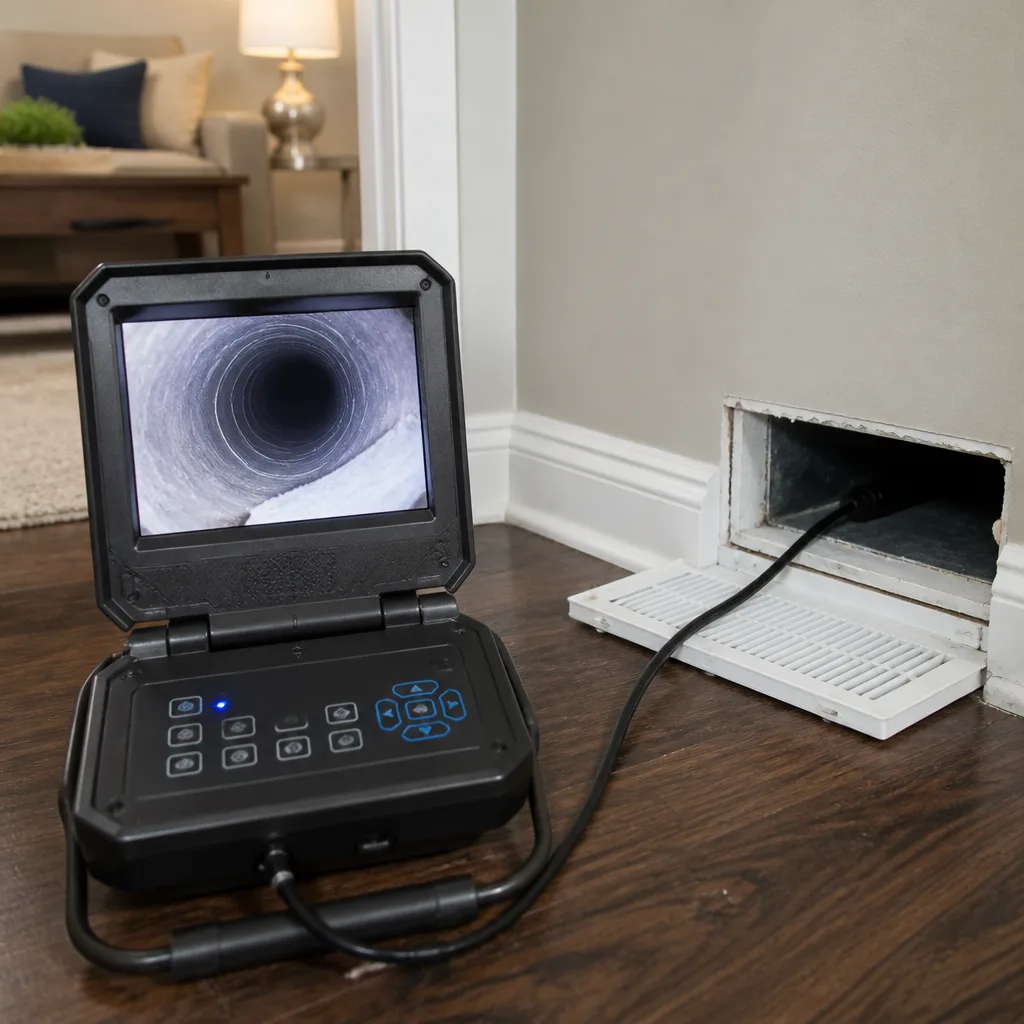 Camera inspection
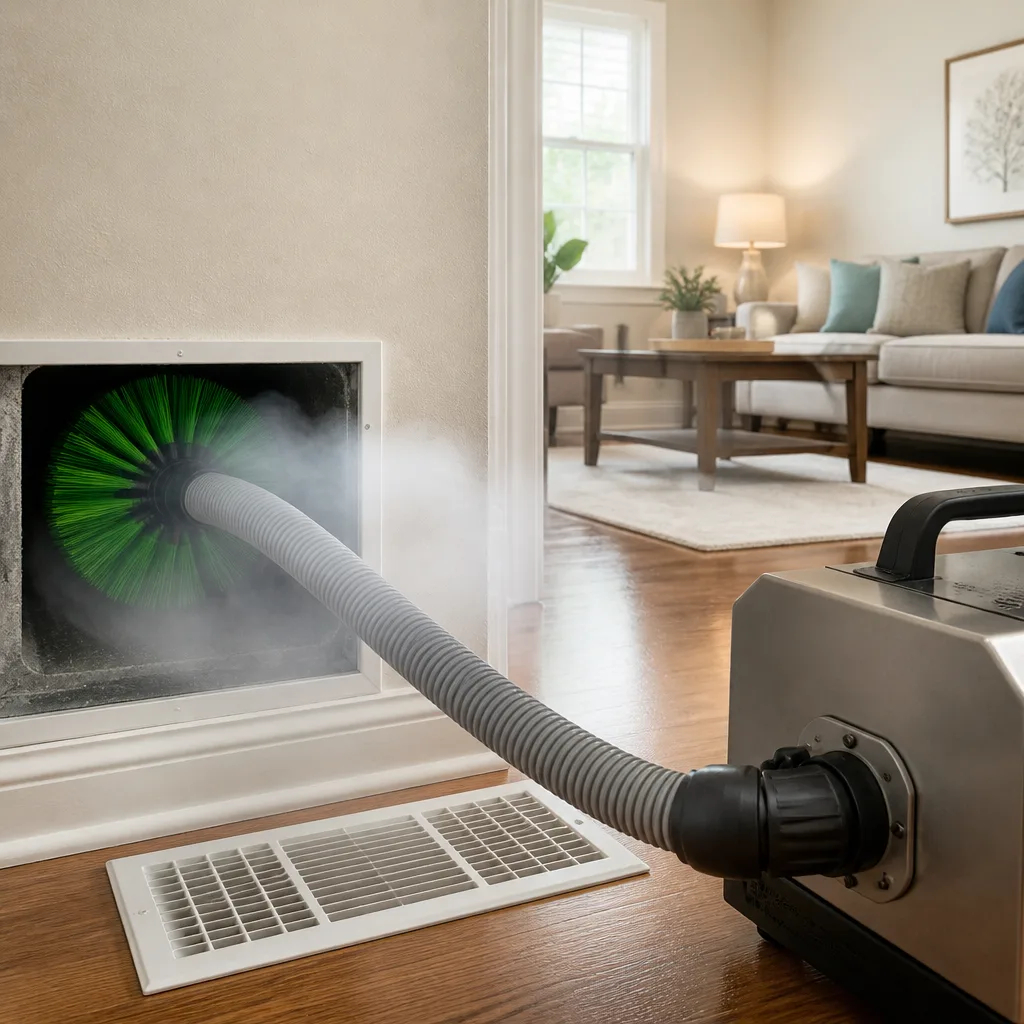 Sanitizing & deodorizing
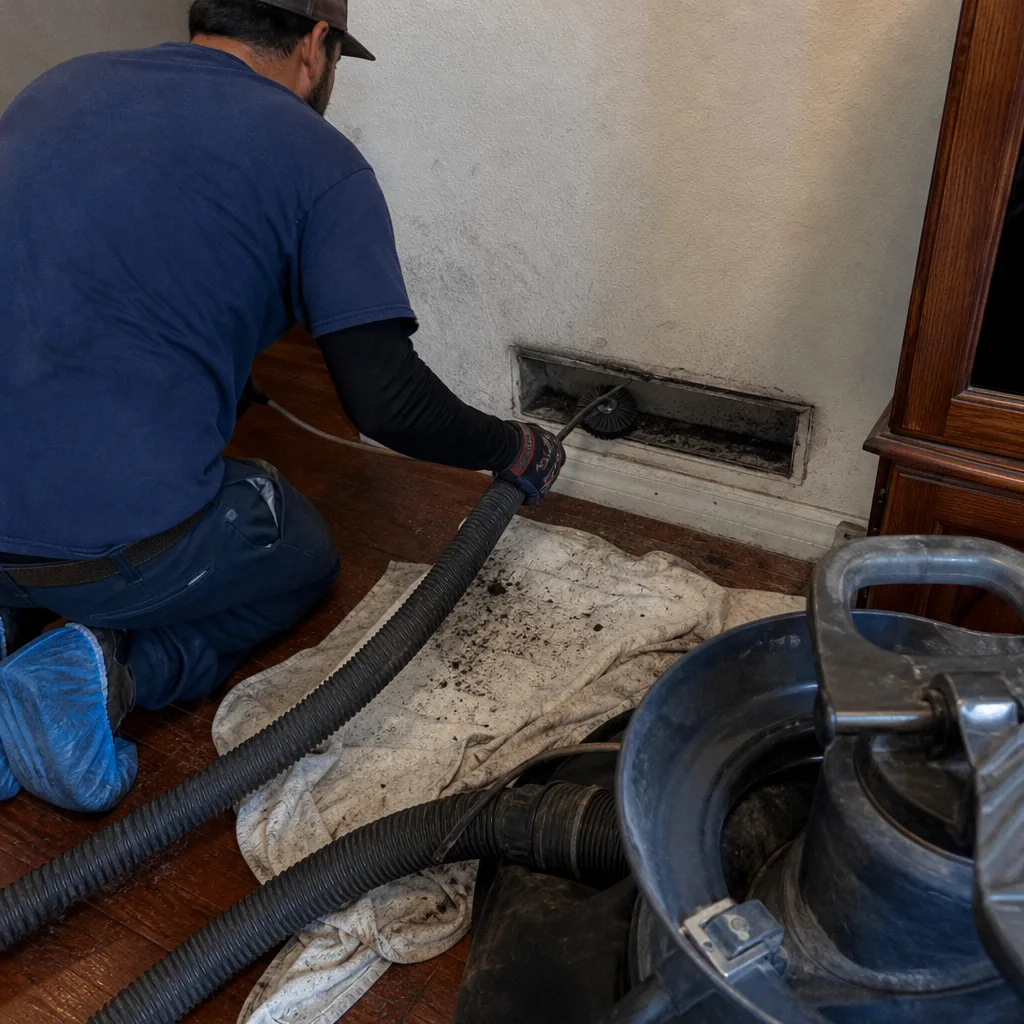
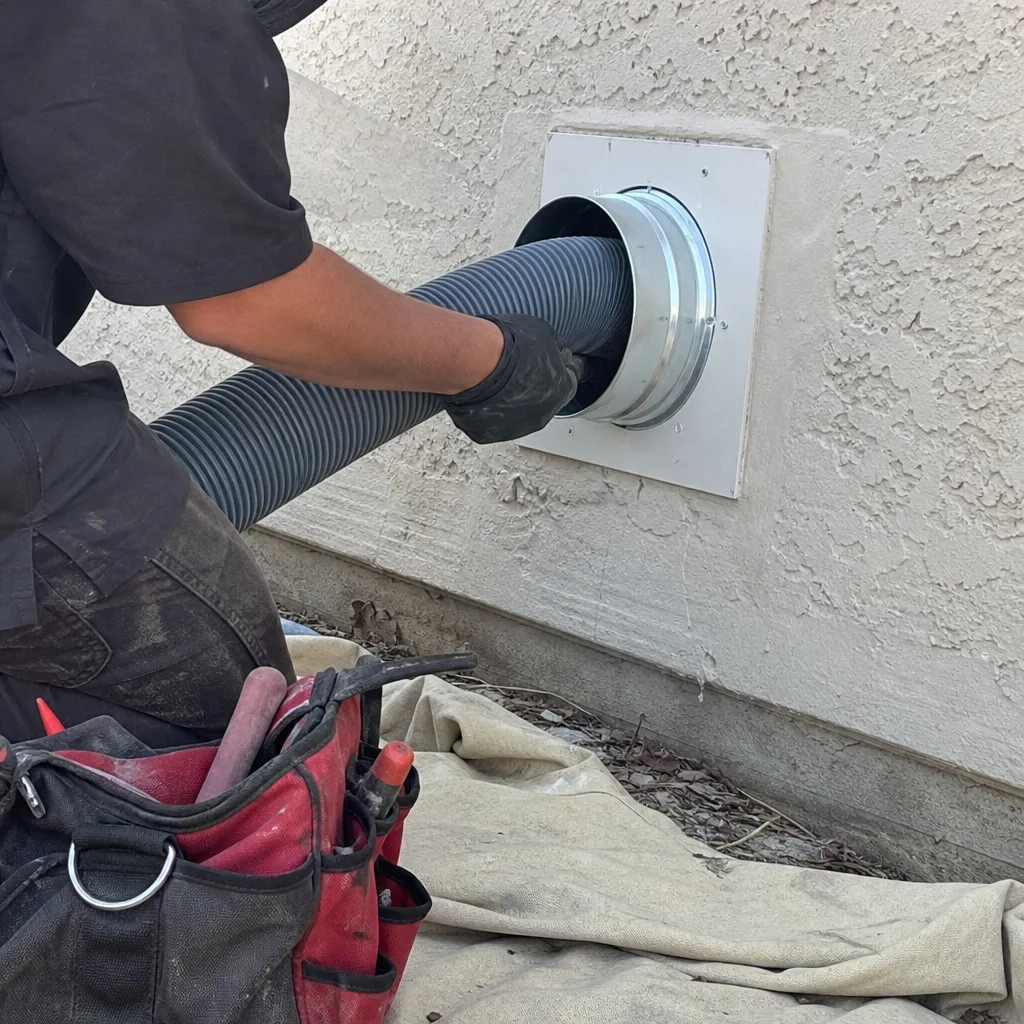
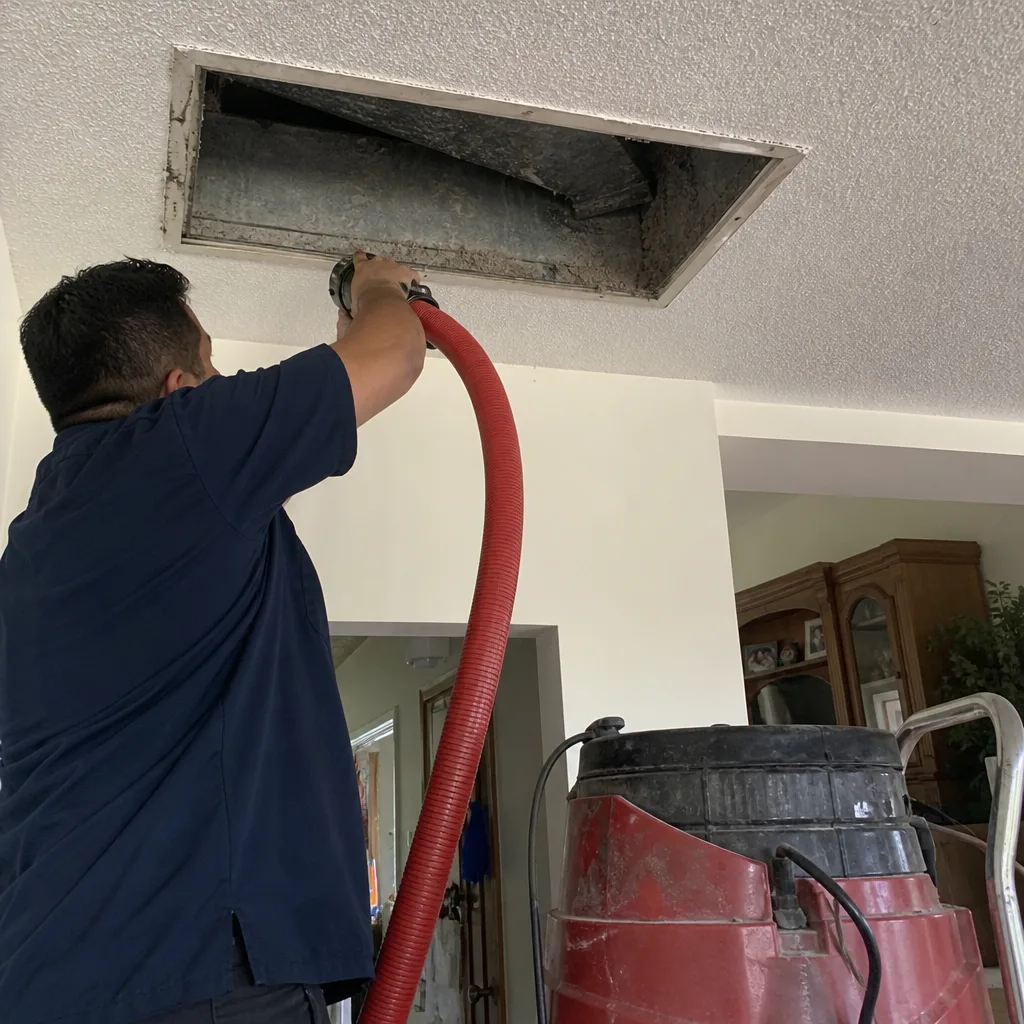
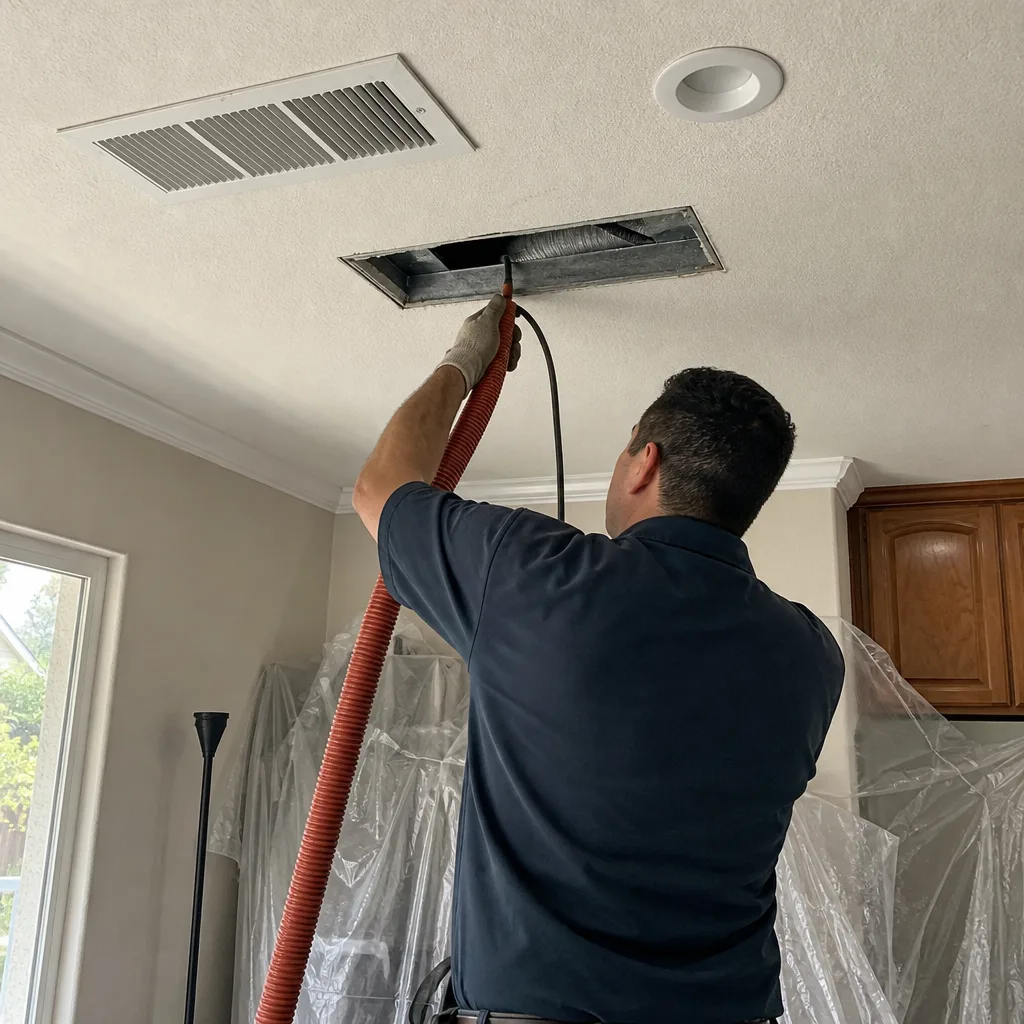
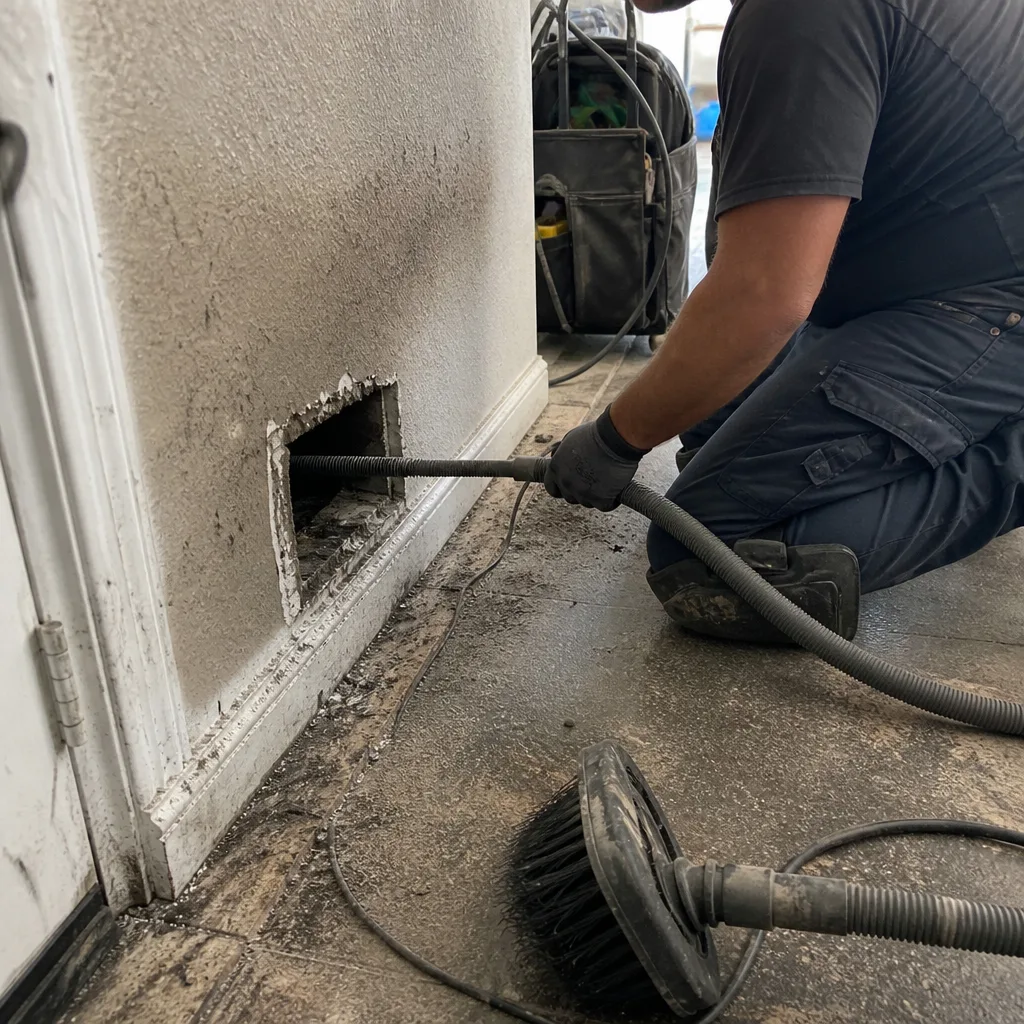
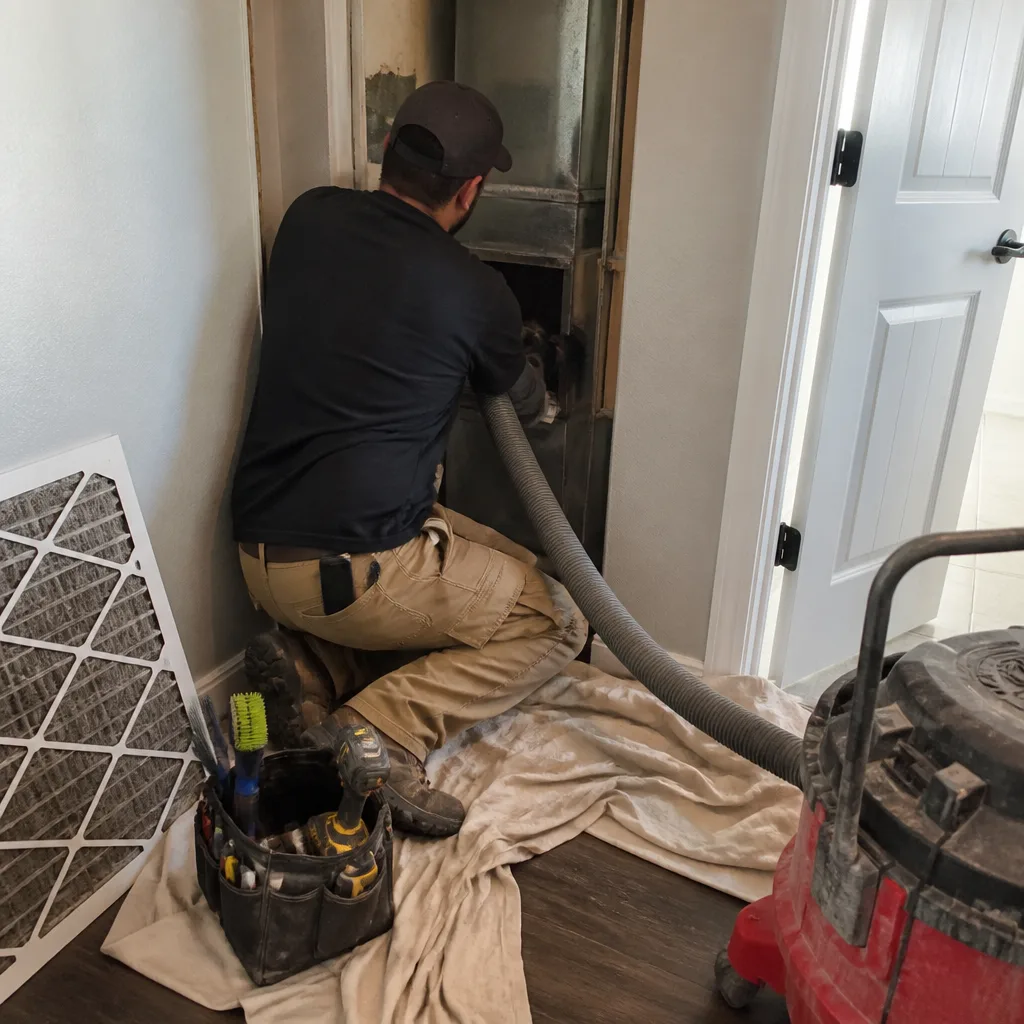
Whole-system duct and dryer vent check with before-and-after photos - you see exactly what came out of your vents
That "$99 whole-house special" is a bait ad - the real number appears once they are in your hallway, or the "clean" is a shop-vac at the register. We photograph the inside of your ducts before and after instead.
Air Duct Cleaning Warning Signs: A Rancho Cordova Homeowner’s Reference Guide
Dust on a register grille can mean your ducts need cleaning, your filter is wrong for your system, your duct has a breach pulling from an unconditioned space, or your HVAC is oversized and short-cycling. These are four different problems. Treating them all with a duct cleaning is how Rancho Cordova homeowners spend money and stay frustrated. Most warning sign articles stop at “dusty vents” without explaining what’s actually causing what you’re seeing, smelling, or paying for on your SMUD bill. This guide gives you a diagnostic framework, not just a checklist of things to worry about, so you can tell a cleaning problem from a mechanical failure before you spend a dollar on Air Duct Cleaning services.
Quick Answer
The clearest warning signs that your Rancho Cordova ducts need cleaning are visible dust accumulation on register grilles within days of dusting, musty or burning odors that appear when the HVAC runs, allergy symptoms that worsen indoors, and a steady rise in cooling costs during Sacramento Valley summers without a matching rise in outdoor temperatures. If you see mold at a register, have rodent odor in the system, or notice your dryer taking longer than 45 minutes per load, those are separate problems with separate solutions. Cleaning fixes contamination. Repair fixes breaches. Knowing which one you’re looking at changes everything.
Styles & brands we work with
- Whole-home duct cleaning
- Dryer vent cleaning
- Camera inspection
- Sanitizing & deodorizing
Table of Contents
- Visible Signs: What You’re Actually Looking At
- Smell Profiles: What Each Odor Is Telling You
- Airflow Problems and Odd Noises: Mechanical vs. Contamination
- The Utility Bill Warning Sign Rancho Cordova Homeowners Miss
- Allergy Symptoms That Track Your HVAC Cycle
- Dryer Vent Warning Signs: The Fire Risk Indicators
- The Role of Your Air Filter in What You’re Seeing
- Common Mistakes to Avoid
- When to Call a Professional
- Frequently Asked Questions
Visible Signs: What You’re Actually Looking At
When a Rancho Cordova homeowner sees gray fuzz around a ceiling register, the first instinct is to assume dirty ducts. Sometimes that’s exactly right. Often it’s not. Dust at the register is the endpoint of a chain of causes, and the cause determines the fix.
Dust that reappears within three to five days of wiping the grille typically points to one of four causes. First, the ducts genuinely hold accumulated debris that the airflow is carrying to the room. Second, the filter is too low a MERV rating for your household, meaning the blower is recirculating particles the filter should have caught. Third, there’s a breach in the return duct pulling unfiltered air from an attic or crawl space. Fourth, the system is oversized and short-cycling, never running long enough for the filter to do meaningful work while stirring up dust each time it kicks on.
Here’s the diagnostic difference: if the dust is evenly distributed across every register in the house, the contamination is likely in the duct system itself or the filter. If dust is heavy on one register and light on others, you’re probably looking at a local breach near that branch line or a disconnected section of duct. That’s an air duct repair in Rancho Cordova situation, not a cleaning one. We’ve seen breaches in older Rancho Cordova homes where a return duct separated at a joint in the attic, and the system spent years pulling hot, dusty attic air directly into the house. No amount of cleaning addresses that. The fix is mechanical, and it’s usually a one-visit repair.
Visible mold at a register is a different category entirely. Surface dust is gray or brown and wipes off dry. Mold is black, green, or white, appears patchy or spotted, and often feels damp or leaves a stain on the grille. Mold on the register itself can sometimes be surface condensation from a cold supply register meeting warm Sacramento summer air in a humid room like a bathroom. If the mold is only on the grille and not inside the visible duct opening behind it, cleaning the grille and improving room ventilation may resolve it. If there’s visible mold growth inside the duct or on multiple registers, you have a moisture problem in the system, not just a cleanliness problem. That can come from a condensate drain issue, a duct leak pulling humid air, or a poorly insulated section of duct sweating in the attic. The correct first step is identifying and correcting the moisture source before cleaning the contaminated surfaces. Otherwise, the mold returns within a season.
Smell Profiles: What Each Odor Is Telling You
Your nose is a more specific diagnostic tool than most homeowners realize. Different duct problems produce different, identifiable smell profiles. Learning to distinguish them tells you whether you’re dealing with contamination, mechanical failure, or pest intrusion.
Musty, earthy, or damp smell when the system runs. This is the classic moisture and microbial growth signature. It’s most noticeable in the first minute of system operation, when the blower pushes air across damp surfaces that have been sitting. In Rancho Cordova, this smell often appears in late summer after months of air conditioning, when condensation has had time to accumulate in low spots of flex ducts or around the evaporator coil. It fades slightly as the system runs, but returns after the system has been off. This is a contamination issue, but only part of it is in the ducts. The coil and drain pan are often the primary source. A proper cleaning includes the supply plenum, return boots, and coil area, not just the duct runs.
Burning, acrid, or electrical smell when the heat runs. If you notice this on the first fall morning when the furnace kicks on after a summer of disuse, it may be nothing more than accumulated dust burning off the heat exchanger. That smell should dissipate within 30 to 60 minutes. If it persists, gets stronger, or has a sharp plastic or electrical edge to it, shut the system down and have it inspected. Persistent burning odors can mean debris in the ductwork near the heat exchanger, an overheating blower motor, or a component failure. This is a safety issue first and a cleaning issue second. Do not run the system while that odor is present. A trained professional should evaluate it before you use the heat again.
Rodent or ammonia smell, especially in specific rooms. This is pest intrusion. Mice and rats enter duct systems through gaps at boots, separated duct joints, or breaches in the return. They nest, they leave droppings, and when they die, the smell is unmistakable. This odor tends to be localized to one or two rooms rather than the whole house because the intrusion point leads to specific branch lines. The cleanup requires removing the contaminated material, sealing the entry points, and sanitizing the affected duct sections. We use professional-grade equipment rather than improvised tools when we handle this kind of job because the contamination is more than superficial dust. If you hear scratching in the ceiling cavities at night along with the odor, the pest problem is active and should be addressed by pest control before duct cleaning.
Rotting organic smell that doesn’t change with the seasons. This can be a dead animal in the duct or plenum, or organic debris that got pulled into the return. In Rancho Cordova homes with side-yard returns at ground level, you’d be surprised what finds its way in: leaves, grass clippings, even small reptiles. The return grille acts like a vacuum inlet when the system runs. This smell profile is constant and localized. Cleaning is the fix, but the entry point needs to be identified and sealed or the problem repeats.
Airflow Problems and Odd Noises: Mechanical vs. Contamination
Most homeowners lump airflow issues in with “ducts need cleaning,” but airflow restriction and temperature inconsistency usually point to mechanical problems. Understanding the difference saves you from paying for a cleaning that won’t fix what’s wrong.
Weak airflow from one or two registers while others blow normally. This is rarely a cleaning issue. If contamination were limiting airflow, it would affect the whole system fairly evenly. A single weak register points to a collapsed flex duct, a disconnected branch line, a crushed section of duct in the attic (common in Rancho Cordova homes where storage has shifted duct runs), or a damper that’s been closed or fallen shut. One way to confirm: remove the register and reach into the boot. If you feel a strong draft at the opening but weak air at the grille, the grille itself may be too restrictive. If the air is weak at the boot itself, the problem is upstream in that branch line. That’s a repair call, not a cleaning call.
Rooms that are consistently hotter or cooler than the rest of the house. In a Sacramento Valley summer, a room that runs eight degrees warmer than the rest of the house is often an airflow balancing or duct sizing issue. It can also be an insulation problem: a south-facing room with large windows and poor attic insulation will always struggle against a system that’s sized for the house as a whole. Here’s the tell: if the room is warm in summer and cold in winter, the duct serving that room is likely undersized or restricted. If the room is warm in summer but fine in winter, the problem is more likely solar gain and insulation. Cleaning the ducts will not change either scenario in a measurable way.
Whistling, rattling, or banging when the system runs. Whistling usually means air is being forced through a restriction: a closed damper, an undersized return, a collapsed flex duct, or a filter that’s too restrictive for the system. Rattling often points to a loose register, a separated duct joint, or debris bouncing in the duct. Banging, especially when the system starts or stops, is usually a duct expansion issue or a damper slamming. These are addressable. None of them are resolved by cleaning. A professional air duct cleaning in Rancho Cordova will often identify these mechanical issues during an inspection, but they’re separate work items with separate fixes. When a company can diagnose, clean, and repair, you get a complete answer in one visit instead of a cleaning followed by a referral to someone else.
The Utility Bill Warning Sign Rancho Cordova Homeowners Miss
Your SMUD bill is a diagnostic instrument if you know how to read it. In Rancho Cordova’s climate, cooling costs dominate the year, and duct contamination has a measurable effect on system efficiency that shows up in the data before you ever see dust on a register.
Here’s the mechanism: when duct interiors accumulate a layer of debris, two things happen. First, the insulating boundary between the airflow and the duct wall becomes less efficient, so conditioned air loses temperature as it travels through unconditioned spaces like attics. Second, airflow resistance increases as the effective duct diameter shrinks, which means the blower works harder to move the same volume of air. In Sacramento Valley summers, where your AC runs daily for months, this compounds.
What to look for: compare your July through September bills year over year. If your cooling costs are rising 10 to 15 percent annually without a matching increase in outdoor temperatures, and you haven’t changed your thermostat habits, you’re losing efficiency somewhere. Duct contamination is one of the few causes that produces a gradual, continuous decline rather than a sudden jump. A breached duct in the attic produces a sharper increase. A failing compressor produces different symptoms entirely (lower cooling output per hour of runtime).
The practical diagnostic step is tracking your kWh consumption during a stable weather week, then comparing it to the same week the prior year. If temperatures match and usage is up, something in the system is working harder than it used to. Duct buildup can account for a real portion of that. We’ve measured pressure differences in Rancho Cordova systems where a return-side restriction was causing the blower to draw more amperage. The homeowner’s only symptom was a $40 higher average summer bill. After cleaning and correcting the restriction, usage normalized. That’s the kind of problem that never announces itself loudly.
Allergy Symptoms That Track Your HVAC Cycle
Rancho Cordova sits in a valley that traps pollen from spring grass, fall weed, and winter tree seasons. The air outside during allergy season is often brutal. But there’s a difference between outdoor allergies and indoor symptoms that worsen when your system runs. Learning to distinguish them tells you whether your ducts are part of the problem.
The key question: do your symptoms track the HVAC cycle? If you wake up congested every morning during spring regardless of whether the AC runs, that’s likely outdoor pollen. Sacramento Valley pollen counts peak in the early morning, and you’re breathing that air before your system even cycles on. If, however, your symptoms spike within 20 to 30 minutes of the system starting, that points to irritants being circulated from inside the system. Dust, pollen that’s been pulled into the ducts and redistributed, pet dander, and biological material from past moisture issues can all accumulate in duct runs and then be pushed into the living space every time the blower engages.
There’s also the filter variable. A filter that’s too low a MERV rating for your household’s allergen load doesn’t protect you from what’s already in the air. A filter that’s too restrictive for your system can actually increase energy use and reduce airflow, which creates its own problems. If you own a whole-home air quality system from Honeywell or Aprilaire, your filtration and, in some cases, whole-home dehumidification are part of the picture. Our technicians work alongside these systems regularly, because the duct system doesn’t exist in isolation from the filtration equipment attached to it. When the duct interior is heavily contaminated, it works against the filtration system you’ve invested in. Cleaning restores the baseline the filter expects to work from.
One more practical test: change your filter to a fresh one of the same MERV rating. If your indoor symptoms persist at the same intensity with a clean filter, the load is coming from downstream of the filter, which mostly means the supply ducts themselves or the coil. If symptoms improve dramatically, the filter was doing the heavy lifting and your ducts may still be fine. This single test costs you the price of a filter and gives you real diagnostic information.
Dryer Vent Warning Signs: The Fire Risk Indicators
Dryer vent cleaning gets treated as an add-on, but it’s the most safety-critical component of duct maintenance in any Rancho Cordova home. Lint accumulation inside the dryer vent is a documented residential fire hazard. The National Fire Protection Association identifies dryers as a leading cause of home fires, with lint buildup being the primary ignition factor. This isn’t an airflow convenience issue. It’s a fire prevention issue.
Warning sign one: extended dry times. A load that used to dry in 40 minutes and now takes 60 to 75 minutes is your earliest and most reliable indicator. The dryer still generates heat. The moisture just can’t escape efficiently because the vent is partially blocked. You’re paying for extra drying cycles while lint accumulates inside the vent pipe behind your walls.
Warning sign two: weak exterior vent flow. Go outside to the vent termination while the dryer runs. You should feel a strong, warm, humid airflow. If the flow feels weak, or if the flapper barely opens, the vent is restricted somewhere. In Rancho Cordova, vent runs often travel through attics or crawl spaces with multiple elbows. Every bend is a lint collection point.
Warning sign three: laundry room heat buildup. If the laundry room becomes noticeably warm and humid during a drying cycle, the dryer is radiating heat into the room rather than exhausting it. This also means moisture is being released into your home, which can create secondary problems: mold in wall cavities, peeling paint, and in some cases, moisture damage around the dryer itself.
Warning sign four: burning smell during dryer operation. A hot, acrid smell from the laundry area or near the vent exit means lint is close to igniting or has already begun to smolder. Stop the dryer immediately and do not run it again until the vent has been inspected and cleaned. This is the last warning you get before a fire.
One more sign that gets missed: the dryer is hot to the touch on the top or sides after a cycle. Dryer surfaces get warm normally, but excessive heat means the thermal limit is being tested. The dryer’s high-limit thermostat is designed to shut the heat off when internal temperatures spike, but if lint buildup prevents proper airflow, the safety systems are working harder than they should be. A properly vented dryer should not feel alarmingly hot. When we perform dryer vent cleaning in Rancho Cordova, we treat it as fire prevention, not as a convenience service. The difference matters in how carefully the work is done.
The Role of Your Air Filter in What You’re Seeing
Before you schedule anything, understand what your filter is doing and what it isn’t. The filter in your HVAC system exists to protect the equipment from debris, not to clean the air in your home. Its secondary function, depending on the MERV rating, is to capture some airborne particles. But the filter only captures what reaches it.
Here’s a sequence of checks to work through before blaming your ducts:
- Confirm the filter is present and correctly oriented. A missing filter means unfiltered air has been drawn directly into your system and distributed through your house. The arrow on the filter frame should point in the direction of airflow, toward the furnace or air handler.
- Check the filter’s MERV rating against your system’s design. A MERV 8 filter catches larger particles but lets fine dust through. A MERV 13 or higher catches much more but can restrict airflow on systems not designed for it. This is where a professional evaluation helps: some Rancho Cordova homes have older systems that can’t handle a high-restriction filter, and the result is a system that struggles to move air.
- Look at the filter’s condition after 30 days. If the filter is visibly clogged with gray mats of dust, the system is moving a lot of particulate. That particulate either comes from inside the ducts or is being drawn in from unconditioned spaces through breaches. A clean filter that’s clogged after 30 days in an average household is a signal that something upstream is contributing more dust than normal.
- Check the filter frame fit. Air bypasses a filter that doesn’t seal in its frame. If the filter is too small for the opening, air flows around it, carrying dust into the supply side. This is a common issue in older Rancho Cordova homes where original filter slots don’t match the replacement filters homeowners buy at the hardware store.
Your filter is a diagnostic surface. It captures a record of what’s moving through your system. A professional inspecting your system can read a lot from the filter condition, from the color of the dust to the presence of fibers that indicate where the contamination is coming from. Before spending on a duct cleaning, spend five minutes looking at your filter. It will either exonerate the ducts or indict them.
Common Mistakes to Avoid
- Treating every symptom as a duct cleaning problem. Dust at the register, weak airflow, temperature imbalance, and odd smells all have different root causes. A duct cleaning fixes contamination, not mechanical failures. Diagnose before you spend.
- Ignoring a burning smell because it “might just be dust.” Dust burn-off on first heating cycle is normal. A persistent burning smell is not. Shut the system down and get it checked before running the heat again.
- Assuming a moldy register means mold throughout the system. A single moldy grille in a bathroom often comes from condensation in that room. Mold inside the duct opening or on multiple registers is a systemic moisture problem. The response is different in each case.
- Believing a higher MERV filter will solve dirty ducts. A filter only captures what reaches it. It doesn’t clean the interior surfaces of your ducts. If your ducts hold years of accumulated debris, a new filter won’t make that go away.
- Neglecting dryer vent maintenance because the dryer “works fine.” The scariest warning signs are the quiet ones. A dryer that takes 70 minutes per load is telling you the vent is restricted. By the time the burning smell arrives, you’re already in emergency territory.
- Paying for a duct cleaning without an inspection first. Any reputable company should inspect the system, show you the condition of the ducts, explain what they’re seeing, and give you a fixed scope and price before work begins. If a company gives you a per-vent price over the phone without seeing the system, that’s a bait-and-switch pattern.
- Assuming all duct cleaning companies use the same equipment. They don’t. The difference between repurposed consumer vacuums and purpose-built duct cleaning platforms is measurable in what gets removed from your system. Ask what’s on the truck before you book.
When to Call a Professional
Some situations are obvious: persistent burning smells, visible mold inside ducts, rodent activity, a dryer vent that’s clearly blocked. Those warrant a call now. Others are quieter: rising cooling bills over multiple seasons, allergy symptoms that track your system’s cycle, dust that returns within days of cleaning. If you’ve worked through the diagnostic steps in this guide and the evidence points toward your ducts, a professional inspection is the next step – though you may also find our The Complete Air Duct Cleaning Guide for Rancho Cordova Homeowners helpful for deeper context. If the problem points toward a mechanical failure instead, you need a company that can repair as well as clean, so the problem actually gets fixed rather than papered over.
Duct Cleaning Rancho Cordova offers free estimates in Rancho Cordova. Call (877) 752-4148 to schedule an inspection. We’ll look at the system, tell you what we’re seeing, and give you a fixed price before any work begins. If your ducts don’t need cleaning, we’ll tell you that too.
Frequently Asked Questions
If dust appears evenly on all registers within days of cleaning, you see visible accumulation inside the duct openings, or you smell musty odors when the system runs, you’re probably looking at duct contamination. If the problem is weak airflow at one register, a persistent burning smell, or temperature imbalance between rooms, you’re more likely dealing with a mechanical issue like a collapsed duct, a closed damper, or an equipment problem. A professional inspection with a camera can confirm what’s happening inside the system before you spend money on a service that may not address the root cause.
In the Rancho Cordova and greater Sacramento market, whole-system duct cleaning for a typical single-family home usually runs between $450 and $900, depending on the number of systems, accessibility of the ductwork, and the level of contamination. The honest answer is that a legitimate company will inspect the system and give you a fixed price before work begins, not a per-vent teaser rate that multiplies once the technician arrives. Call (877) 752-4148 for an exact quote, and make sure it’s a price per system, not per vent.
Low quotes usually come from companies using equipment that isn’t designed for professional duct cleaning, or from a bait-and-switch model where a low introductory price becomes a much larger invoice once the technician is in your home. For guidance on vetting providers, see our Choosing the Right Air Duct Cleaning Brand: A Buyer’s Guide for Rancho Cordova. The cost difference also reflects what’s actually being done: surface-level brushing versus full-system cleaning with containment. A company running professional-grade Rotobrush or Nikro systems with HEPA-level containment from Abatement Technologies has real equipment costs. The quote should reflect a real job with a defined scope, not a teaser number.
Reputable duct cleaning companies provide before-and-after photos of the interior of your ducts, taken through the access points they cut or open. You should see the difference. Some companies also provide a post-cleaning inspection you can review with the technician. If a company can’t or won’t show you what the ducts looked like before and after, treat that as a red flag. The work happens in spaces you can’t see, which makes photo documentation a non-negotiable part of a trustworthy job.
In the Sacramento Valley climate, where air conditioning runs daily for five to six months a year, most homes benefit from a professional duct cleaning every three to five years. Homes with pets, smokers, occupants with significant allergies, recent renovation work, or prior pest intrusion may need cleaning more frequently. The key variable isn’t time. It’s the condition of the system. An inspection tells you whether you need it now or can wait.
The dust you see on registers and furniture is only the portion heavy enough to settle. The fine particulate moving through your system includes pollen, dander, dust mite byproducts, and particles small enough to stay suspended in the air you breathe. Duct interiors can hold a substantial reservoir of this material, and the system redistributes it every time the blower runs. Cleaning removes the reservoir. Your filter captures what enters the system going forward. Both parts matter.
The Bottom Line
Warning signs exist to give you time to act before a problem becomes expensive or dangerous. Dust at the registers, smells that change with the seasons, airflow that doesn’t match room to room, and utility bills that climb without explanation all carry information. The skill is in reading them correctly. A duct cleaning is the right call when the evidence points to contamination. A repair is the right call when the evidence points to mechanical failure. A dryer vent service is the right call when the lint is building up behind your walls. In each case, the goal is the same: a definitive answer, a fixed price, and a system that works the way it should. If you’re in Rancho Cordova and something feels off with your ductwork, call (877) 752-4148 and get it diagnosed properly.
Written by the team at Duct Cleaning Rancho Cordova, serving Rancho Cordova since 2013. Explore more guides & resources from our team.
See the difference
 Before
 After
 Before
 After
 Before
 After