
Last updated November 2, 2026
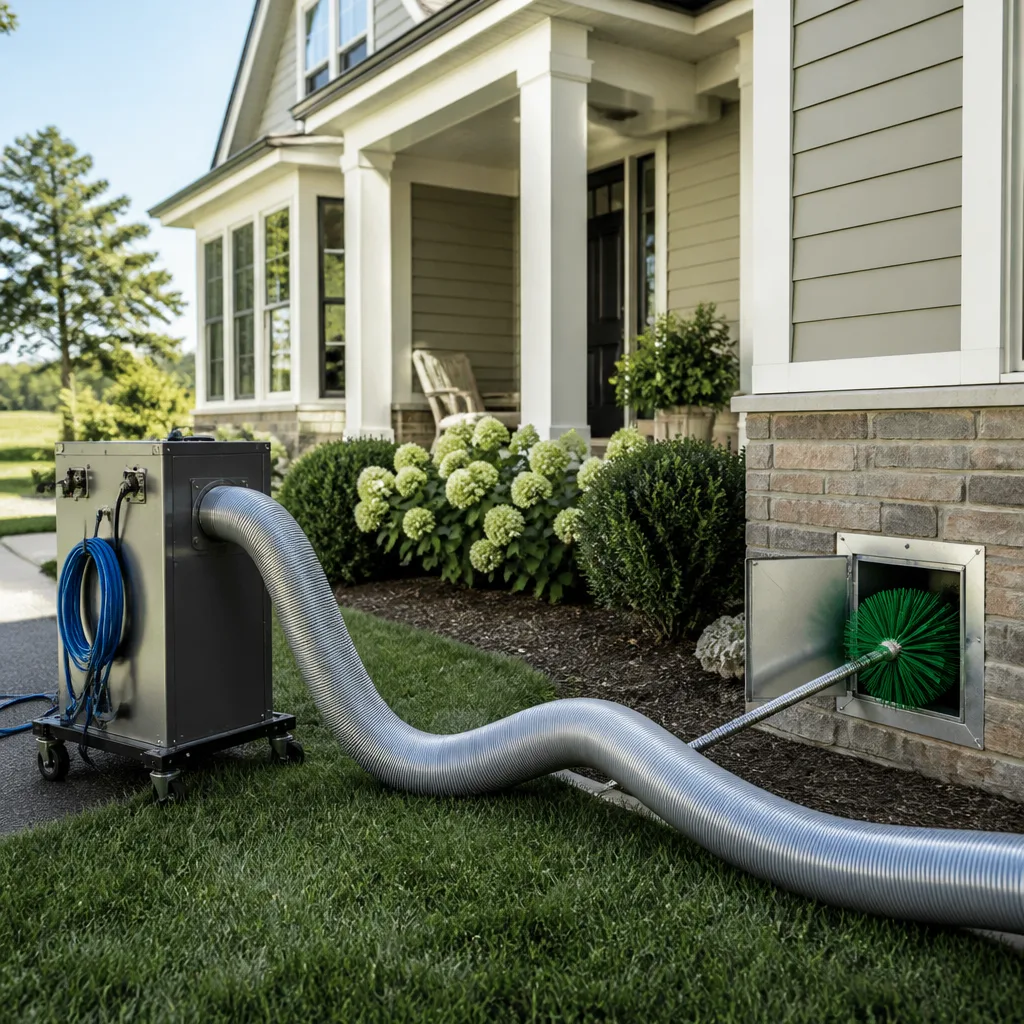 Whole-home duct cleaning
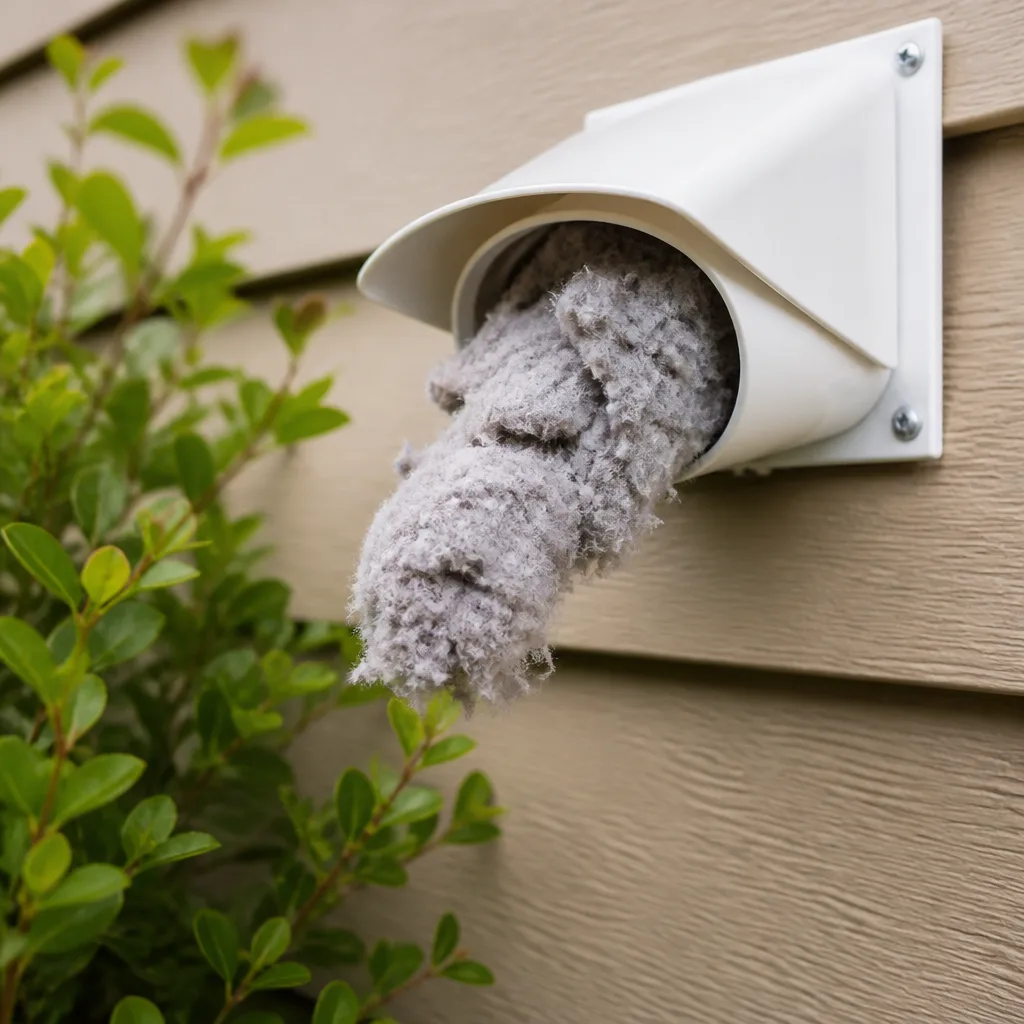 Dryer vent cleaning
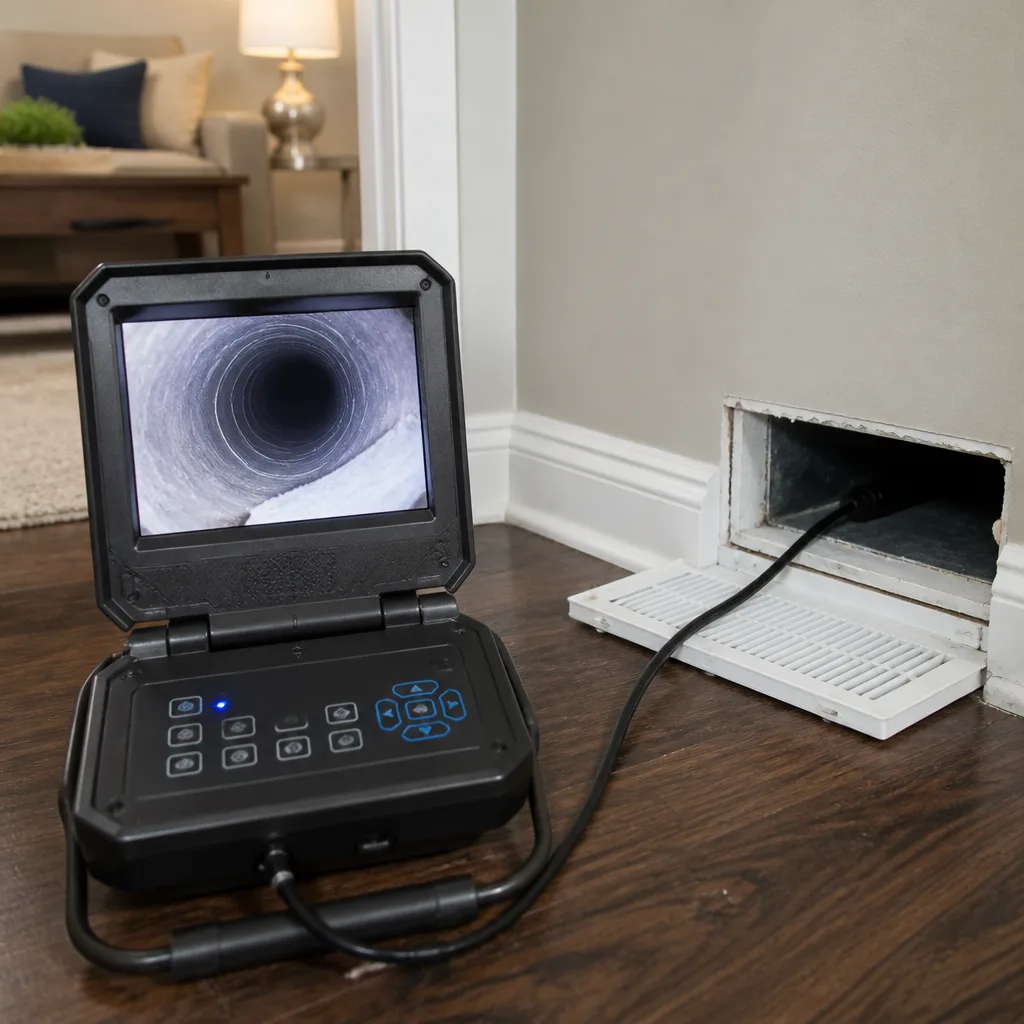 Camera inspection
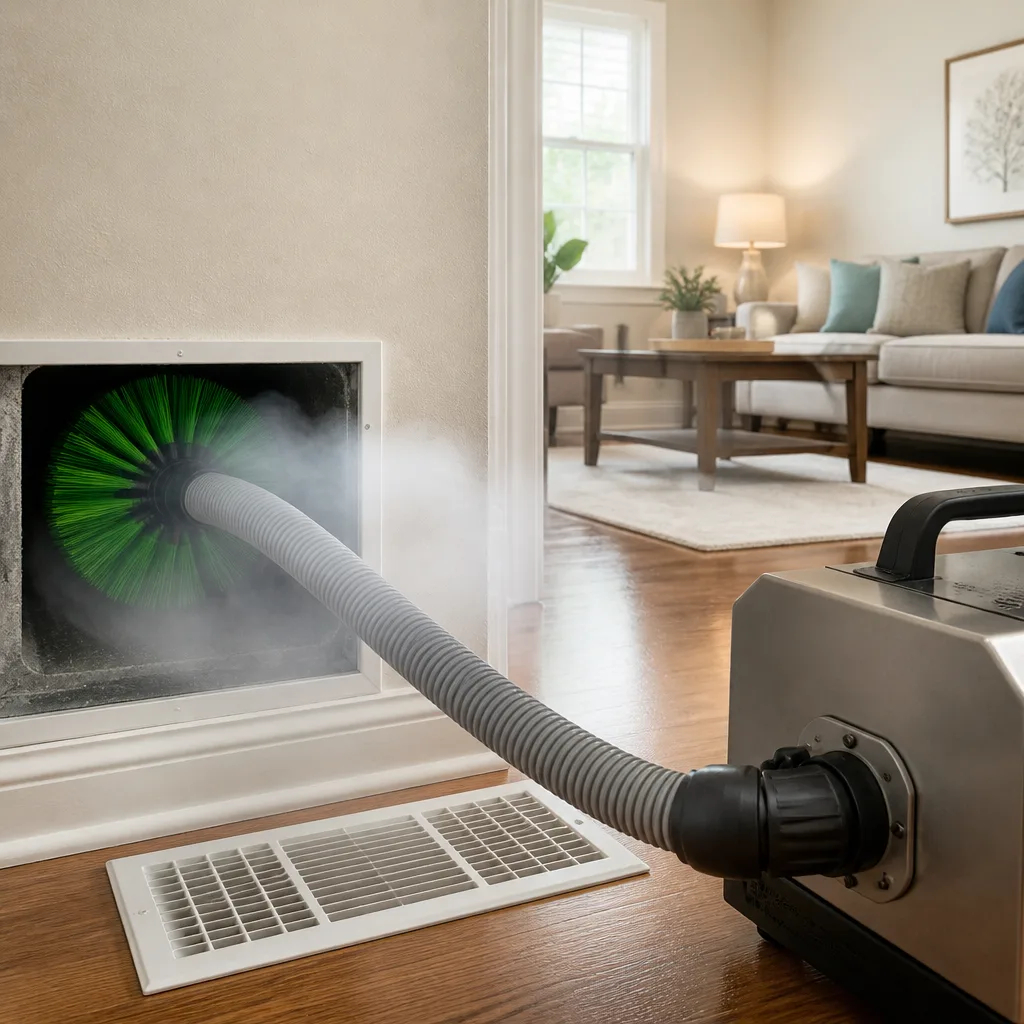 Sanitizing & deodorizing
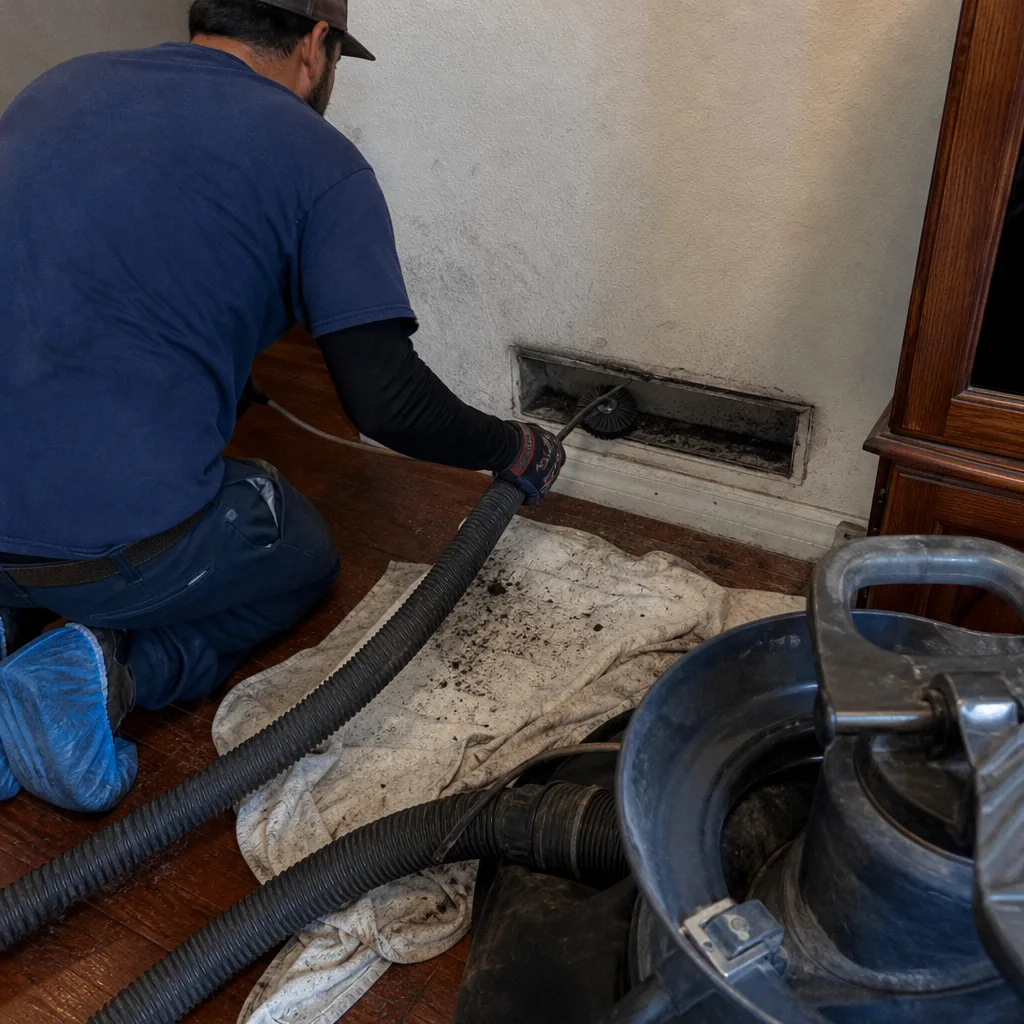
Whole-system duct and dryer vent check with before-and-after photos - you see exactly what came out of your vents
That "$99 whole-house special" is a bait ad - the real number appears once they are in your hallway, or the "clean" is a shop-vac at the register. We photograph the inside of your ducts before and after instead.
The Complete Air Duct Cleaning Guide for Rancho Cordova Homeowners
Rancho Cordova sits in a valley that routinely hits triple digits and pulls wildfire smoke from three directions, yet most duct cleaning advice was written for a Midwest ranch house with a basement. That mismatch costs local homeowners money. This guide is built specifically around Rancho Cordova’s housing stock, the Sacramento Valley’s dust patterns, and the seasonal cycles that determine when and how your ducts should be cleaned. We’re going to cover what actually happens inside your ductwork, why local conditions matter more than generic checklists suggest, what a legitimate Air Duct Cleaning looks like, and how to avoid the bait-and-switch operators who’ve given this industry its reputation.
Styles & brands we work with
- Whole-home duct cleaning
- Dryer vent cleaning
- Camera inspection
- Sanitizing & deodorizing
Quick Answer
Air duct cleaning in Rancho Cordova typically costs between $350 and $800 for a full single-family home, depending on square footage, number of returns, and how long it’s been since the last cleaning. Most Rancho Cordova homes should schedule cleaning every 3 to 5 years, though homes near open fields, recent construction zones, or properties that experienced wildfire smoke intrusion may need service sooner. The most important decision isn’t who charges the least, it’s whether the company uses source-removal equipment rather than a contact vacuum, and whether they inspect before quoting. For a deeper dive, see our DIY vs Professional Air Duct Cleaning: The Rancho Cordova Homeowner’s Decision Guide.
Table of Contents
- Why Rancho Cordova Is Different
- What Actually Accumulates in Your Ducts
- How Often Should You Clean Your Air Ducts in Rancho Cordova?
- Air Duct Cleaning Methods Compared: Source Removal vs. Contact Vacuum
- Duct Materials in Rancho Cordova Homes and Why They Matter
- What a Legitimate Pre-Cleaning Inspection Should Include
- What Does Air Duct Cleaning Cost in Rancho Cordova?
- When Cleaning Isn’t Enough: Duct Repair and Sealing
- Dryer Vents and Fire Safety: A Separate Service That Deserves Attention
- Common Mistakes to Avoid
- When to Call a Professional
- Frequently Asked Questions
- The Bottom Line
Why Rancho Cordova Is Different
Rancho Cordova’s climate creates a duct-cleaning environment that most national guides simply don’t address. The Sacramento Valley is a topographical bowl. Air settles here. During summer, inversion layers trap particulate matter close to the ground, and when the Delta breeze arrives each evening, it pushes dust, pollen, and agricultural particles through every neighborhood east of the river. Homes in the Anatolia, Sunriver, and Capital Village areas sit on former grassland that turns dusty from May through October. White Rock and the neighborhoods along Coloma Road deal with the same valley dust, plus whatever blows off Highway 50 when traffic peaks.
Add wildfire season, and the equation changes further. Smoke events from the foothills, the Sierra, or the coastal ranges push fine particulate into homes through windows, exterior doors, and that one bathroom exhaust fan that doesn’t seal tightly. That particulate doesn’t just drift through and leave. Much of it settles in your ductwork, where it joins the dust already accumulated from daily living. When your AC cycles on, that material gets redistributed through the home, coating registers, clinging to filter grilles, and triggering allergy symptoms that seem worse in the mornings.
Local housing stock compounds the issue. The majority of Rancho Cordova’s residential construction happened between the late 1970s and early 2000s. Rancho Cordova homes built during the 1980s and 1990s commonly use flex duct for branch runs off a metal trunk line. Flex duct’s inner liner is a thin plastic film over fiberglass insulation. It’s far more sensitive to aggressive cleaning than rigid sheet metal, which means the method a technician uses matters substantially more here than it would in, say, a Sacramento craftsman home with all-metal ducting.
What Actually Accumulates in Your Ducts
Homeowners sometimes expect dramatic before-and-after photos showing thick mats of black debris. The reality is usually less theatrical but still significant. Inside most Rancho Cordova duct systems, we find a fine gray-brown powder that’s a mix of dead skin cells, fabric fibers from clothing and carpet, pet dander, and the valley dust that enters the return air stream. In kitchens, a light coating of aerosolized grease from cooking adds a sticky binder. In homes with smokers or frequent candle burning, that residue darkens and adheres more firmly to duct walls.
During wildfire season, that baseline shifts. Smoke introduces fine carbon particles, partially combusted organic compounds, and sometimes charred debris that’s coarse enough to see. These particles are smaller than the dust your HVAC filter can reliably capture, especially if you’re running a basic MERV 8 filter. They enter the return side of your system, travel through the blower, and deposit along the walls of your supply ducting. When the next smoke event arrives, the existing layer serves as a foundation for more accumulation.
Fiberglass is another local consideration. When flex duct ages, the inner liner can develop pinholes or its adhesive backing can fail, releasing fiberglass particles into the air stream. Homeowners sometimes report seeing “sparkly dust” on their furniture or catching a cough that won’t resolve. That’s not normal valley dust. That’s a material failure that cleaning alone won’t fix, which brings us to a point we’ll make repeatedly: cleaning is valuable, but it has to be matched to the actual condition of the system. A good technician knows the difference between surface dust, embedded grime, and material breakdown.
How Often Should You Clean Your Air Ducts in Rancho Cordova?
The honest answer is that no universal schedule fits every Rancho Cordova home. The National Air Duct Cleaners Association suggests evaluation every 3 to 5 years, with cleaning as needed. Our experience in this market supports that window, with adjustments based on local variables. Homes near active construction zones, vacant lots that generate windblown dust, or the unpaved edges of Rancho Cordova’s newer developments may see meaningful buildup in 3 years. Homes in the tree-heavy pockets of the city, where leaf litter and pollen production are high, also trend shorter. Conversely, a single occupant in a well-sealed, newer home with a high-MERV filter and no pets might go 5 or 6 years without significant accumulation.
Specific triggers justify inspection sooner than a calendar would suggest. If you experienced heavy smoke intrusion during recent wildfire seasons, that’s a reason to have the system evaluated even if only 2 years have passed. If you’ve completed a major remodel, drywall dust, sawdust, and paint overspray travel astonishingly far through a home’s return system. And if you notice dust settling on furniture within 48 hours of cleaning, visible dust trails at supply registers, or a musty odor when the blower kicks on, those are indicators that something is happening in the duct interior.
Here’s a straightforward reference list for Rancho Cordova:
- Every 3 years: Homes with multiple pets, active allergy sufferers, residents who smoke or burn candles frequently, homes near construction or open lots.
- Every 4 years: Average family homes with standard living patterns, average filter maintenance, one or two pets.
- Every 5 to 6 years: Single or dual occupants, no pets, conscientious filter changes, no recent construction or smoke exposure.
- Sooner than schedule: After wildfire smoke intrusion, after major renovation work, after buying a home with unknown duct maintenance history, or when visible dust and odor signals appear.
Air Duct Cleaning Methods Compared: Source Removal vs. Contact Vacuum
Understanding the difference between cleaning methods is the single most valuable piece of knowledge a Rancho Cordova homeowner can bring to a service call. The industry has two main approaches, and they produce dramatically different outcomes.
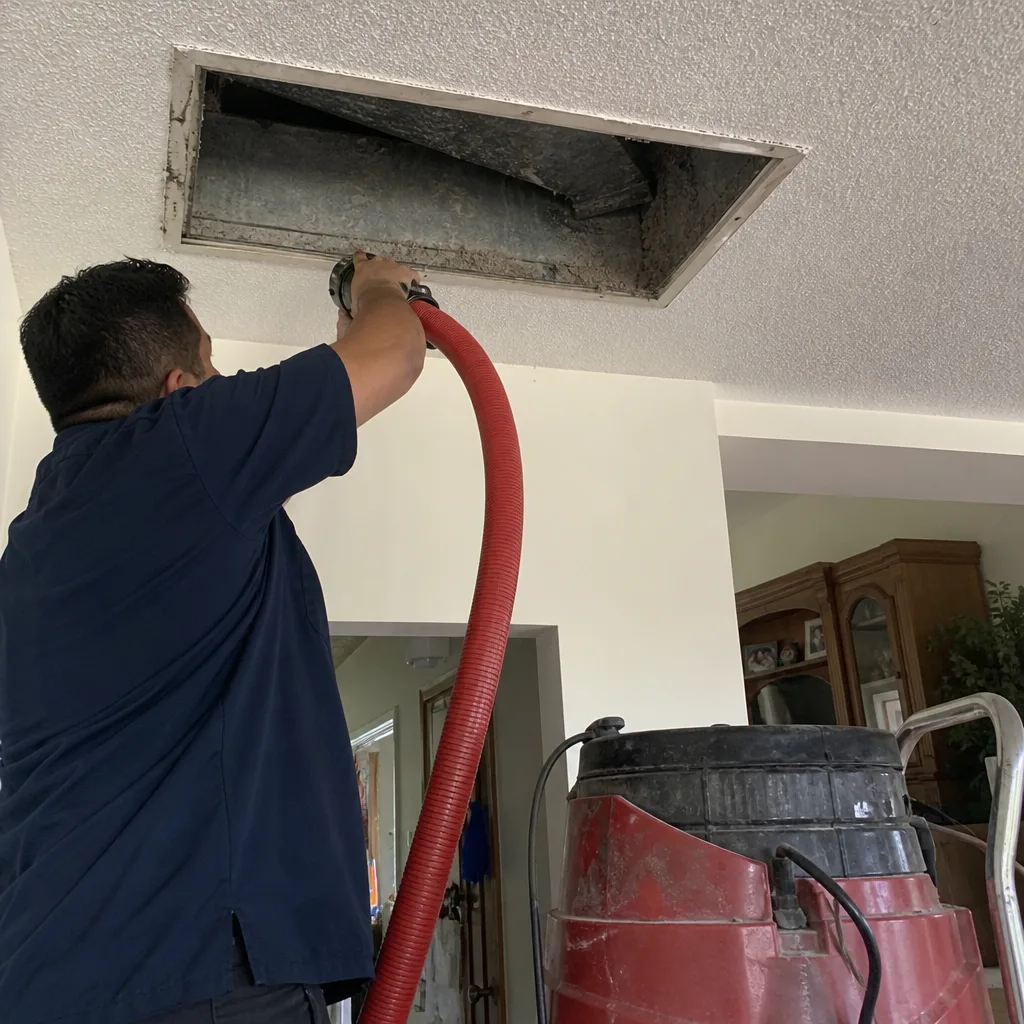
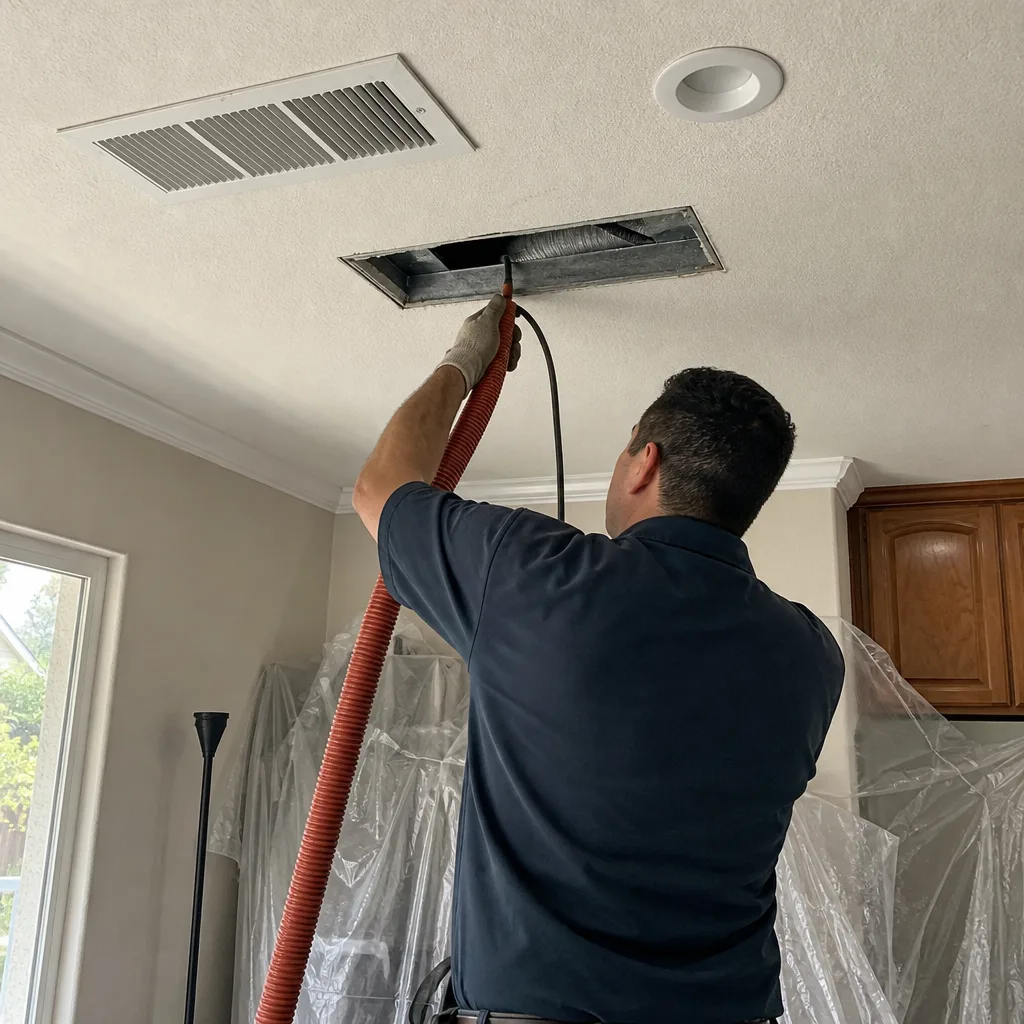
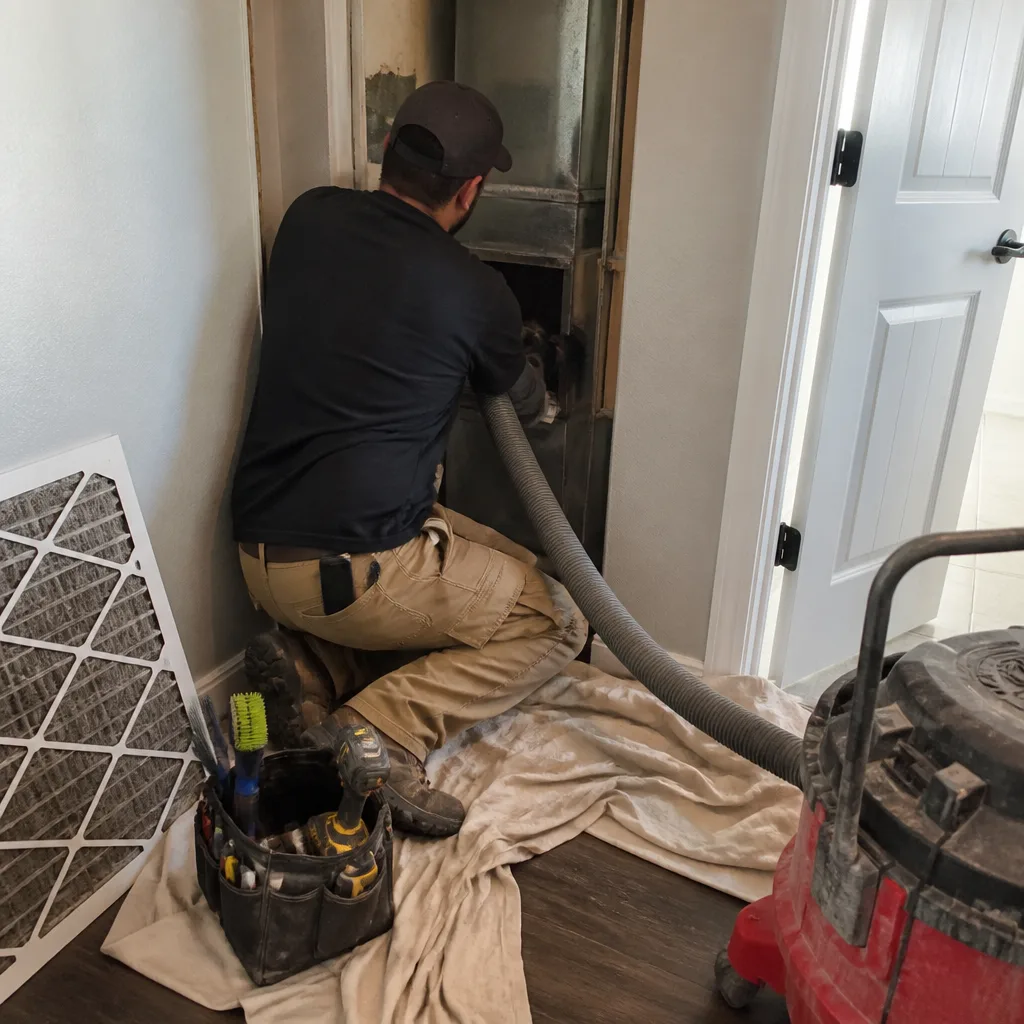
Source-removal cleaning is the NADCA-recommended standard. The entire system is placed under negative pressure using a powerful vacuum connected at a strategic point, often at the plenum near the furnace or air handler. The vacuum pulls air through the system continuously while agitation tools loosen debris from duct walls. As material breaks free, it’s sucked downstream into the collection system. The key principle is that debris leaves the ducting and enters containment, rather than being pushed around or stirred into the air. Professional platforms like Rotobrush and Nikro systems are engineered around this method, combining high-CFM vacuum power with rotating brushes or air whips that reach deep into branch lines. When combined with Abatement Technologies air filtration equipment, the working environment can maintain HEPA-level containment, capturing fine particulates that would otherwise become airborne in the living space.
Contact vacuuming is the method used by many low-bid operators, and it’s the reason duct cleaning has a mixed reputation. A technician inserts a vacuum hose into each register and moves it around, often with a brush attachment secured to the end with tape. The vacuum might be a standard shop vac with a long hose. Bulk debris near the registers gets removed, which produces satisfying before-and-after photos. But material deeper in the runs, especially in the trunk line and return plenum, stays in place. Worse, aggressive poking with a residential-grade brush can tear the inner liner of flex duct, releasing fiberglass into the airstream. Contact vacuuming costs less because it takes less time and requires no real equipment investment, but it does not achieve source removal.
The distinction matters especially in Rancho Cordova, where flex duct is common. A rigid sheet metal duct can tolerate more physical agitation. A 25-year-old flex duct liner cannot. The wrong method on the wrong material doesn’t just underdeliver, it can cause damage that wasn’t there before.
Duct Materials in Rancho Cordova Homes and Why They Matter
Rancho Cordova’s building history plays directly into what’s inside your walls and attic. Homes built through the 1970s often used galvanized sheet metal for both trunk lines and branch runs. Sheet metal is robust, cleanable with aggressive agitation, and less prone to material breakdown. It’s also less common in Rancho Cordova than in older Sacramento neighborhoods like Midtown or Land Park, where pre-1970s construction dominates.
The city’s major suburban expansion happened from the 1980s through the early 2000s, and that era belonged to flex duct. Flexible duct is cheaper to install, easier to route through the tight attic spaces common in production housing developments, and quicker to connect. The tradeoff is longevity. The plastic inner liner degrades over time, especially in the heat-stressed attics common throughout Rancho Cordova. Attic temperatures in Sacramento Valley summers routinely exceed 140 degrees, year after year. That thermal cycling accelerates the aging of adhesives and plastic materials. A flex duct that would remain serviceable for 25 years in a cooler climate might show liner separation or pinholes at 15 to 18 years here.
This is why cleaning method must match material. When we encounter flex duct, our technicians inspect carefully before agitation begins. Areas showing liner separation, compression at connection points, or visible tearing are flagged as repair candidates, not cleaning candidates. Some ducts can be cleaned safely with appropriate air whip pressures. Others need replacement or repair first. We’ll cover that distinction in the repair section, but for now, the takeaway is simple: your duct material determines the right approach, and a technician who doesn’t assess material before cleaning is doing it backward.
What a Legitimate Pre-Cleaning Inspection Should Include
The first step of any professional duct cleaning in Rancho Cordova is a proper inspection, and taking shortcuts here is a red flag. Here’s what a legitimate pre-cleaning assessment should cover, in order:
- System mapping. The technician should identify the return path, locate the air handler or furnace, count supply registers, and note where trunk lines split into branches. This establishes the vacuum connection point and the access strategy.
- Material identification. Flex duct, sheet metal, duct board, or a combination. This determines cleaning method and agitation pressure. If the technician doesn’t know what’s in your walls, they don’t know how to clean it.
- Interior visual inspection. At minimum, remove a register and inspect with a bright light. Ideally, run a camera scope into the return and a sample of supply runs. This documents actual accumulation, not estimated accumulation.
- Filter and blower compartment check. The filter should be inspected for condition and size. The blower wheel deserves visual assessment. Heavy debris buildup on the blower wheel indicates long-standing filter neglect and affects cleaning strategy.
- Leak and damage assessment. Look for disconnected runs, collapsed flex duct, gaps at connections, or evidence of rodent activity. These conditions limit the effectiveness of cleaning and may require repair before or during the service.
- Photo documentation. Before-photos from inside the ducts establish a baseline. You should see these, not just be told “it was really dirty.” After-photos should match the same access points for honest comparison.
Skipping the inspection is the first indicator of a low-effort operation. An operator who quotes a flat price over the phone without seeing the system is guessing, and if their guess is dramatically lower than competitors, the pressure is on their technician to make that number work, usually by cutting corners once they arrive.
What Does Air Duct Cleaning Cost in Rancho Cordova?
You’ll find ads quoting astonishingly low prices, often under $100. Those prices exist for a reason, and it’s not efficiency. Legitimate whole-home duct cleaning in Rancho Cordova requires professional equipment, proper containment, a real time commitment, and technicians who know what they’re looking at. The math doesn’t work at $79 or $99. Here’s what honest pricing looks like in this market:
- Single-family home, one system, 1,000 to 1,500 square feet: $350 to $500
- Single-family home, one system, 1,500 to 2,500 square feet: $450 to $650
- Single-family home, one system, 2,500 to 3,500 square feet: $550 to $800
- Larger homes, dual systems, or complex layouts: $700 to $1,100
- Additional services like return plenum detailing or blower cleaning: Often included with reputable operators; confirm at quote time
These ranges reflect the valley’s competitive landscape and the real time involved. A thorough source-removal cleaning of an average Rancho Cordova home takes 3 to 5 hours with two technicians. Anyone promising the same scope in under 90 minutes is not doing the same work. The pricing spread between reputable operators comes down to equipment quality, whether containment filtration is included, and how thorough the inspection process is. One flat price per system, agreed before work starts, is the standard you should expect. Estimates should be free, and the quote should be fixed, not an opening bid that grows when the technician “finds something.”
For a deeper look, see our guide to Air Duct Cleaning in Rancho Cordova. And if you’re wondering about the full lifespan of your system, Air Duct Repair in Rancho Cordova explains what happens when cleaning reveals deeper problems.
When Cleaning Isn’t Enough: Duct Repair and Sealing
Cleaning solves accumulation. It does not solve damage. In Rancho Cordova, where aging flex duct and heat-stressed attics meet, a meaningful percentage of homes need more than cleaning. As part of a complete air duct service, our technicians can identify and repair issues during the cleaning visit. Here are the conditions we regularly encounter and what they mean for your system:
- Disconnected flex runs. Attic movement, poor original installation, or animal activity can pull flex duct off its connection collar. Conditioned air pours into the attic while dust and insulation fragments get pulled into the system. Cleaning won’t reconnect a run.
- Torn or perforated inner liners. When the plastic liner inside flex duct fails, fiberglass from the insulation layer enters your airstream. Cleaning agitation can worsen this. The damaged section needs replacement or repair.
- Crushed or kinked flex duct. Anything stored in the attic, from holiday boxes to old furniture, can compress flex duct and choke airflow. The fix is physical, not chemical.
- Gaps at connections. Sheet metal connections can separate over time, especially where vibration from the blower works against tape and mastic. Sealing these gaps improves system performance and prevents attic air intrusion.
The practical point: if your ducts have real problems, spending $500 on cleaning without addressing those problems wastes the money. The system will re-contaminate quickly because outside air and insulation material keeps entering. A Duct Cleaning Rancho Cordova home service call that includes honest inspection and repair capability means you get the full picture, not half of it.
Dryer Vents and Fire Safety: A Separate Service That Deserves Attention
Your dryer vent is technically not part of your HVAC duct system, but it deserves discussion in any complete duct care guide. The U.S. Fire Administration reports that failure to clean dryer vents is a leading cause of residential dryer fires, with an estimated 2,900 fires annually. Lint is combustible. Heat is constant. Restricted airflow allows heat to build. The connection is direct.
Rancho Cordova homes face a specific version of this risk due to layout and climate. Many laundry rooms are located near the center of the home or on a second floor, with long vent runs that climb, turn, and exit through the roof or a high sidewall. Every change in direction is a lint trap point. Every extra foot of run adds resistance. Summer heat means dryers work harder and lint baked onto vent walls becomes harder and more recalcitrant. If your dryer takes more than one cycle to dry a standard load, or the exterior vent flap doesn’t open fully when the dryer runs, the vent needs attention.
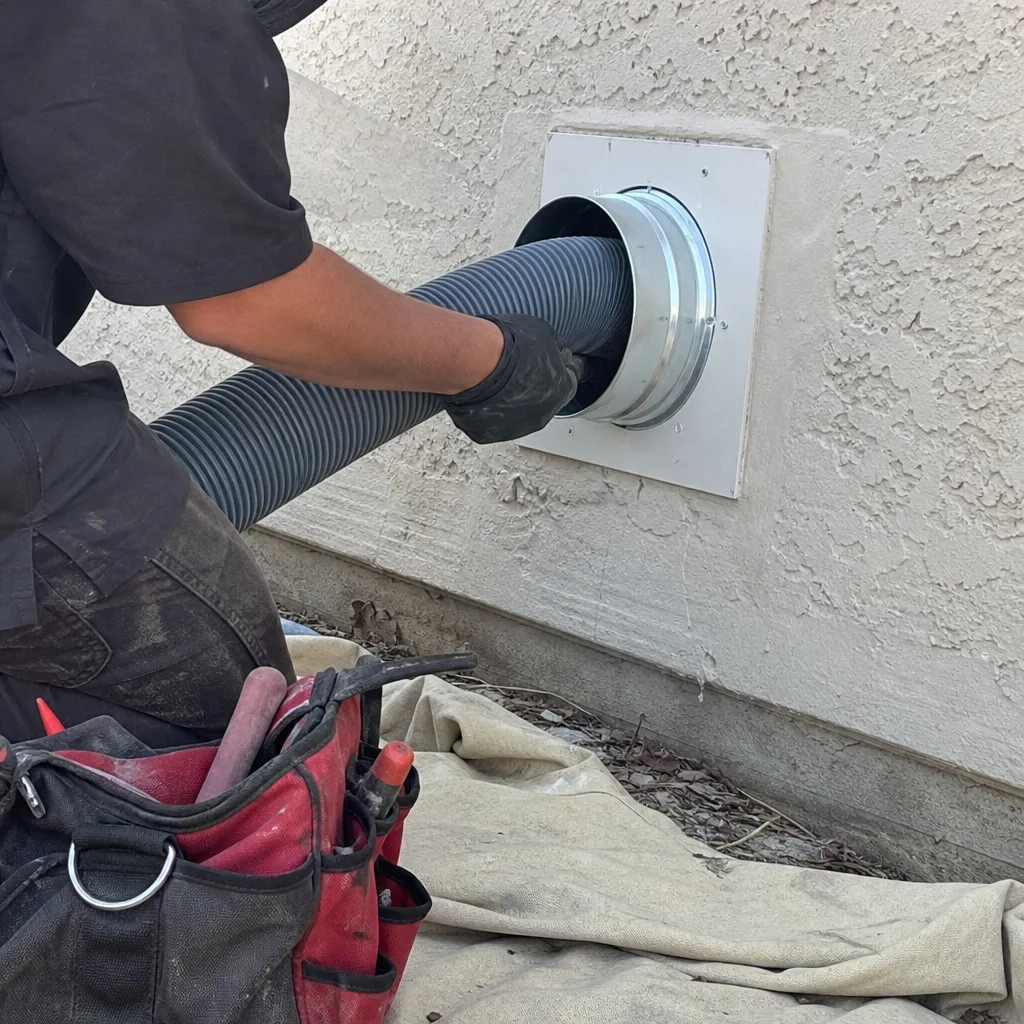
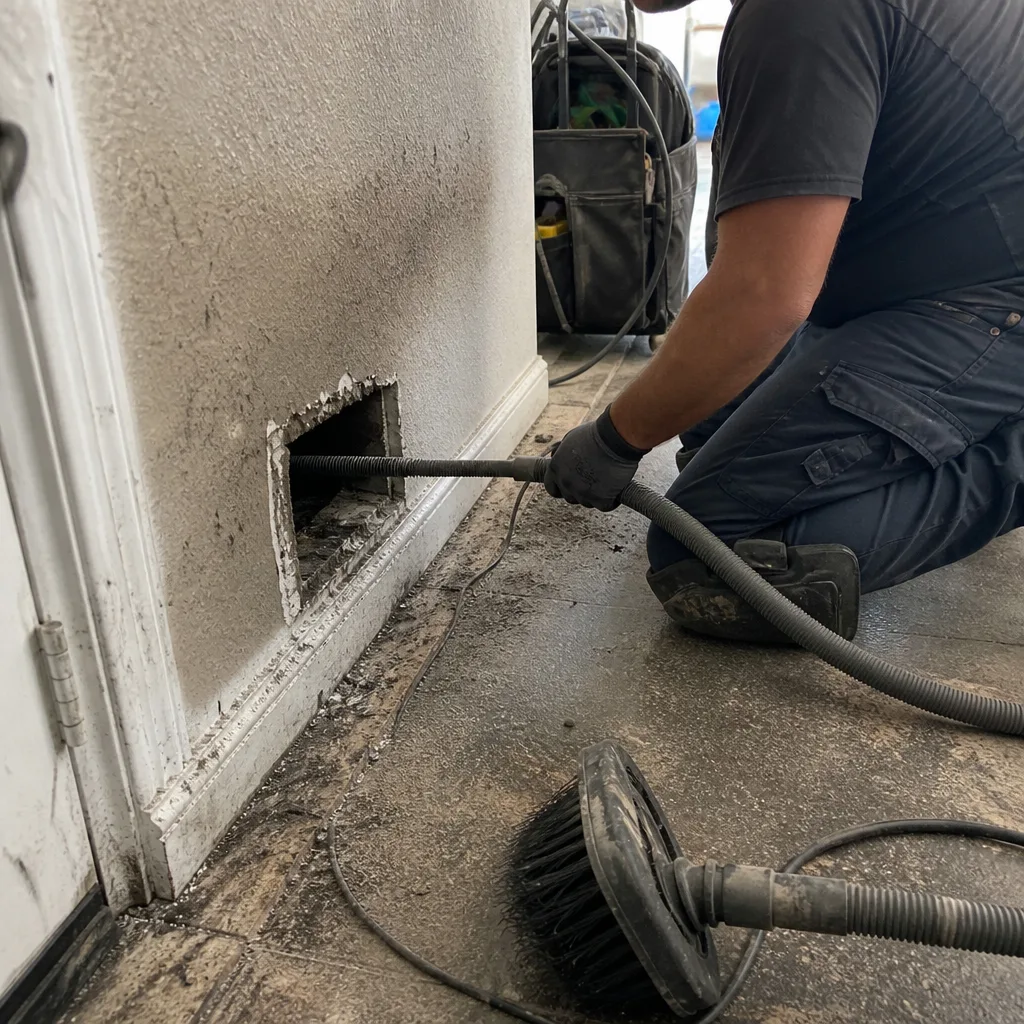
This is why we treat Dryer Vent Cleaning in Rancho Cordova as a dedicated fire-safety service, not an add-on. It involves specialized brushes and air tools suited to the vent’s smaller diameter. It includes inspection of the exterior termination point and recommendations for vent replacement if the existing run uses flexible foil or plastic transition hose that should be rigid metal. The goal is not simply better airflow. The goal is reducing a documented fire risk in your home.
Common Mistakes to Avoid
- Choosing by lowest bid. The operator offering $79 whole-home cleaning is either running a teaser that escalates once a technician arrives, or they’re doing contact vacuuming at two registers and calling it done. Neither is the service you think you’re buying.
- Skipping the inspection. Any company that quotes without looking is not planning to do real work. Legitimate operators inspect first and quote after documentation.
- Using generic equipment. A shop vac with a long hose is not duct cleaning equipment. It’s a shop vac. Purpose-built platforms like Rotobrush and Nikro systems are engineered for interior reach and collection capacity. The difference shows in the results.
- Ignoring filter maintenance after cleaning. Clean ducts behind a clogged or undersized filter will re-contaminate quickly. Match your filter to your system and household needs. Ask your technician what MERV rating your blower can handle.
- Assuming smoke damage just fades. After wildfire season, particulate settles inside your ducting and keeps circulating with every blower cycle. If smoke entered your home, an inspection is warranted even if you “aired it out.”
- Cleaning damaged ducts. If flex duct liners are torn or runs are disconnected, cleaning makes the problem worse. Repair first, then clean. The order matters.
- Forgetting the dryer vent. Your HVAC ducts and your dryer vent are different systems that need different service. A complete duct health plan includes both.
When to Call a Professional
Call for a professional assessment if you see visible dust trails at supply registers, notice a distinct musty odor when the blower starts, or find dust settling on surfaces within a day or two of cleaning. If you’ve lived in your Rancho Cordova home for more than 4 years without duct service, if you experienced significant wildfire smoke intrusion, or if you’ve completed renovation work, an inspection is genuinely warranted. Most importantly, if your dryer takes longer than one cycle to dry a load, the dryer vent deserves immediate attention. Duct Cleaning Rancho Cordova offers free estimates in Rancho Cordova. Call (877) 752-4148 to schedule an inspection. Our team uses Rotobrush and Nikro professional systems with Abatement Technologies HEPA-level containment, and we can diagnose, clean, and repair in a single visit.
Frequently Asked Questions
Expect to pay between $350 and $800 for a complete source-removal cleaning of a typical single-family home in Rancho Cordova, with larger homes or dual systems running $700 to $1,100. Avoid $79 and $99 offers. Those prices are teaser rates designed to get a technician to your door, where the invoice grows. Call (877) 752-4148 for an exact quote. Estimates are free and the price is fixed before work begins.
Cheaper quotes usually mean a different method. Contact vacuuming with a shop vac and a brush attachment costs almost nothing in equipment and takes an hour or two. Source-removal cleaning with professional platforms like Rotobrush or Nikro systems, plus HEPA-level containment, requires real equipment and real time. Cheap operators can’t afford to spend 3 to 5 hours on your system at $79. They can afford to spend 45 minutes pushing debris around, which is what they do.
Ask for before-and-after photos from the same access points inside your ductwork. A legitimate technician will document the interior of the return plenum and representative supply runs both before and after cleaning. You should also receive a summary of what was found, what method was used, and any conditions that need attention. If a company can’t or won’t provide visual proof, assume the worst.
Every 3 to 5 years is the realistic window for most Rancho Cordova homes, with the shorter end for households with pets, allergy sufferers, smokers, or proximity to construction. Wildfire smoke intrusion or major renovation shortens the interval. If you’re buying a home and the seller can’t document recent service, include an inspection in your due diligence.
Yes, with a caveat. Source-removal cleaning removes the particulate that carries smoke odor. However, if smoke saturated insulation, carpet, or porous materials, those need separate treatment. Your ducts are one part of the equation. A professional cleaning addresses what’s inside the system. If the smell persists after cleaning, the source lies elsewhere in the home.
Yes. Our technicians are familiar with Honeywell and Aprilaire whole-home systems, including how these units interact with your ductwork. We can clean your ducts without compromising the filtration or humidity equipment installed in your system, and we’ll check that everything is functioning correctly during the service. Call (877) 752-4148 to discuss your setup.
The Bottom Line
Rancho Cordova’s climate, housing stock, and seasonal smoke events create a duct maintenance case that’s distinct from the generic national picture. Your home’s flex duct ages faster here. Your systems accumulate valley dust and smoke particulate that coastal homes never see. And the difference between a useful cleaning and a wasted service call comes down to method, equipment, and whether the operator inspects before they quote. Source-removal cleaning with professional systems like Rotobrush and Nikro, supported by HEPA-level containment from Abatement Technologies, is the standard that actually delivers. When cleaning reveals damage, repair capability matters. And when it comes to dryer vents, the stakes are fire safety, not convenience. Your ducts cleaned, repaired, and cleared, one call, one company. Call (877) 752-4148 for a free estimate in Rancho Cordova.
Written by the team at Duct Cleaning Rancho Cordova, serving Rancho Cordova since 2013. Explore more guides & resources on keeping your home’s air clean.
See the difference
 Before
 After
 Before
 After
 Before
 After