
Last updated November 2, 2026
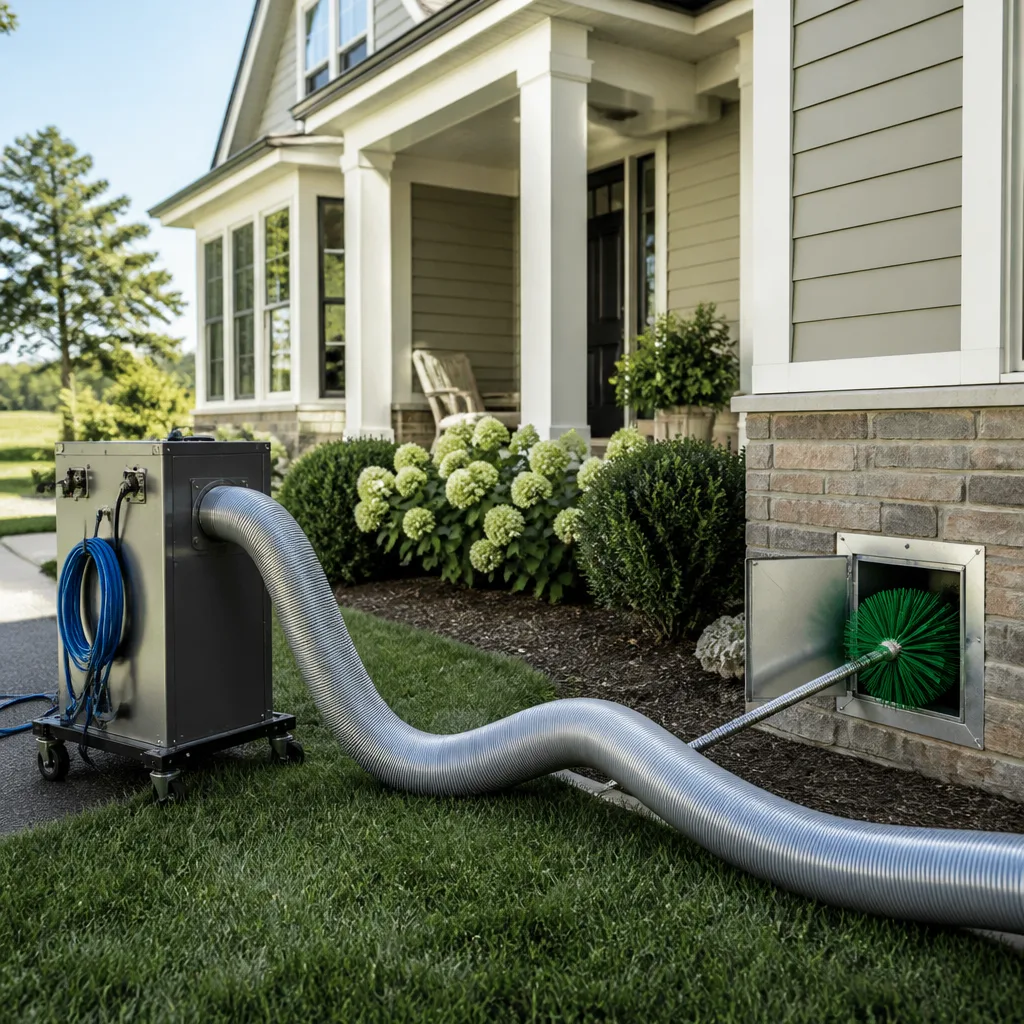 Whole-home duct cleaning
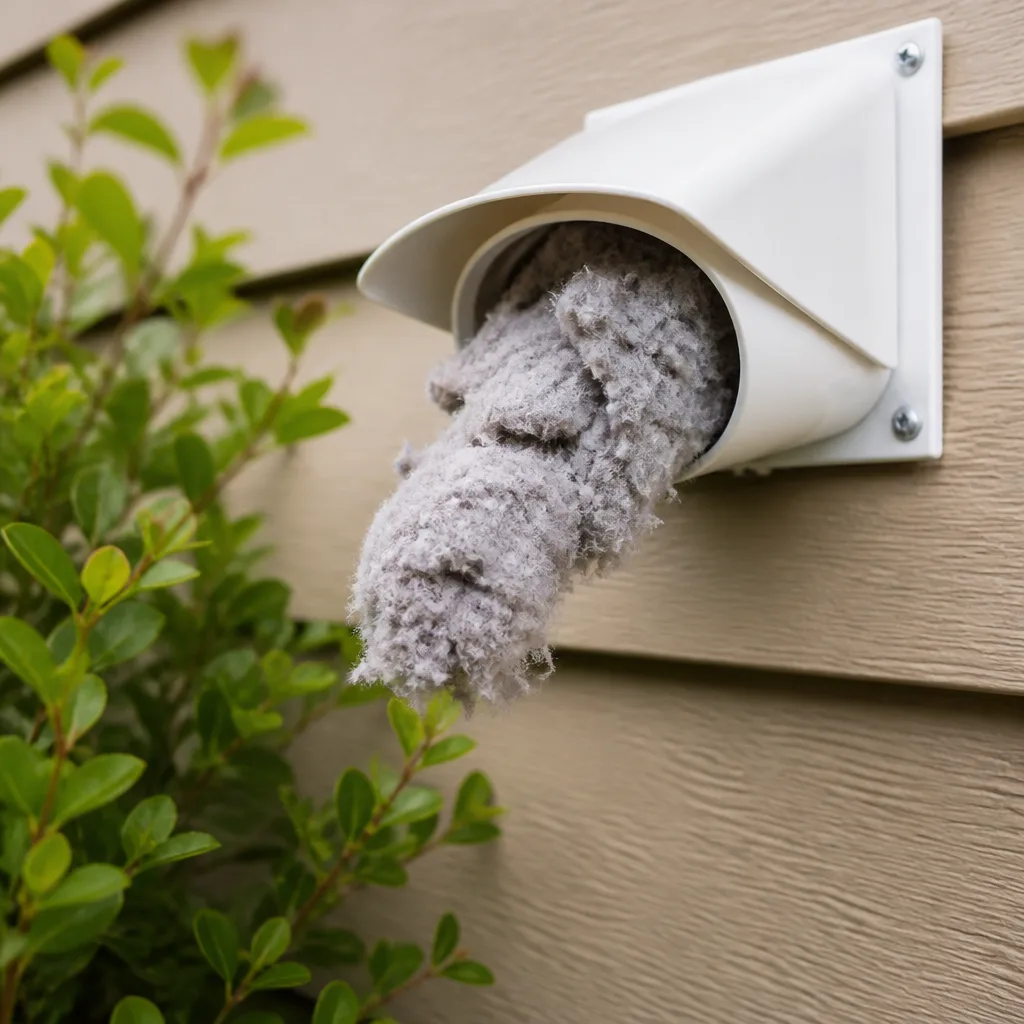 Dryer vent cleaning
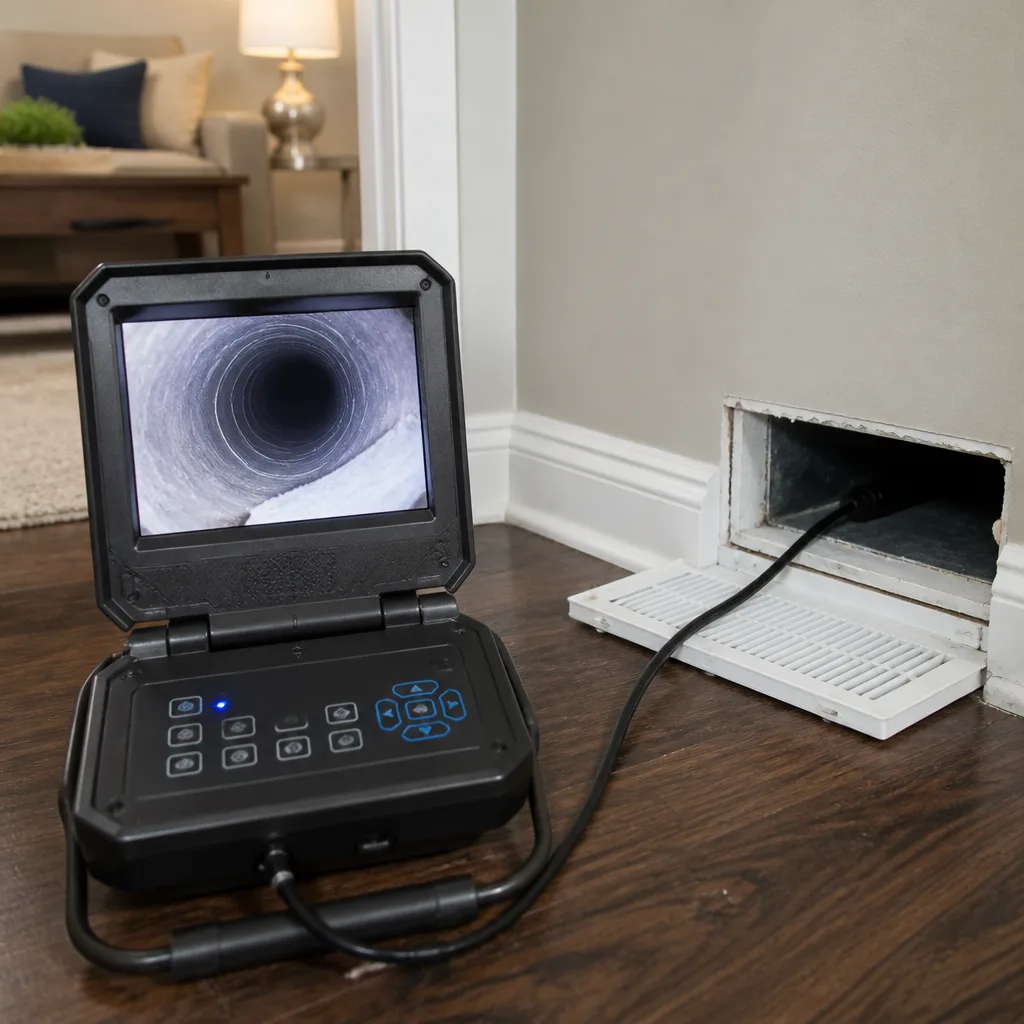 Camera inspection
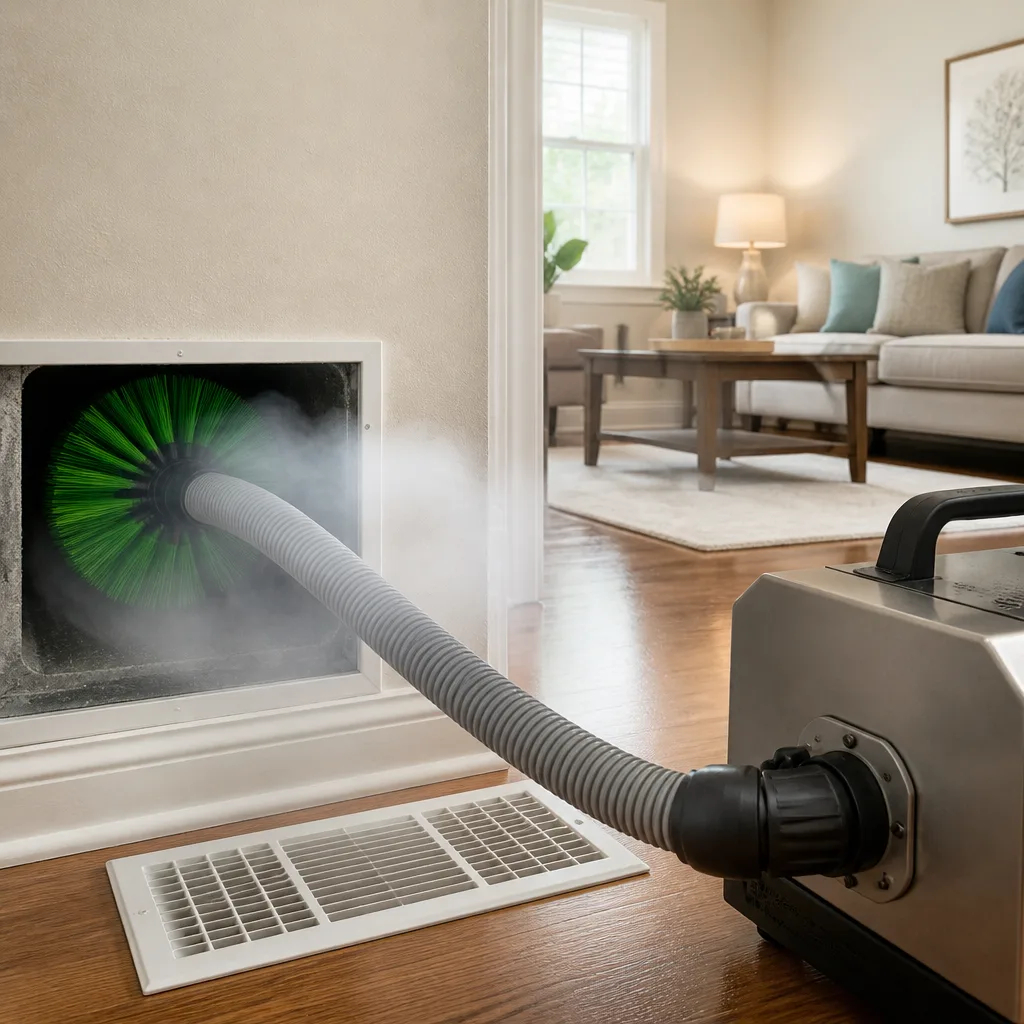 Sanitizing & deodorizing
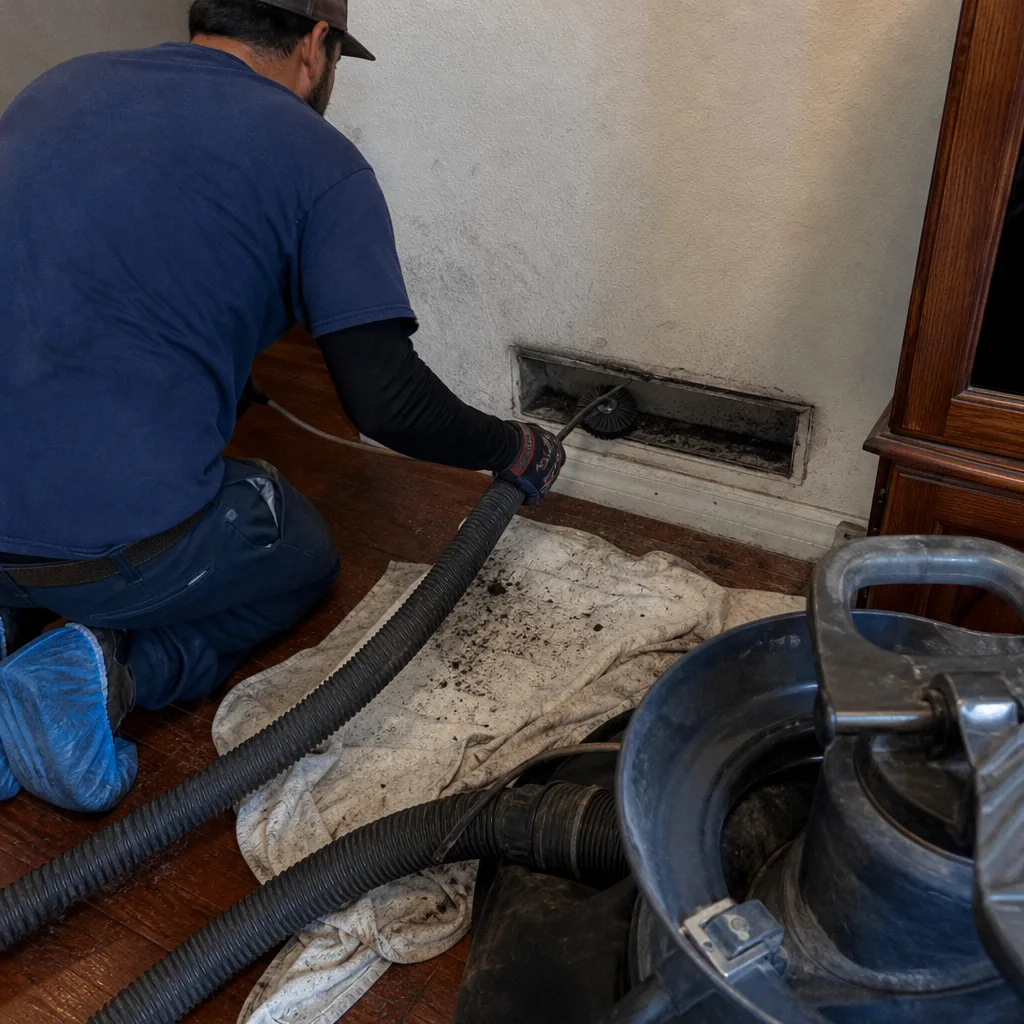
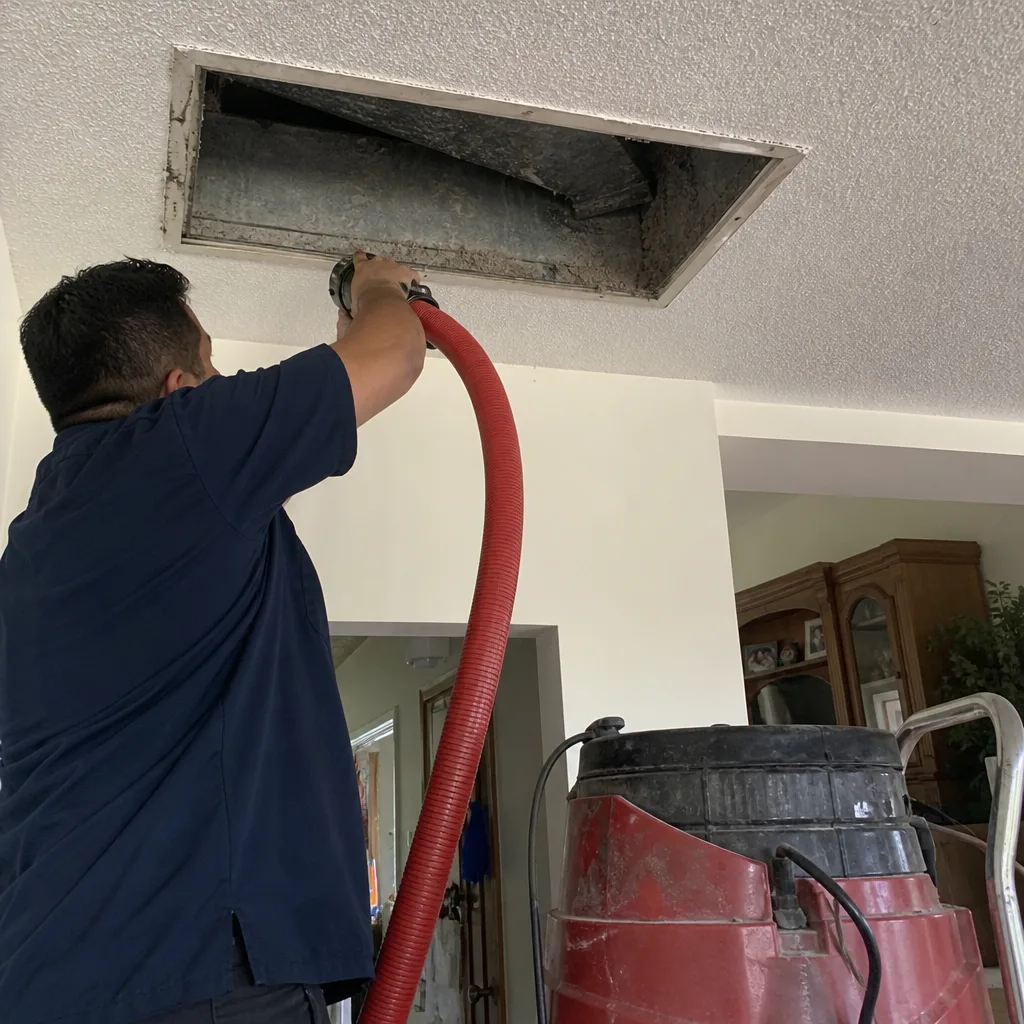
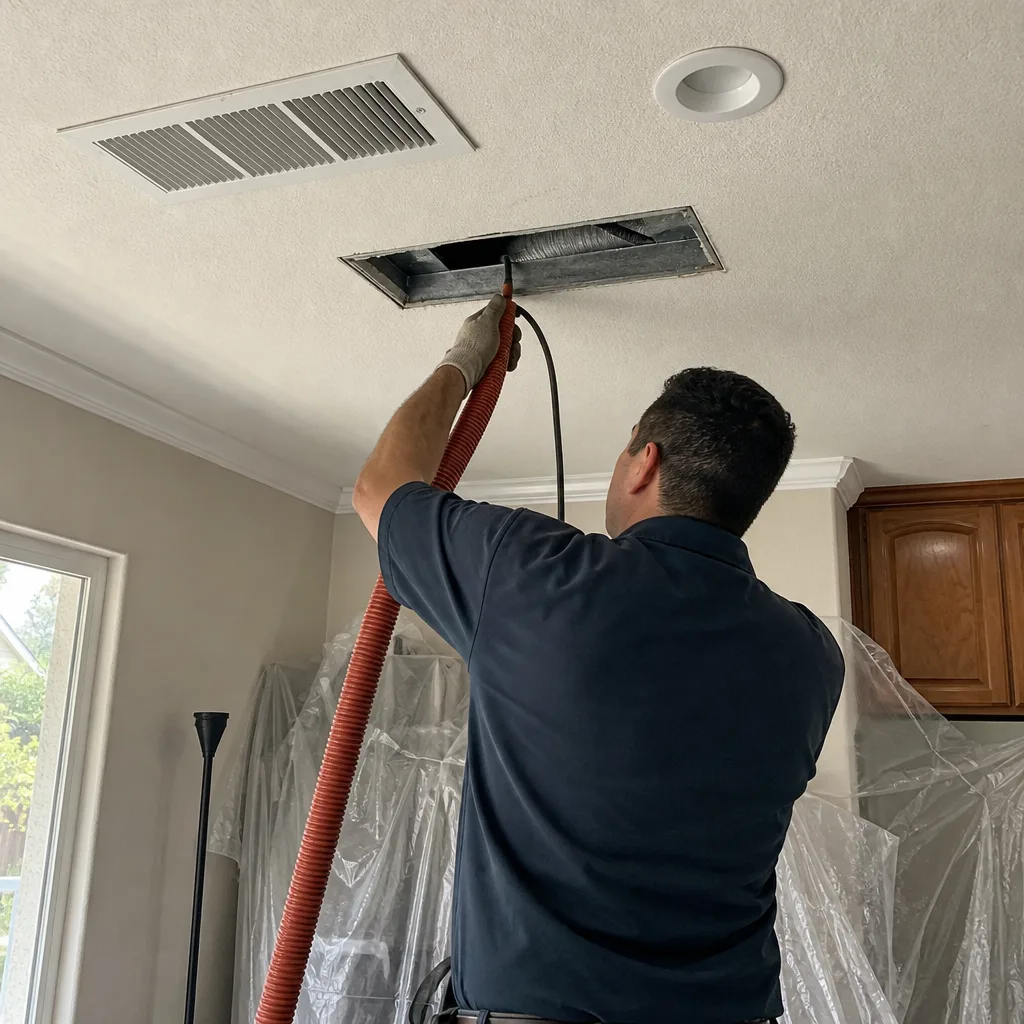
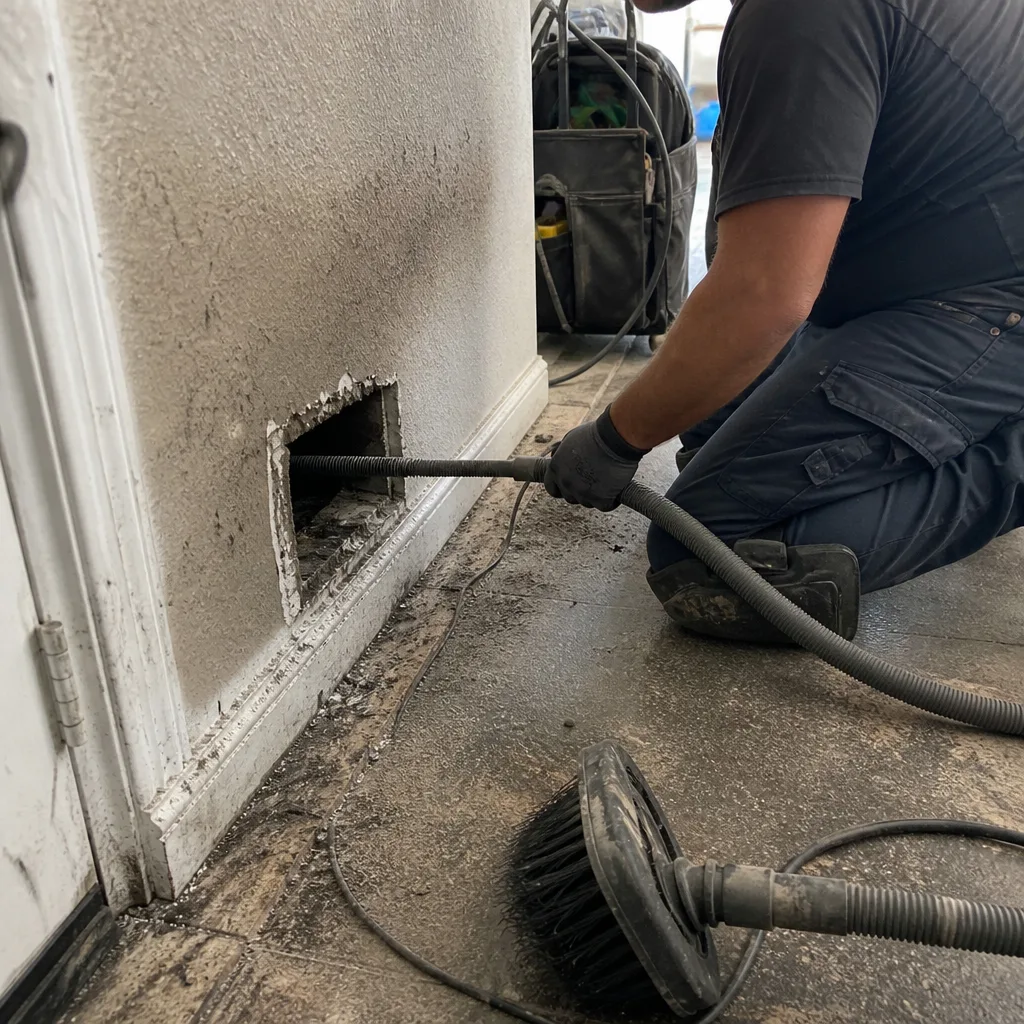
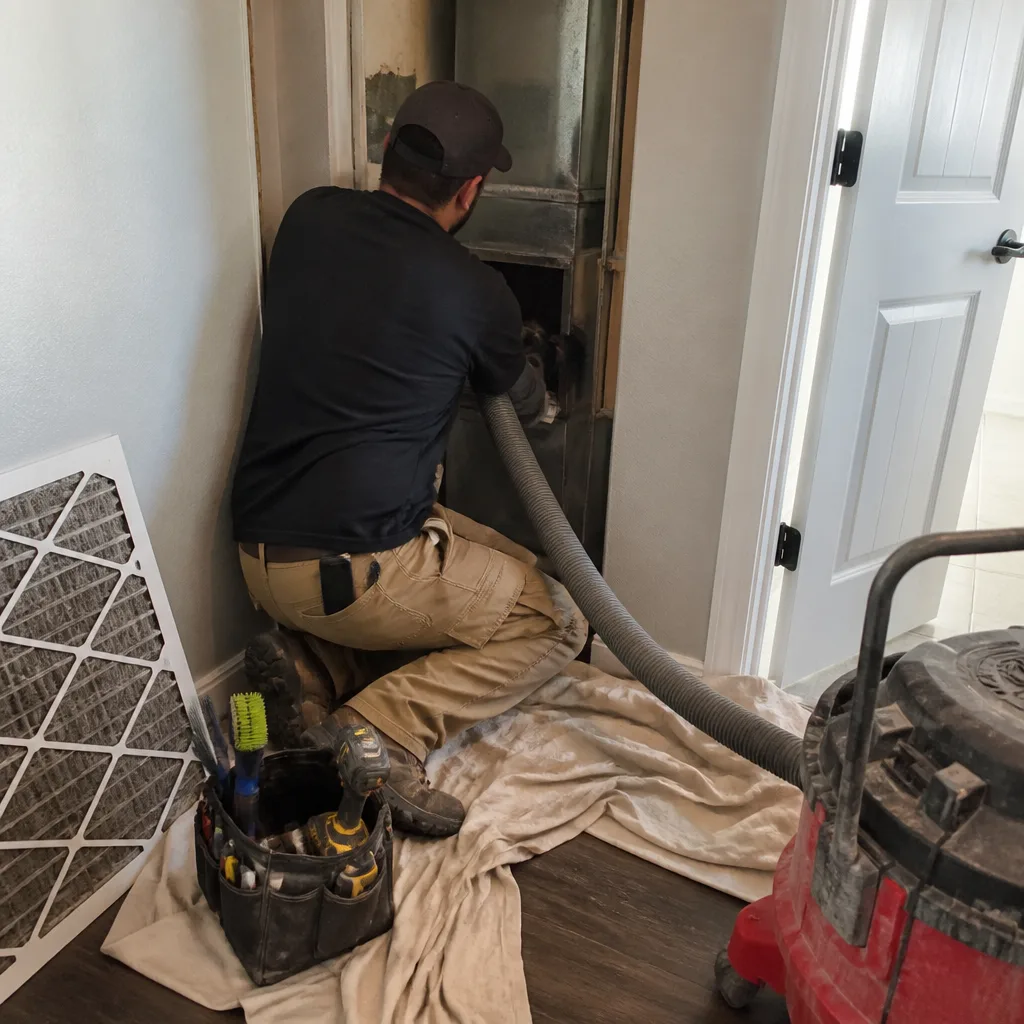
Whole-system duct and dryer vent check with before-and-after photos - you see exactly what came out of your vents
That "$99 whole-house special" is a bait ad - the real number appears once they are in your hallway, or the "clean" is a shop-vac at the register. We photograph the inside of your ducts before and after instead.
DIY vs Professional Air Duct Cleaning: The Rancho Cordova Homeowner’s Decision Guide
Here’s something most duct cleaning websites won’t tell you: a homeowner with a brush kit and a shop vac can clean a register grille. They cannot create the negative pressure needed to extract debris from a 30-foot flex duct run without pulling contaminants back into the living space. In fact, doing the job wrong can actively redistribute what you’re trying to remove. This guide covers exactly where the line sits between homeowner maintenance and professional source removal in Rancho Cordova, so you can spend money on the right thing at the right time.
Styles & brands we work with
- Whole-home duct cleaning
- Dryer vent cleaning
- Camera inspection
- Sanitizing & deodorizing
Quick Answer
DIY air duct cleaning in Rancho Cordova can effectively handle surface-level tasks like register grille cleaning, filter replacement, and visible dust removal from accessible openings. Professional cleaning becomes necessary when debris sits deeper than the first few inches of the duct run, when flex duct damage is a concern, or when full-system negative-pressure extraction is required. The honest answer: do the surface maintenance yourself, and hire a professional for source removal every 3 to 5 years.
Table of Contents
- What Homeowners Can Actually Do Themselves
- The Physics of Source Removal: Why Consumer Tools Fall Short
- When DIY Makes Things Worse
- The Dryer Vent DIY Reality Check
- The Honest Cost-Benefit Calculation for Rancho Cordova
- Filter Housing and Return Grille Maintenance: The Highest-Impact DIY Task
- Common Mistakes to Avoid
- When to Call a Professional
- Frequently Asked Questions
- The Bottom Line
What Homeowners Can Actually Do Themselves
Before we talk about what DIY can’t accomplish, let’s establish what it can. There are four tasks a Rancho Cordova homeowner can perform safely and effectively without professional equipment. These tasks genuinely improve conditions between professional air duct cleaning in Rancho Cordova visits, and we recommend them without reservation.
First, register grille cleaning. Every supply register in your home collects dust on the louvers and inside the boot. Removing the grille, washing it with warm soapy water, drying it thoroughly, and vacuuming the visible interior of the boot removes the debris that otherwise re-enters your living space every time the system cycles on. In Rancho Cordova’s dry summer months, this dust accumulates faster than in coastal climates because our air carries more fine particulate from the Central Valley.
Second, return air grille cleaning. The return grille is where the system breathes in. It traps lint, pet hair, and dust in a visible mat that restricts airflow. Cleaning this grille monthly during cooling season keeps static pressure lower and reduces the load on your blower motor. The filter located behind it needs checking at the same time.
Third, accessible plenum visual inspection. If you have a plenum box attached directly to your air handler with an access panel, you can remove that panel and inspect what you can see without reaching inside. What you’re looking for is surface dust accumulation, signs of moisture staining, or visible debris. Document what you find with photos. This information helps a professional understand what’s happening deeper in the system.
Fourth, filter housing cleaning. The filter slot itself accumulates dust on the surfaces around the filter. A damp cloth and vacuum can clean this housing, which prevents bypass air from carrying debris around the filter and into the coil. This task takes five minutes and directly improves your system’s particulate capture efficiency.
The Physics of Source Removal: Why Consumer Tools Fall Short
Source removal is the industry term for extracting contaminants from inside the duct system rather than disturbing them. It requires one specific condition: sustained negative pressure across the entire duct run being cleaned. Here’s why that matters and why consumer equipment cannot replicate it.
Professional systems like Rotobrush and Nikro create negative pressure measured in thousands of CFM (cubic feet per minute) using truck-mounted or high-output portable vacuum units. This airflow, combined with mechanical agitation from rotating brushes, dislodges debris from duct walls and immediately draws it out of the system through the vacuum. The key mechanic is that the air velocity inside the duct moves faster toward the vacuum than debris can settle. For a 30-foot flex duct run in a Rancho Cordova ranch home, that means the entire length of the run is under active extraction while agitation happens.
A shop vac, by comparison, generates perhaps 100 to 200 CFM through the narrow hose. Attached to a duct opening, it creates localized suction that drops off dramatically within three to five feet. Beyond that distance, the air barely moves. Any brush you push into the duct disturbs debris, but the majority of that disturbed material settles back onto the duct floor once agitation stops. When the system blower runs again, that loosened debris carries into your living space. The DIY attempt has effectively transported contaminants from deep in the system to the supply registers.
We’ve also worked with Abatement Technologies air filtration equipment during professional cleanings in Rancho Cordova. These HEPA-filtered air scrubbers create negative pressure at the room level during the cleaning process, containing any particulates that escape the duct system. This is a standard borrowed from environmental remediation, and it’s the difference between cleaning your ducts and temporarily filling your home with the dust you were trying to remove. Consumer air purifiers don’t move enough air to serve this function during an active cleaning.
When DIY Makes Things Worse
There are specific ways a DIY attempt can make a professional cleaning harder or more expensive. Understanding these prevents a $50 DIY project from becoming a $500 repair.
- Disturbed debris pushed deeper. When you push a brush or compressed air into a duct from the register opening, you’re pushing debris away from the opening, not extracting it. Fine particulate migrates deeper into the flex run, past the midpoint, where extraction becomes more difficult. A professional then needs longer hose runs, more agitation time, and sometimes access cuts to reach the compacted material.
- Damaged flex duct from improper probes. Flex duct is a thin aluminum or plastic inner liner wrapped in insulation. Pushing a stiff rod, a straightened wire hanger, or a consumer brush kit into a flex run can tear the liner. Even a small tear changes system static pressure, leaks conditioned air into the attic or crawlspace, and allows insulation fibers to enter the airstream. In Rancho Cordova attics where summer temperatures exceed 140 degrees, damaged flex duct degrades faster than in cooler climates.
- Detached duct connections. Consumer brush kits with drill attachments can catch on joints between duct sections. Pulling the brush back when it snags can separate a flex duct from its collar, creating a disconnect that dumps conditioned air into the attic. This is one of the most common things we see after DIY attempts, and the homeowner usually doesn’t know it happened until the next utility bill arrives.
- Registers left misaligned. Removing and reinstalling registers seems simple, but a register not properly seated changes airflow patterns in the room. It’s a minor issue, but it contributes to uneven heating and cooling that homeowners often attribute to other causes.
The lesson here is not that homeowners should never touch anything. It’s that anything beyond the first few inches of visible duct interior carries risk without professional equipment and training. If your air duct repair needs stem from a DIY attempt, the combined cost is typically higher than the professional cleaning would have been originally.
The Dryer Vent DIY Reality Check
Dryer vent cleaning deserves its own section because the DIY options are marketed aggressively, and the stakes are different. A clogged dryer vent is a documented fire hazard, not just an efficiency problem. Lint is highly combustible, and a restricted vent allows heat to build at the dryer connection point.
What a homeowner brush kit actually addresses: a consumer dryer vent brush with flexible rods attaches to a drill and can reach 8 to 12 feet into a straight vent run when used from the exterior termination. For a Rancho Cordova home where the dryer sits on an exterior wall with a short, straight vent run under 10 feet, this can clear visible lint accumulation from the duct walls. It does not capture the lint effectively; it pushes most of it toward the dryer or out the exterior cap, which is a reasonable outcome for a short straight run.
What a homeowner brush kit does not address: longer runs, runs with bends, and runs that transition through roof terminations. In many Rancho Cordova homes built in the 1970s and 1980s, dryer vents run 15 to 25 feet with multiple elbows before terminating through the roof. A consumer brush kit cannot navigate those bends effectively, and the lint it does disturb tends to collect at the first elbow, creating a more dangerous restriction than existed before the attempt.
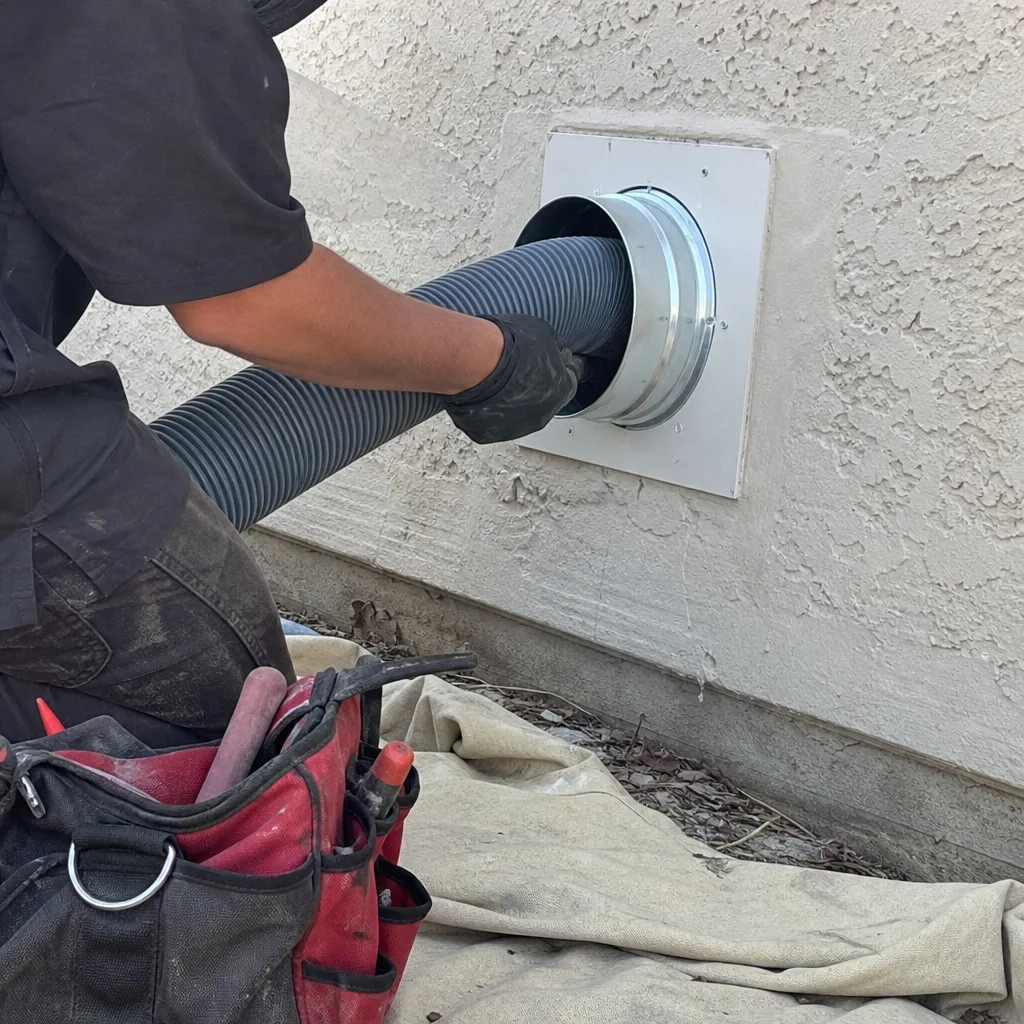
A professional dryer vent cleaning in Rancho Cordova uses a rotary system with a reverse-spinning cable and HEPA-filtered vacuum collection. The rotary head physically scrubs lint off the duct walls while the vacuum captures it at the point of disturbance. It navigates elbows without catching, and it clears the entire run to the termination point. For roof-terminated vents, it also means the technician can access the roof cap to clear bird nests, debris, and built-up lint that a ground-level DIY attempt never reaches.
Dryer vent cleaning is about fire prevention, not just airflow. The National Fire Protection Association identifies dryer vent obstruction as a leading cause of residential dryer fires. A professional cleaning removes the fuel source. A DIY brush attempt on a complex run can leave that fuel source in place while giving the homeowner false confidence that the vent is clear.
The Honest Cost-Benefit Calculation for Rancho Cordova
Let’s talk numbers in a way that actually helps a Rancho Cordova homeowner make a decision. Professional whole-home air duct cleaning in this market typically runs between $350 and $600 for a single-system home, varying with system size, number of returns, and accessibility. That’s a real cost, and it’s reasonable to ask whether DIY maintenance can extend that interval or replace the service entirely.
What homeowner maintenance actually does: regular grille cleaning, filter replacement, return cleaning, and filter housing cleaning reduce the rate at which debris accumulates in the system. They don’t remove the debris already there. Think of it like changing the oil in your car. Regular oil changes keep the engine cleaner for longer, but they don’t clean an engine that’s already sludged. Homeowner maintenance reduces incoming contaminants, which keeps the system from getting worse as quickly, but it doesn’t reverse existing accumulation.
What homeowner maintenance realistically buys you: perhaps an extra 12 to 18 months between professional cleanings. For a home with a diligent maintenance routine, a professional cleaning every 4 to 5 years is reasonable. For a home with no maintenance routine, that interval shrinks to 3 to 4 years. The DIY tasks don’t eliminate the need for professional source removal; they extend the interval and improve system performance between cleanings.
The false economy is attempting a full DIY cleaning with consumer equipment. The equipment costs $40 to $80 for a brush kit. The potential outcomes include damaged flex duct requiring repair, disturbed debris entering the living space, and a system that appears cleaner at the registers while remaining dirty deeper in the runs. The professional cleaning still has to happen, and now it may include air duct repair for damage caused by the attempt. The $40 savings became a $400 additional cost.
Filter Housing and Return Grille Maintenance: The Highest-Impact DIY Task
If you do one DIY task, make it this one. The return side of your HVAC system is where the system breathes in, and it’s where the majority of airborne particulates enter the equipment. The filter housing and return grille are accessible, and cleaning them has a disproportionate impact on system efficiency and indoor air quality.
Here’s the step-by-step sequence we recommend for Rancho Cordova homeowners:
- Locate all return grilles. Most Rancho Cordova homes have one or two primary returns plus smaller returns in bedrooms. Check each one.
- Remove the return grille. Most are held by two screws or spring clips. Set hardware aside where it won’t be lost.
- Vacuum the visible filter surface. If you have a reusable filter, vacuum both sides thoroughly. If you have a disposable filter, check its condition. If it’s visibly loaded or it’s been longer than 90 days, replace it.
- Vacuum the filter housing. Reach into the housing with your vacuum hose and remove accumulated dust from all visible surfaces. Pay attention to the rails the filter slides into, as bypass air carries dust around the filter at these points.
- Wipe the grille louvers. Use a damp microfiber cloth to wipe both sides of the grille. Dry thoroughly before reinstalling.
- Check the return boot. Look past the filter into the return duct boot. If you see visible dust accumulation on the boot walls, that’s a signal that deeper cleaning is warranted.
This maintenance matters more in Rancho Cordova because of our air quality pattern. Summer brings wildfire smoke from surrounding foothills, and fall brings agricultural dust from the Central Valley. These fine particulates load filters faster than in many parts of the country. A homeowner who checks filters and grilles monthly during wildfire season prevents the filter from loading to the point of bypass, which is when unfiltered air flows around the filter and deposits particulates directly onto the cooling coil.
For homes with Honeywell or Aprilaire whole-home air quality systems, the same maintenance applies but with higher stakes. These systems often include media filters, electronic air cleaners, or bypass humidifiers that need periodic attention. A Honeywell media filter that’s loaded past its service life creates static pressure that reduces airflow through the entire system. An Aprilaire humidifier with a dirty water panel redistributes mineral scale and biological material through the supply ducts. The filter housing cleaning sequence above applies to these systems, and the filter replacement interval matters even more when the system is actively treating air quality.
Common Mistakes to Avoid
- Using compressed air to blow out ducts. Compressed air pressurizes the duct rather than depressurizing it. Debris moves from high pressure to low pressure, which means it exits through every register opening into the living space. This is the opposite of source removal.
- Running the blower during a DIY attempt. If your system blower runs while you’re disturbing debris with a brush, the moving air carries that debris through the system. Always ensure the system is completely off and the thermostat is set to off before touching anything.
- Assume visible registers equal clean ducts. The register is the last six inches of the run. What you see at that opening tells you nothing about the other 25 feet of duct behind it. The dirtiest section is often the return trunk, which you cannot see from any supply register.
- Ignoring the coil. The evaporator coil sits downstream of the filter and upstream of the supply ducts. If the coil is dirty, it negates the benefit of clean ducts. Coil inspection is a task that requires training, and Rancho Cordova’s cooling season runs six months or longer, which means coil condition matters.
- Using chemical duct sprays or foggers. Consumer products that claim to sanitize or deodorize ducts by spraying into registers coat duct surfaces with residue. That residue attracts and holds dust, making future cleaning more difficult. No chemical replaces physical source removal.
- Skipping dryer vent inspections entirely. Dryer vents are the forgotten duct system. Most Rancho Cordova homeowners have never had their dryer vent professionally inspected. A vent that’s never been cleaned in a 20-year-old home is a fire waiting for the right conditions.
When to Call a Professional
Call for professional air duct cleaning in Rancho Cordova when visible dust returns to registers within days of cleaning them, when airflow is noticeably weaker at some registers than others, when the home has persistent dust despite regular housekeeping, when occupants have unexplained allergy symptoms that worsen indoors, when the system has never been professionally cleaned in a home older than 10 years, or when you can see dust accumulation beyond the first few inches of any duct opening. Call for professional dryer vent cleaning when the dryer takes longer than one cycle to dry a normal load, when the exterior vent cap doesn’t open fully during operation, when you find lint accumulating around the dryer in the laundry room, or when the vent has never been cleaned in the home’s history. Duct Cleaning Rancho Cordova offers free estimates in Rancho Cordova. Call (877) 752-4148 to schedule one.
Frequently Asked Questions
Professional whole-home air duct cleaning in Rancho Cordova typically costs between $350 and $600 for a single-system home, depending on system size, number of returns, and accessibility. Homes with multiple systems or complex duct layouts fall at the higher end of that range. Call (877) 752-4148 for an exact quote based on your specific system.
Most Rancho Cordova homes benefit from professional cleaning every 3 to 5 years, with diligent homeowner maintenance extending that interval toward the longer end. Homes with pets, smokers, recent renovation work, or wildfire smoke exposure should expect to clean more frequently. The Central Valley’s dry climate and seasonal agricultural dust load particulates faster than in coastal regions.
A shop vac cannot create the negative pressure needed for source removal in a residential duct run. It creates localized suction that drops off within a few feet of the hose, and any brush used alongside it disturbs debris without extracting it. The result is loosened debris that re-enters the living space when the system runs.
The $99 special typically covers only the visible portions of registers and perhaps the first few inches of duct at each opening. It’s a surface cleaning, not source removal. Professional source removal uses negative-pressure equipment like Rotobrush or Nikro systems to extract debris from the full duct run while containing particulates with HEPA-level filtration. The difference is the difference between wiping a countertop and cleaning the inside of the drain pipe.
Look for visible dust accumulation extending beyond the first few inches of any duct opening, dust returning to surfaces within days of cleaning, inconsistent airflow between rooms, unexplained allergy symptoms that worsen at home, or visible debris on the return side of the filter housing. Any of these signals indicates accumulation worth evaluating.
Yes. Lint accumulation is a progressive fire hazard that doesn’t always announce itself with obvious symptoms. A dryer can appear to function normally while lint builds at an elbow or in the vent cap, creating a restriction that allows heat to build. The National Fire Protection Association identifies dryer vent obstruction as a leading cause of residential dryer fires. A dryer vent cleaning in Rancho Cordova addresses the hazard before it becomes apparent. Call (877) 752-4148 to schedule an inspection.
The Bottom Line
The DIY versus professional duct cleaning decision isn’t binary. Rancho Cordova homeowners who clean registers, maintain filters, and inspect accessible openings are doing productive work that extends professional cleaning intervals and improves system performance. But the core job, removing debris from the interior of long duct runs under negative pressure, requires equipment that consumer tools cannot approximate. The smart approach: do the surface maintenance yourself, understand what it can and can’t accomplish, and schedule professional source removal every 3 to 5 years. Your ducts cleaned, repaired, and cleared, one call, one company. Reach the Duct Cleaning Rancho Cordova home team at (877) 752-4148 for a free estimate.
Written by the team at Duct Cleaning Rancho Cordova, serving Rancho Cordova since 2013.
See the difference
 Before
 After
 Before
 After
 Before
 After