
Last updated November 2, 2026
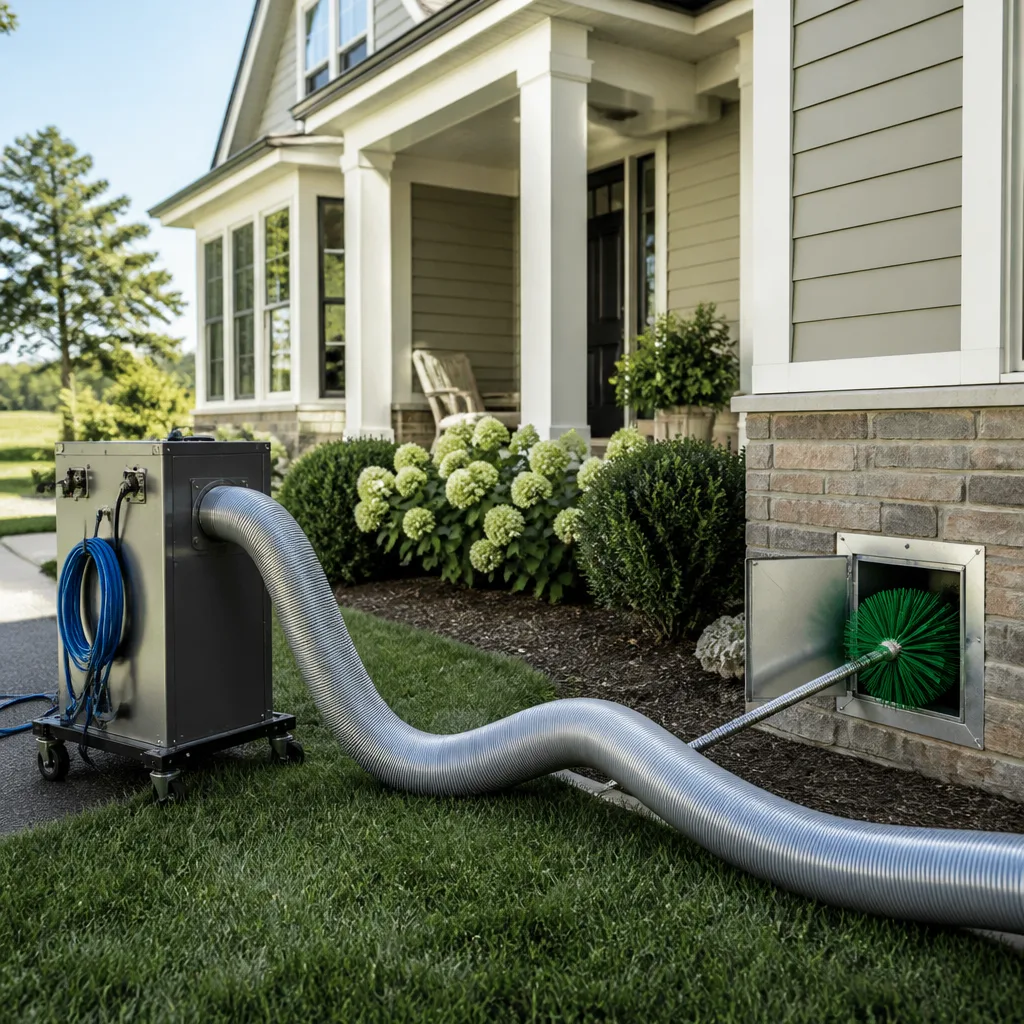 Whole-home duct cleaning
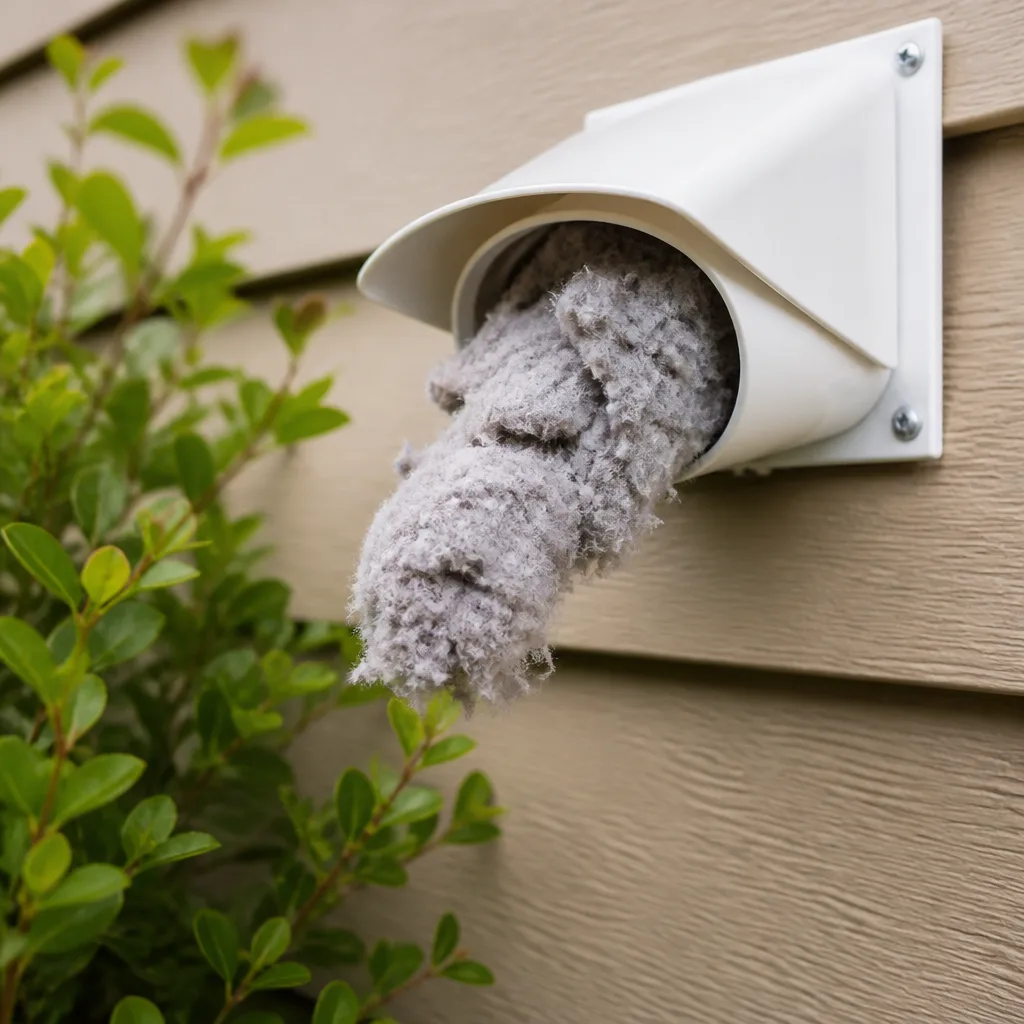 Dryer vent cleaning
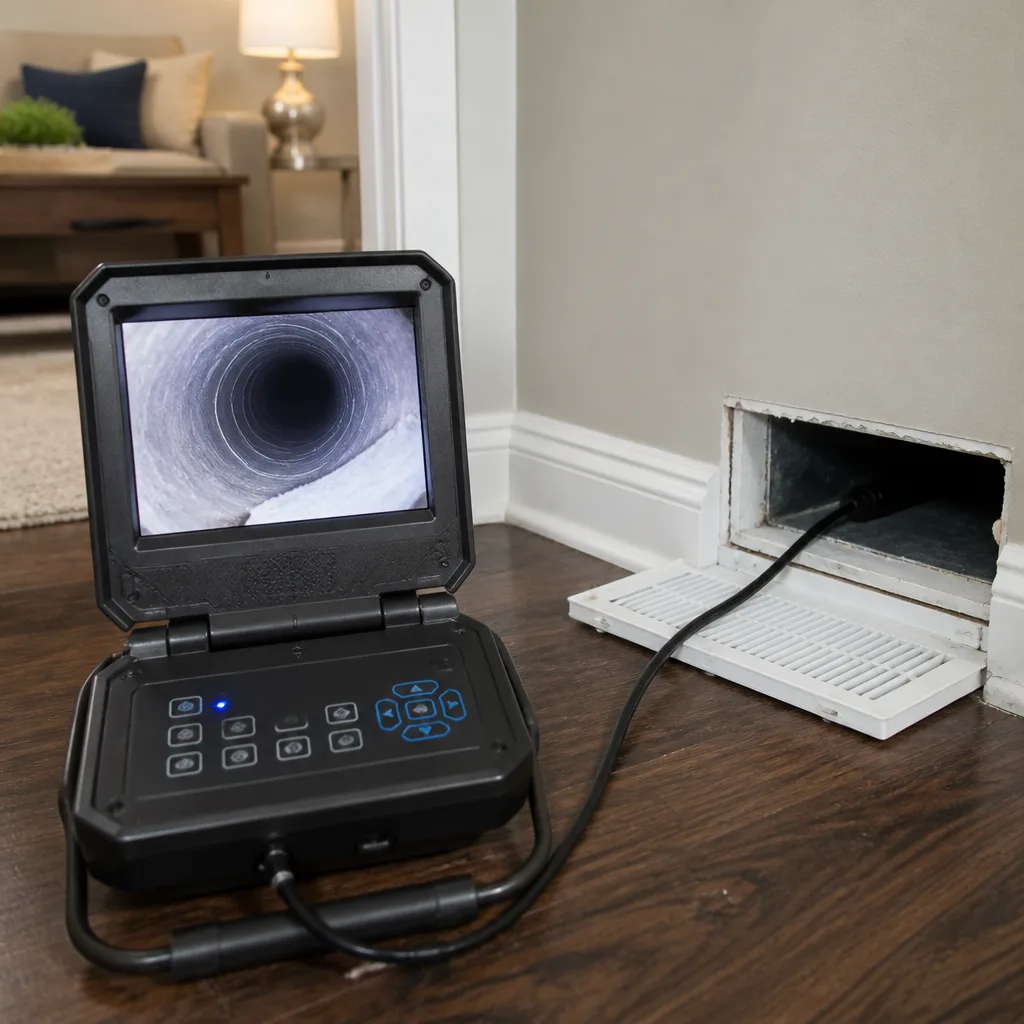 Camera inspection
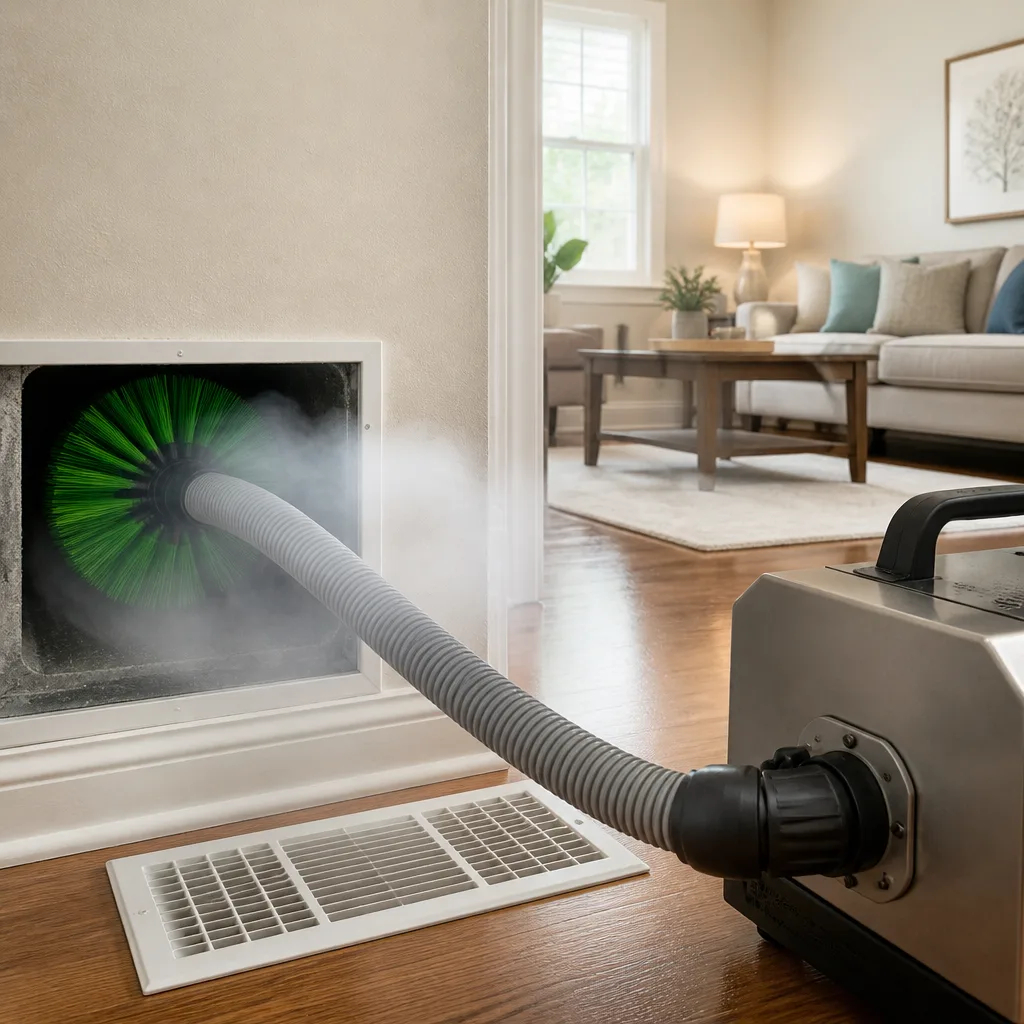 Sanitizing & deodorizing
Whole-system duct and dryer vent check with before-and-after photos - you see exactly what came out of your vents
That "$99 whole-house special" is a bait ad - the real number appears once they are in your hallway, or the "clean" is a shop-vac at the register. We photograph the inside of your ducts before and after instead.
Air Duct Cleaning Troubleshooting: Common Problems and How to Fix Them
If your home still smells musty two weeks after a professional duct cleaning, the technician likely cleaned the wrong thing – or cleaned correctly but missed the actual source. Ducts don’t generate odors; they transport them. And when dust reappears on your furniture days after a full-system cleaning, the problem is almost never that the technician “didn’t try hard enough.” It’s that the cleaning method, the equipment, or the diagnostic step before cleaning was inadequate. This guide walks through the most common post-cleaning complaints we hear from homeowners in Rancho Cordova and the wider Sacramento area, explains the technical root cause behind each one, and gives you a plain-language checklist to verify whether a completed Air Duct Cleaning job actually met professional standards. By the end, you’ll know exactly what to ask, what to inspect, and when the problem isn’t your ducts at all.
Quick Answer
Most persistent duct problems after a cleaning fall into five categories: dust returns fast because low-agitation methods left embedded debris behind; smells persist because the odor source was never identified or addressed; airflow doesn’t improve because the real restriction is at the coil, blower, or filter, not inside the duct runs; one room stays hot or cold because of a damper, leak, or poorly designed branch run that cleaning alone won’t fix; and mold keeps coming back because the moisture source feeding it was never corrected. The fix in each case requires correct diagnosis first, then equipment that actually agitates and extracts debris rather than just loosening surface dust, then verification against a standard before you pay.
Styles & brands we work with
- Whole-home duct cleaning
- Dryer vent cleaning
- Camera inspection
- Sanitizing & deodorizing
Table of Contents
- Complaint One: Dust Returns Within Days of Cleaning
- Complaint Two: The Smell Never Went Away
- Complaint Three: Airflow Is Unchanged After Cleaning
- Complaint Four: One Room Stays Hot or Cold No Matter What
- Complaint Five: Mold Keeps Coming Back in the Ducts
- How to Verify a Cleaning Job Met NADCA Standards Before Paying
- Duct Problem or HVAC Problem: How to Tell the Difference
- Common Mistakes to Avoid
- When to Call a Professional
- Frequently Asked Questions
- The Bottom Line
Complaint One: Dust Returns Within Days of Cleaning
You paid for a full duct cleaning. A week later, you run a finger across the TV stand and it comes back gray. The natural conclusion is that the cleaner didn’t do the job. Sometimes that’s true. More often, the cleaner did something, but not enough. Dust re-appearing within days almost always points to one of three technical failures: low-agitation cleaning that left embedded debris in place, a filter bypass that lets unfiltered air re-contaminate the system, or a return-side leak pulling attic or crawlspace air into the ducts.
The Agitation Problem
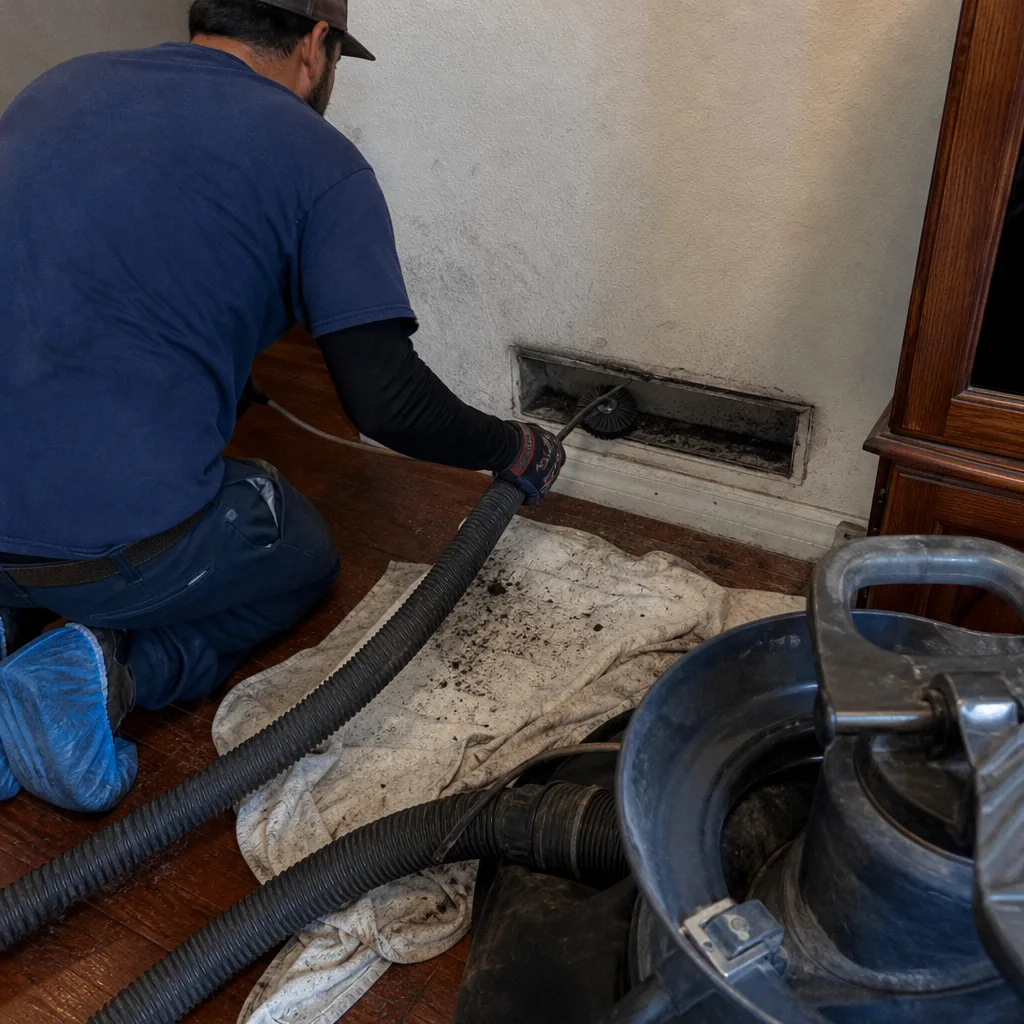
Most duct systems in Rancho Cordova homes are a mix of rigid sheet metal trunks and flexible branch runs. Flex duct has a spiral wire liner with deep ridges. Debris embeds itself in those ridges over years of operation. A shop vac attached to a vent opening pulls loose surface dust, but it does not dislodge the compacted material pressed into the liner. Professional systems like Rotobrush and Nikro platforms use rotating brush heads that physically contact the duct walls and break that embedded debris free while negative air pressure extracts it simultaneously. Without both agitation and extraction, you get a partial clean. The surface looks better; the embedded load stays. That embedded material loosens over the following weeks with normal airflow and re-coats your home. This is the single most common reason dust returns fast, and it’s the reason we run agitation equipment on every branch run, not just the main trunk.
The Filter Bypass Problem
If your filter doesn’t seal correctly in its slot, air goes around it. That air carries whatever was in the return duct straight into the blower, across the coil if you have one, and out through your supply registers. A brand-new filter in a bypassing slot filters nothing. You can check this yourself: turn the system off, remove the filter, and look for a visible gap between the filter frame and the filter slot. In Rancho Cordova, where summer cooling season runs long and systems cycle frequently, this gap means hours of unfiltered recirculation every day. The fix is a properly sized filter, filter slot gasketing if needed, and verifying the filter cover seals when closed. During a cleaning, the technician should flag this. If no one mentioned it, ask.
The Return-Side Leak Problem
Return ducts pull air from your living space back to the equipment. If a return run has a disconnected joint, a torn section, or an unsealed connection where it passes through the attic, it pulls attic air into the system. Attic air in a Rancho Cordova summer is loaded with fine dust, insulation fibers, and whatever else lives up there. Cleaning the supply side does nothing for this. The dust comes from upstream of the cleaning. A proper diagnostic includes a return-side inspection, ideally with a camera or at minimum a manual check of accessible return runs. This is part of how we scope every Air Duct Cleaning in Rancho Cordova job before starting work.
Complaint Two: The Smell Never Went Away
Odors that persist after a duct cleaning are not a sign that the cleaning “failed.” They’re a sign that the odor’s source was never in the ducts to begin with, or that the source was identified but only partially addressed. For help identifying these issues early, see our Air Duct Cleaning Warning Signs: A Rancho Cordova Homeowner’s Reference Guide. Ducts are metal tubes and flex liners. They don’t create smells. They carry air, and if that air picks up odor molecules somewhere along the path, the ducts deliver those molecules to every room. The fix starts with figuring out where the smell actually originates.
What Actually Causes Persistent Duct Odors
- The evaporator coil. In a Rancho Cordova cooling season, the coil sits wet for months at a time. Dust that bypasses the filter accumulates on the wet coil, forming a sludge. Bacteria and mold grow in that sludge, and the smell distributes through the supply ducts every time the system runs. Cleaning the ducts without cleaning the coil leaves the odor source fully intact.
- The drain pan or drain line. A clogged condensate line backs water up into the pan. Standing water grows biofilm, and biofilm smells. This is an HVAC equipment issue, not a duct issue, but it contaminates the air that passes through the ducts.
- A dead rodent in the duct or near a return. This smell is unmistakable, and it means an animal got in somewhere. Cleaning removes the remains if they’re in the duct, but the entry point has to be sealed or it happens again.
- Moisture in the ductwork itself. This is less common in Rancho Cordova’s dry climate than in humid regions, but it happens when a duct runs through an unconditioned attic and condensation forms on the outside or inside during cool-air operation. Surface cleaning won’t fix this. The duct needs inspection, insulation assessment, and possibly replacement of affected sections.
The Honest Diagnostic Sequence
- Identify the odor type: musty, burning, dead animal, chemical, or something else.
- Determine when it occurs: only when the system runs, only in certain rooms, or continuously.
- Inspect the coil, pan, and drain line first. These are the most common sources of musty smells in cooling-heavy climates like Sacramento County.
- Inspect the return side for entry points if the odor suggests an animal.
- Inspect the duct interior for visible contamination, moisture staining, or debris that could hold odor.
- Clean what’s contaminated and fix what caused the contamination. Cleaning without fixing is a temporary fix.
This is the sequence we follow on every job that involves a smell complaint. If a technician shows up and starts cleaning ducts without asking you to describe the smell and when you notice it, they’re skipping the diagnostic step.
Complaint Three: Airflow Is Unchanged After Cleaning
You expected stronger airflow from your registers after a cleaning. You didn’t get it. The first thing to understand is that duct cleaning is not an airflow repair service. Cleaning removes debris from inside the ducts. It does not change the duct layout, fix crushed or collapsed sections, replace an undersized return, or upgrade an aging blower motor. If airflow was poor before cleaning and unchanged after, the restriction was never debris in the first place. Here are the usual suspects.
The Real Airflow Restriction Points
- The blower motor. Blower motors age. Capacitors weaken. Blower wheels accumulate dust that unbalances them and reduces output. A 15-year-old blower moving air at 60% of its original capacity is an equipment problem, not a duct problem.
- The evaporator coil. A coil packed with years of accumulated dust and sludge restricts airflow dramatically, even with the blower at full power. This is one of the most overlooked airflow issues in Rancho Cordova homes where cooling runs from May through October. Coil cleaning is often done by HVAC contractors, but if it’s not done, no amount of duct cleaning will restore airflow.
- Collapsed or crushed flex duct. Flex runs get bent, pinched, or crushed by stored items, wildlife in the attic, or poor initial installation. A crushed six-inch flex run might deliver the equivalent of a three-inch run. Cleaning it does nothing. It needs to be repaired or replaced.
- Undersized return. If the return side can’t pull enough air to feed the blower, the system starves. No cleaning fixes this. It’s a duct design issue that requires modification.
- Closed or partially closed dampers. Sometimes an airflow complaint is a damper setting. A previous occupant or technician closed a damper to balance a room and never reopened it.
If you want to diagnose this yourself before calling anyone, walk through the house with the system running and feel the airflow at each register. Note which rooms are weak. Check the filter. Check for visible crushed flex in any accessible attic area. Then, when you call a professional, you can describe the pattern precisely. That saves diagnostic time and points the technician toward the right fix. Our team includes Air Duct Repair in Rancho Cordova because airflow problems often need a repair, not a cleaning.
Complaint Four: One Room Stays Hot or Cold No Matter What
This complaint is extremely common in two-story Rancho Cordova homes and in homes with long duct runs to converted garages, additions, or rooms over unconditioned spaces. The room gets the least cooling in summer or the least heat in winter, and a duct cleaning changed nothing. Here’s why: the problem is not debris. The problem is how much conditioned air reaches that room, and whether the room holds it.
Why One Room Underperforms
- Long duct run with high friction loss. A branch run of 40 feet loses more pressure than one of 15 feet. The room at the end of the long run gets weak airflow. This is a design issue. Fixes include adding a duct booster fan, resizing the run, or rebalancing dampers.
- No return in the room. If a room has a supply register but no return, air struggles to enter because the pressure in the room has nowhere to go. The door has to stay open for the room to condition properly. Adding a return, a transfer grille, or a jumper duct is the solution. Cleaning the supply duct does nothing for this.
- Leaking or disconnected branch run. A flex branch that has pulled loose from the trunk or the register boot spills conditioned air into the attic instead of the room. The room starves; the attic gets comfortable. This requires a repair, not a cleaning.
- Inadequate insulation or air sealing in the room itself. If a converted garage has poor insulation, the duct system could deliver proper airflow and the room still won’t hold temperature. The envelope is the problem, not the ducts. Rancho Cordova summers expose this fast.
The diagnostic sequence here is: measure airflow at the register, compare it to other rooms, inspect the branch run from the trunk to the register, check for leaks or disconnects, and assess the room’s insulation. Only after that do you know whether cleaning, repair, or something else is needed.
Complaint Five: Mold Keeps Coming Back in the Ducts
You saw dark staining inside a duct, or a musty smell in one room. You had the ducts cleaned. The staining or smell came back within months. This is one of the most frustrating complaints a homeowner can have, and the answer is almost always the same: the moisture source was never addressed.
What Mold in Ducts Actually Looks Like – and Doesn’t
First, a clarification. Much of what homeowners identify as mold is not mold. Dust deposits in ducts often appear as dark streaks or patches. They can look alarming. But dust is not mold. Mold requires moisture and an organic food source. In Rancho Cordova’s dry climate, mold inside ducts is relatively rare compared to humid coastal or southern regions, but it does occur, most commonly in these situations: condensation on the outside of metal ducts in unconditioned attics during cool weather, condensation inside ducts carrying cold air through warm humid spaces, or actual moisture intrusion from a roof leak, plumbing leak, or a disconnected bathroom exhaust vent dumping moist air into an attic.
The Fix Sequence
- Identify the moisture source. If it’s condensation, the duct needs insulation or the attic needs ventilation correction.
- If the moisture source is a leak, fix the leak. A roof leak dripping onto a duct will re-contaminate it after every cleaning until the roof is repaired.
- Replace contaminated duct sections if the liner is saturated or the mold has penetrated the insulation. Surface cleaning of porous material does not eliminate mold that has taken root in the substrate.
- Clean remaining ducts with agitation and extraction to remove spores and debris.
- Re-test after the fix to confirm the moisture problem is solved.
This is not a five-minute assessment. It requires inspection and a willingness to look beyond the ducts themselves. If a cleaner offers to “spray the mold away” without discussing the moisture source, you’re being sold a tempory fix.
How to Verify a Cleaning Job Met NADCA Standards Before Paying
NADCA, the National Air Duct Cleaners Association, publishes the ACR standard, which is the industry benchmark for residential duct cleaning. The standard is specific about what must be cleaned and how. Here is a plain-language checklist you can use before you sign off on a completed job.
The Pre-Payment Verification Checklist
- Ask what equipment was used. The standard requires mechanical agitation and negative air extraction. A shop vac and a brush do not meet the standard. Professional platforms like Rotobrush and Nikro are designed for exactly this purpose.
- Ask to see the ducts after cleaning. A post-cleaning visual inspection, ideally with a camera before and after, should show clean duct surfaces without visible debris accumulation.
- Verify the scope. The standard covers supply ducts, return ducts, registers, grilles, diffusers, coils, drain pan, blower motor and housing, and the air handling unit. If the technician only cleaned supply vents, the job was incomplete.
- Check that registers and grilles were cleaned and re-seated. Dirty registers re-contaminate clean ducts on the first cycle. They should be washed, not just vacuumed.
- Verify filter replacement. A used filter with accumulated dust gets reinstalled over clean ducts. The filter should be new or verified clean.
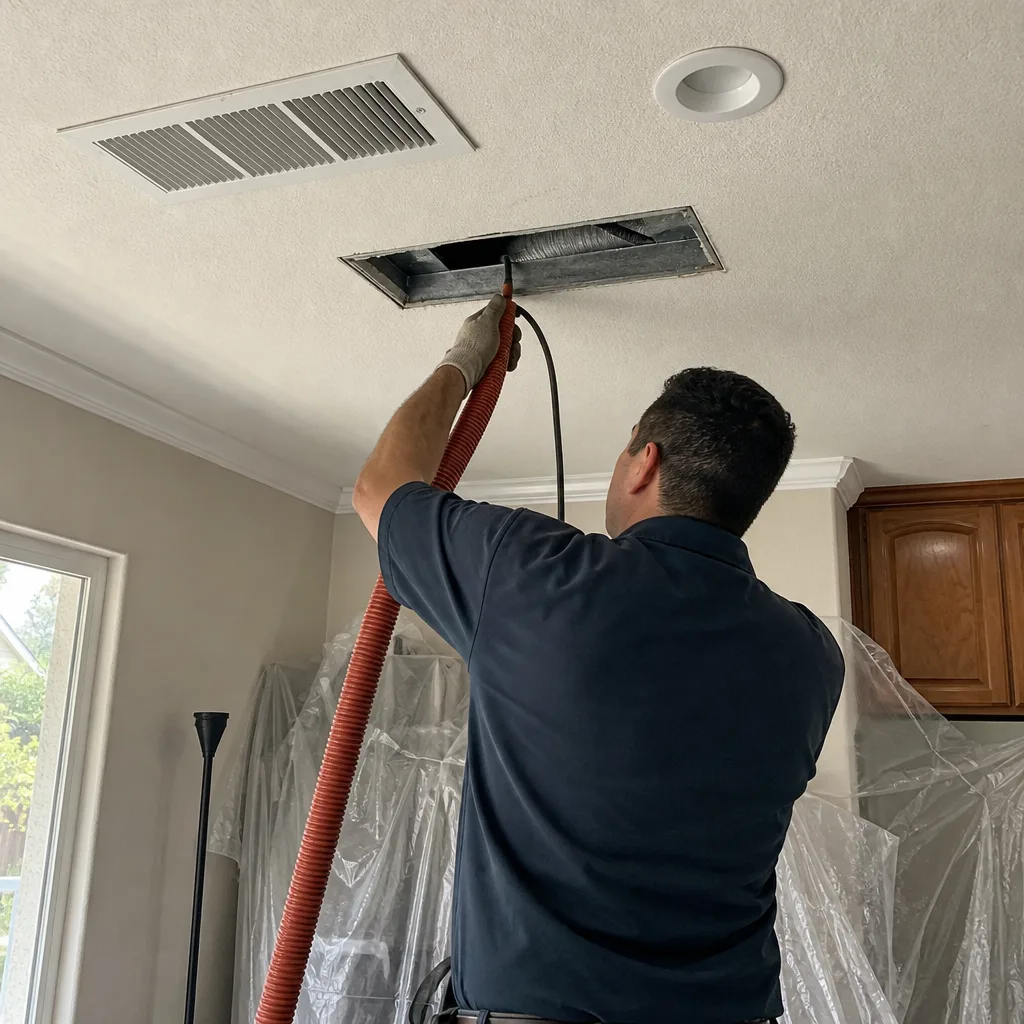
- Ask about the containment method. Negative air pressure should be established during cleaning so dislodged debris is extracted, not blown into your living space. Systems like Abatement Technologies HEPA filtration units contain particulates at a level most residential cleaners don’t reach.
This checklist protects you from paying for a partial job. It also gives you a concrete way to compare one provider’s scope against another’s before you hire.
Duct Problem or HVAC Problem: How to Tell the Difference
One of the most frustrating experiences for a homeowner is paying for a service that doesn’t solve the problem because the problem was misdiagnosed from the start. Duct cleaning companies sometimes blame the ducts. HVAC companies sometimes blame the HVAC. The truth is that the systems are connected, and the diagnosis requires looking at both. Here’s a practical way to sort it out.
Questions That Point to the Real Problem
- Is the problem in every room or one room? Every room suggests a central issue: blower, coil, filter, or total duct blockage. One room suggests a branch run issue, a closed damper, a leak, or a room envelope issue.
- Does airflow improve after filter replacement? If yes, the filter was the restriction. If no, look deeper.
- Does the problem change with the season? If cooling is weak but heating is fine, the issue is often coil-related, since the coil is active during cooling. If both are weak, look at the blower and the ducts.
- Is there visible dust buildup at the registers? Heavy buildup at supply registers after a short period can indicate return-side leakage pulling dirty attic air in.
- Has the system been serviced recently? An HVAC tune-up that didn’t include coil cleaning or blower wheel cleaning leaves those restrictions in place. Duct cleaning can’t compensate for them.
In our experience, the most common “duct problem” that isn’t actually a duct problem is a dirty coil. This is especially true in Rancho Cordova, where the cooling season is long and coils see constant use. A coil inspection should be part of any duct cleaning scope. If it’s not, you may be paying for the wrong fix.
See the difference
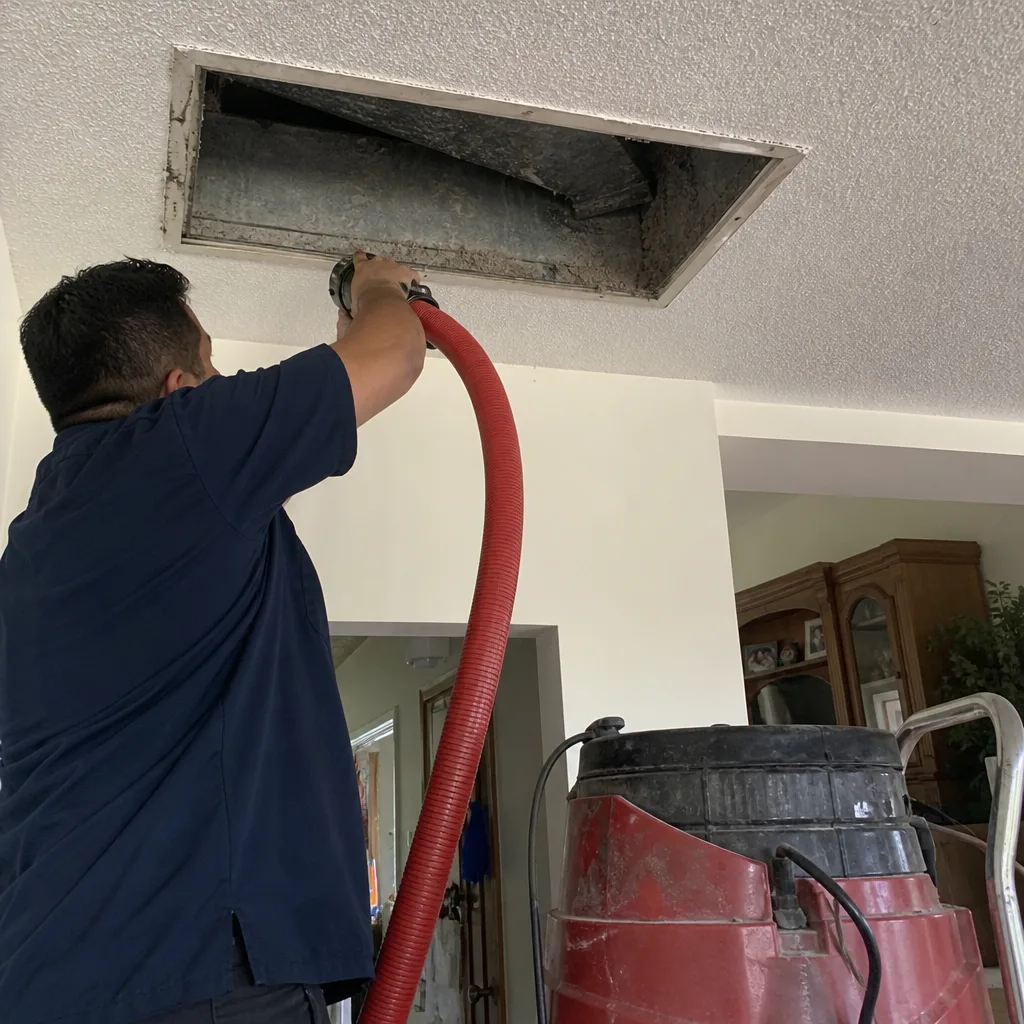
 Before
 After
 Before
 After
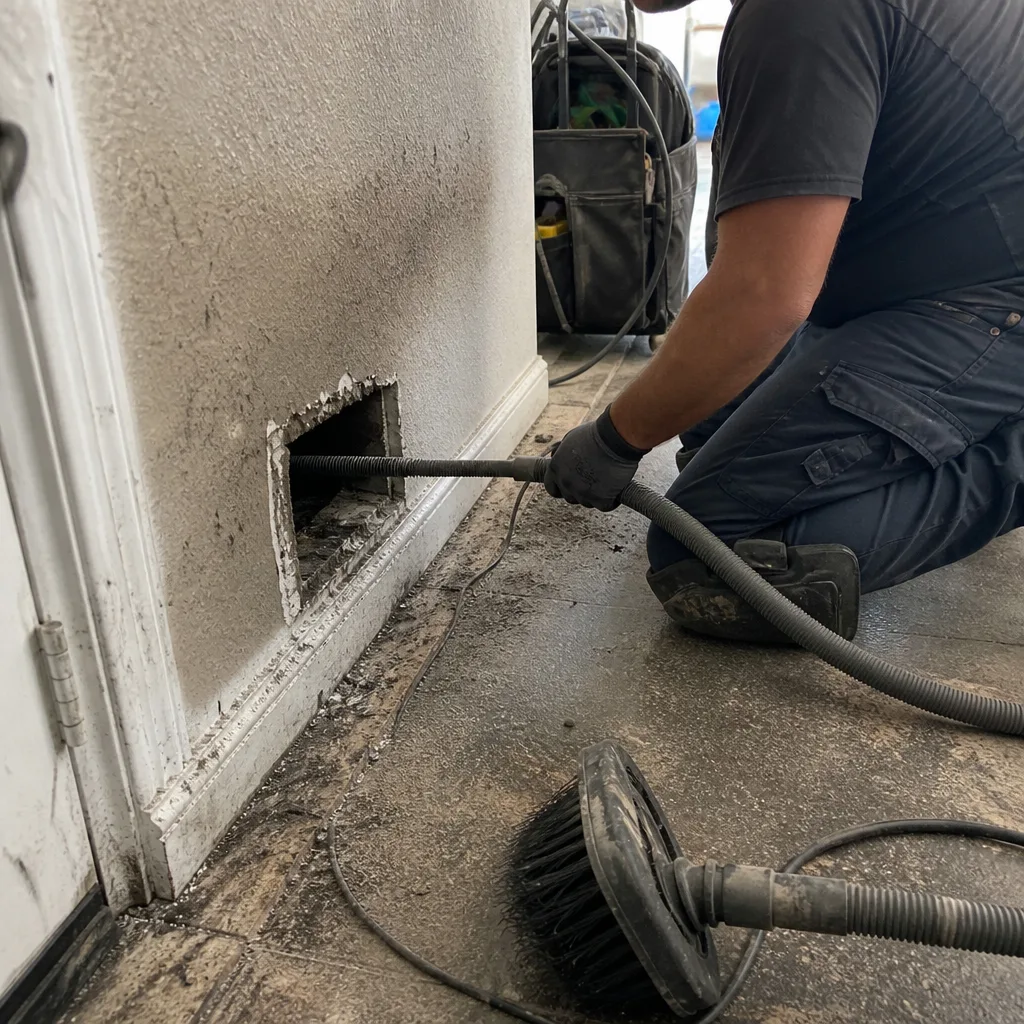 Before
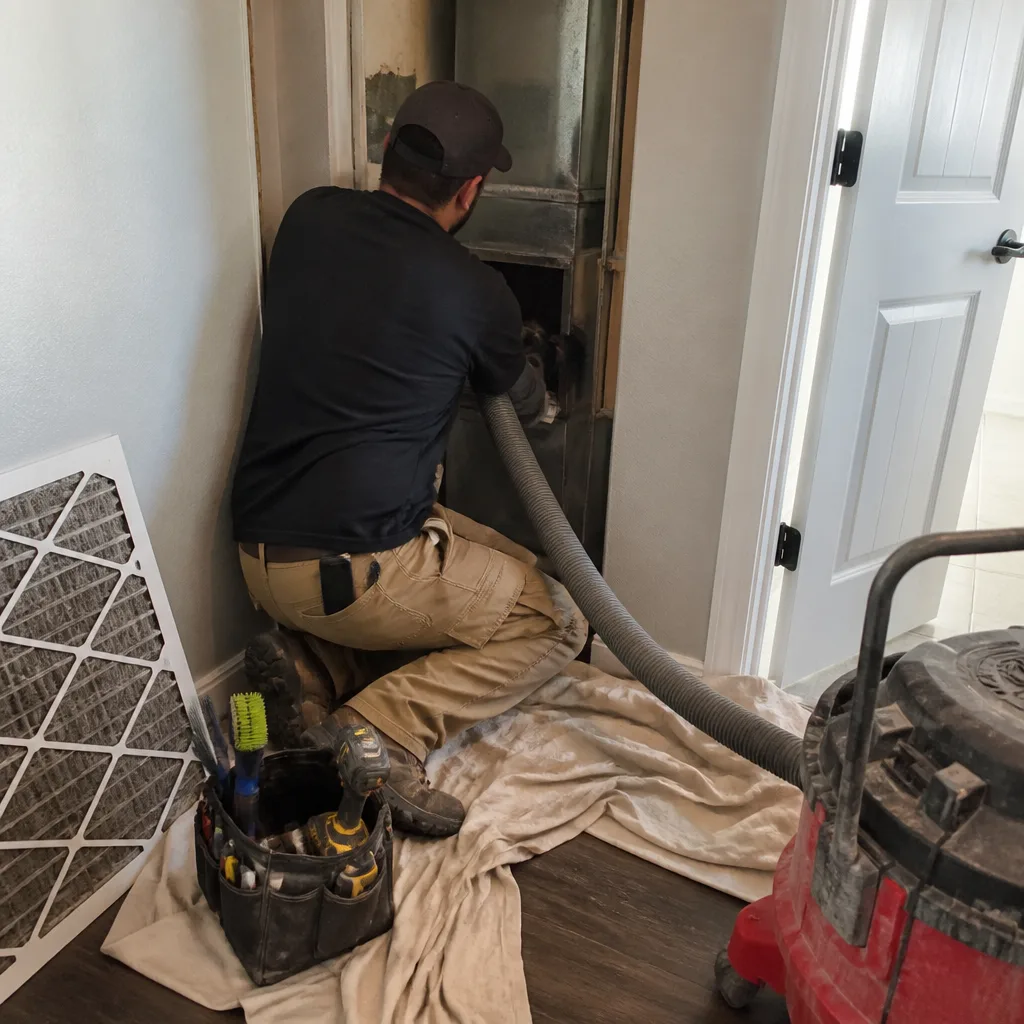 After
Common Mistakes to Avoid
- Hiring on price alone. A low price usually means low-agitation methods, skipped components, or a rushed job. The most expensive cleaning is the one that has to be redone. In Rancho Cordova, we see this pattern repeatedly: a $99 special that misses the coil, the return side, and the blower, and leave the homeowner with the same complaint they started with.
- Assuming all duct cleaning methods are equivalent. They are not. Vacuum-only methods leave embedded debris in place. Mechanical agitation with extraction removes it. The difference shows up in how long the results last.
- Skipping the diagnostic step. A technician who doesn’t ask about your specific complaint before starting work is guessing. The complaint should guide the inspection, and the inspection should guide the cleaning.
- Expecting cleaning to fix airflow or temperature problems. Cleaning removes debris. Airflow and temperature problems often need repair, rebalancing, or equipment service. Know the difference before you spend.
- Ignoring the filter after cleaning. Reinstalling a dirty filter over clean ducts is a missed opportunity. The filter is the first line of defense for the clean system.
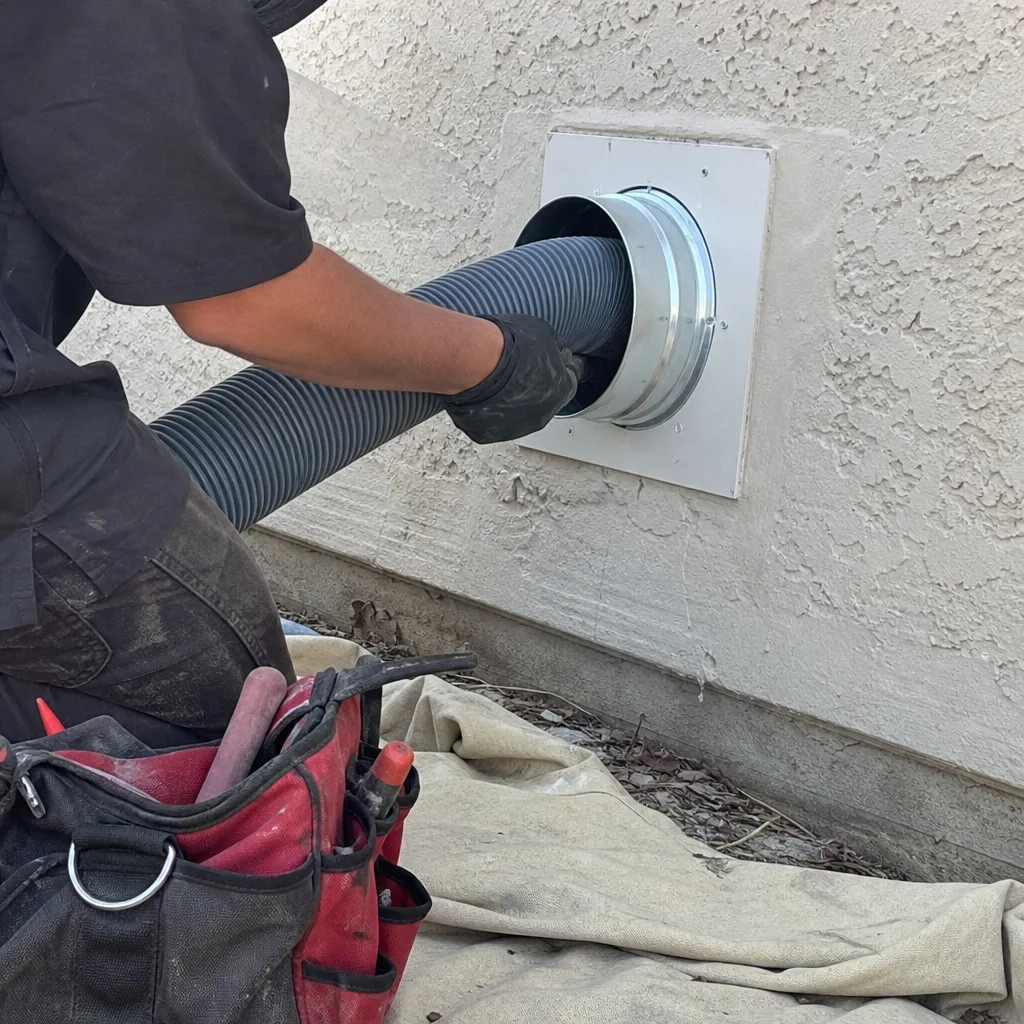
- Treating dryer vents as an afterthought. Dryer vents are part of the duct system in your home, and they present a fire risk that supply and return ducts don’t. If you’re already having ducts serviced, Dryer Vent Cleaning in Rancho Cordova should be on the same scope. Lint-filled vents are a leading cause of residential fires, and the fix is straightforward.
- Not checking for return-side leakage. Supply-side cleaning gets all the attention, but return-side leaks are a primary source of re-contamination in attic-vented homes.
When to Call a Professional
If you’ve worked through this guide and you’re still seeing dust return fast, smelling something that won’t clear, feeling weak airflow in specific rooms, or suspecting moisture in the ducts, it’s time to bring in someone who can diagnose the system as a whole rather than just clean the visible parts. That means a company that scopes the job before quoting, uses professional agitation and extraction equipment, and can repair what it finds rather than referring you to a second contractor. For Choosing the Right Air Duct Cleaning Brand: A Buyer’s Guide for Rancho Cordova, Duct Cleaning Rancho Cordova offers free estimates in Rancho Cordova – call (877) 752-4148 to schedule an inspection. We’ll walk you through what we find, what needs cleaning, what needs repair, and what’s actually fine.
Frequently Asked Questions
Professional duct cleaning in Rancho Cordova typically ranges from $350 to $650 for a full system, depending on home size, number of systems, and the condition of the ductwork. Homes with multiple HVAC systems or heavily contaminated ducts may fall above this range. Be wary of whole-house quotes under $200 – they almost always mean vacuum-only methods with no mechanical agitation, limited scope, or both. Call (877) 752-4148 for an exact quote based on your home’s configuration. Estimates are free.
Cheaper quotes almost always reflect what’s being left out: no mechanical agitation, skipped return side, no coil or blower cleaning, no containment, and no post-cleaning verification. A vacuum attached to a vent removes loose surface dust but leaves embedded debris in the flex liner ridges. That debris loosens over the following weeks and re-coats the home. You’re paying for a temporary improvement rather than a cleaning. The equipment alone explains much of the price difference – professional platforms like Rotobrush and Nikro systems, plus HEPA-level containment units like those from Abatement Technologies, cost significantly more to operate than a shop vac.
Ask for a pre- and post-cleaning camera inspection. You should be able to see the duct interior before and after. The post-cleaning image should show clean metal or flex liner without visible debris accumulation. You should also verify the scope: supply ducts, return ducts, registers, grilles, coil, blower, and housing. If the technician only opened a few supply vents and called it done, the job was incomplete.
Most homes benefit from duct cleaning every 3 to 5 years, with adjustments based on specific conditions: pets that shed heavily, recent renovation, allergies or respiratory conditions in the household, or visible debris at the registers. Rancho Cordova’s dry climate and long cooling season mean HVAC systems run frequently, which accelerates dust accumulation. If you just had a cleaning and dust returns within weeks, the cleaning method or a system leak is the problem – not the frequency.
Ducts themselves don’t cause illness, but they distribute whatever accumulates in them. Dust, pet dander, pollen, and mold spores that settle in ductwork recirculate through the living space every time the system runs. For people with allergies or respiratory conditions, this can worsen symptoms. The relevant fix is removing the material through proper agitation and extraction, then verifying the system’s filter is doing its job correctly. HEPA-level containment during the cleaning prevents dislodged particulates from spreading through the house during service.
Duct cleaning can help efficiency when significant debris is restricting airflow, but the effect is usually modest. The larger efficiency impacts come from filter replacement, coil cleaning, and sealing duct leaks. If you’re concerned about energy bills, a full system inspection is more useful than cleaning alone – that’s why our scope includes checking the coil, blower, and filter bypass while we’re in the system.
The Bottom Line
Duct cleaning works when it’s done correctly: mechanical agitation with negative air extraction, a full scope that includes returns, coils, blower, and registers, proper containment so debris doesn’t spread, and a diagnostic step that identifies the real source of the complaint before the cleaning starts. It fails when it’s reduced to vacuuming the supply side and calling it a day. If dust returns fast, the smell persists, airflow is unchanged, or one room won’t cooperate, the answer is almost always that a step was skipped, the equipment was inadequate, or the problem was never in the ducts to begin with. Work through the checklists in this guide, verify the scope before you pay, and if you’re in Rancho Cordova and want a second look at a system that’s been “cleaned” but still isn’t right, our team at Duct Cleaning Rancho Cordova will inspect it honestly and tell you what’s actually going on.
Written by the team at Duct Cleaning Rancho Cordova, serving Rancho Cordova since 2013. Explore more guides & resources.