
Last updated November 3, 2026
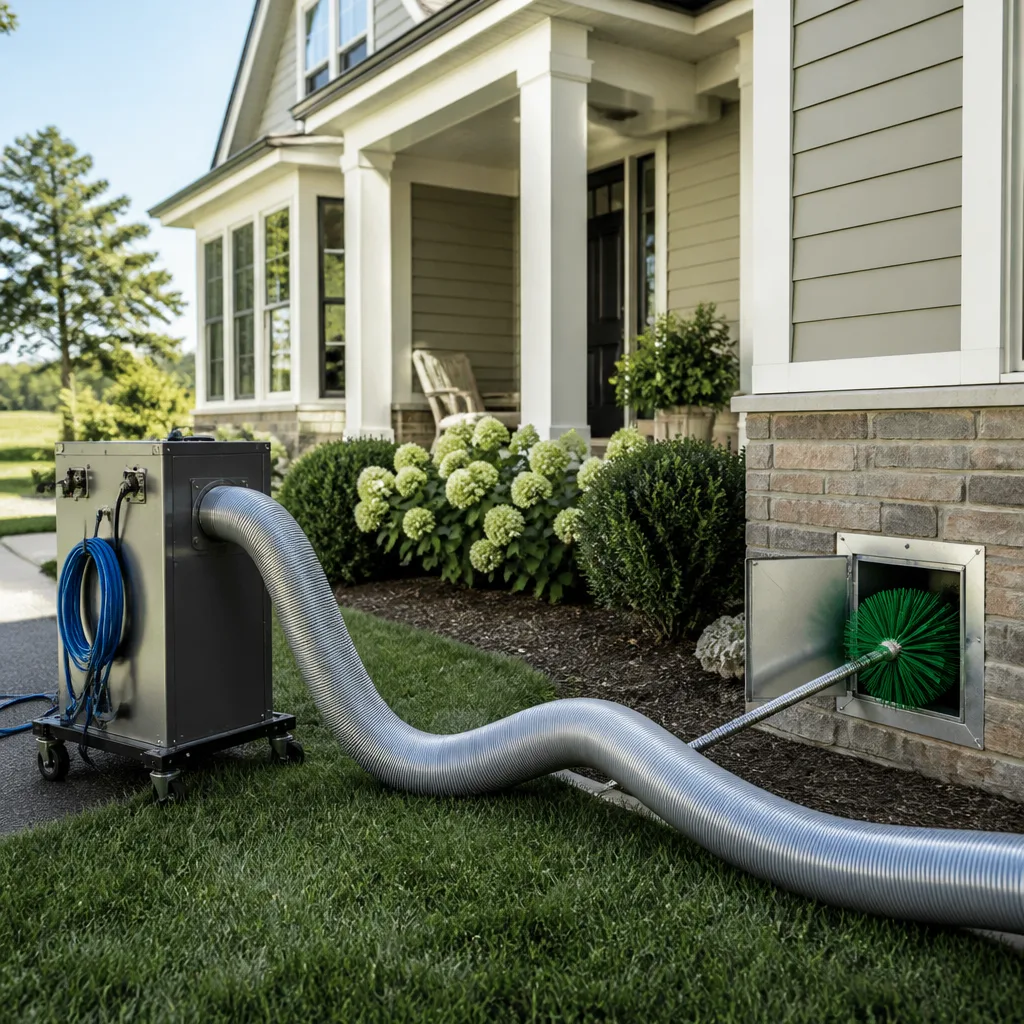 Whole-home duct cleaning
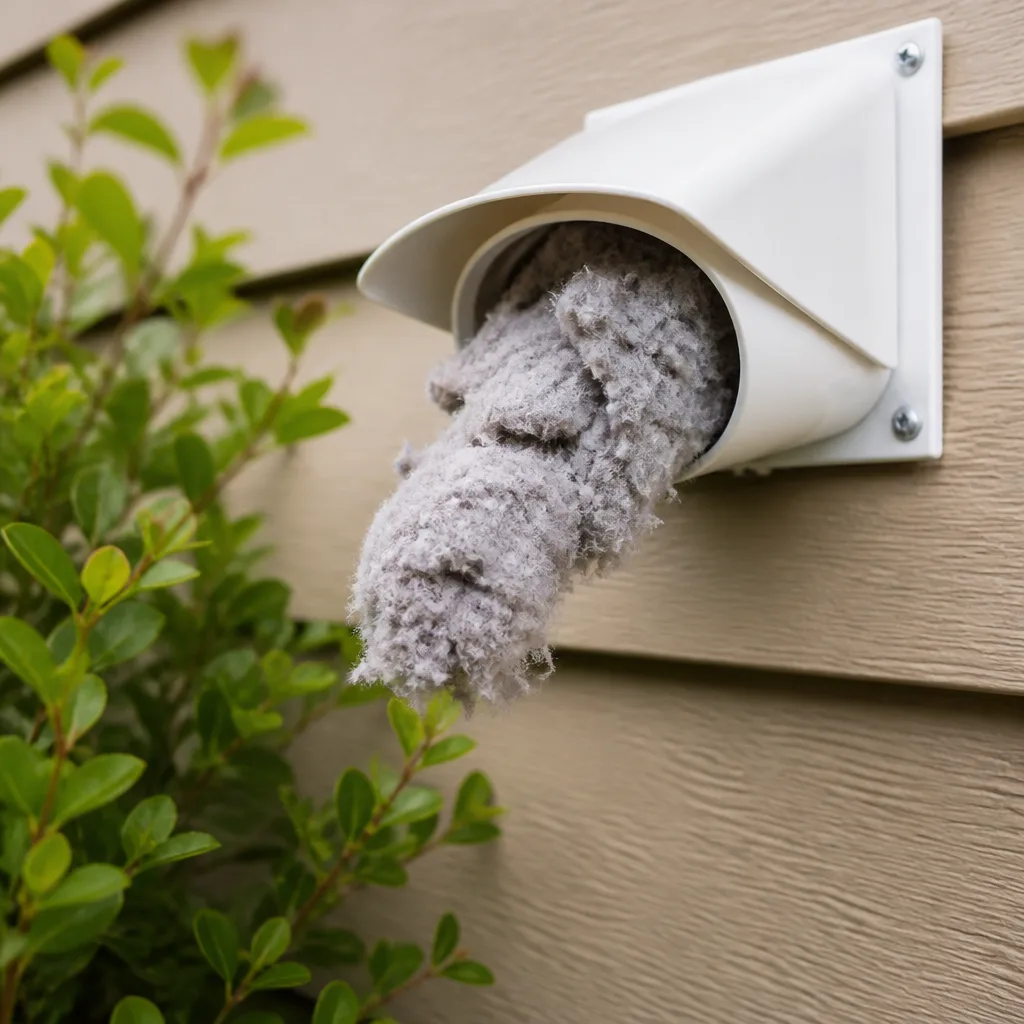 Dryer vent cleaning
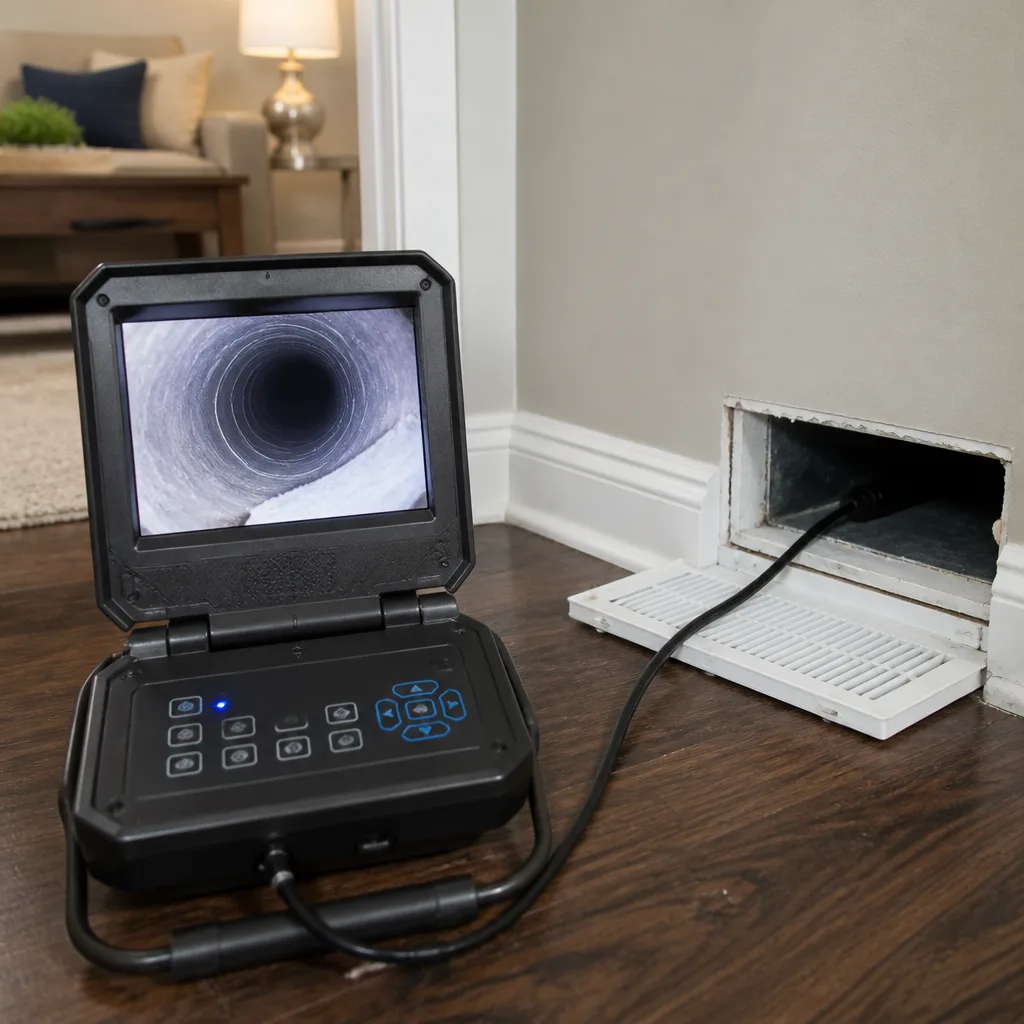 Camera inspection
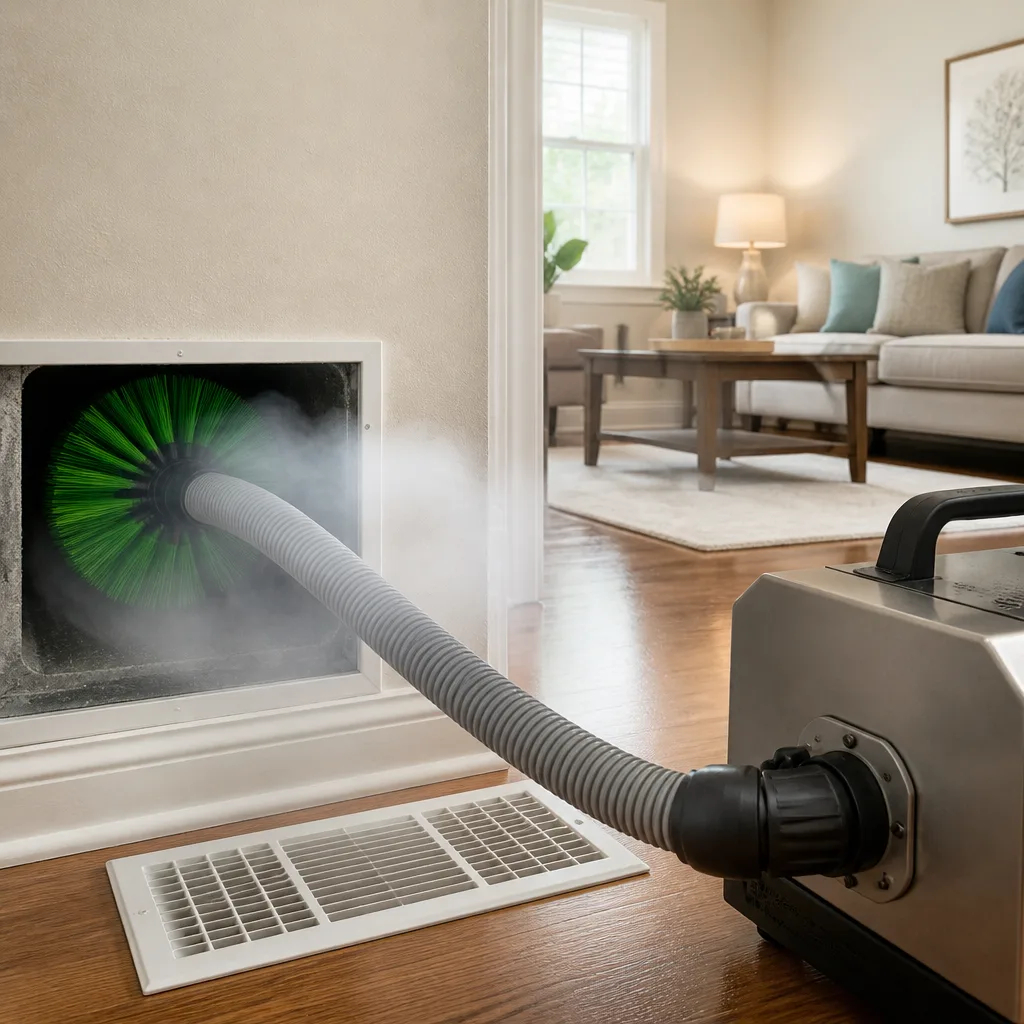 Sanitizing & deodorizing
Whole-system duct and dryer vent check with before-and-after photos - you see exactly what came out of your vents
That "$99 whole-house special" is a bait ad - the real number appears once they are in your hallway, or the "clean" is a shop-vac at the register. We photograph the inside of your ducts before and after instead.
Choosing the Right Air Duct Cleaning Brand: A Buyer’s Guide for Rancho Cordova
Here’s something that surprises most Rancho Cordova homeowners: the most recognized name in duct cleaning isn’t a brand you’ll see on a billboard. It’s a technical standard called NADCA ACR, and the majority of companies operating in the Sacramento metro area never mention it because their equipment and process can’t meet it. This guide will give you a technical filter for evaluating any our Air Duct Cleaning services, not a marketing one. By the time you finish reading, you’ll know exactly which questions separate professional-grade operators from shop-vac-and-a-promise outfits serving Rancho Cordova.
Quick Answer
The right air duct cleaning in Rancho Cordova isn’t defined by a recognizable logo. It’s defined by three verifiable things: commercial-grade negative-pressure equipment (not portable shop vacuums), a documented process that aligns with NADCA’s ACR standard, and a company scope that includes repair and dryer vent fire-safety rather than cleaning alone. Ask any company to name their equipment platform and describe their containment method. If the answer is vague, keep looking.
Styles & brands we work with
- Whole-home duct cleaning
- Dryer vent cleaning
- Camera inspection
- Sanitizing & deodorizing
Table of Contents
- The Two Equipment Tiers: Why the Truck Matters More Than the Logo
- What the NADCA ACR Standard Actually Specifies
- How to Spot Technical Transparency (or the Lack of It)
- What Legitimate Post-Cleaning Verification Looks Like
- Why Repair and Dryer Vent Capability Signals Deeper Competency
- Rancho Cordova-Specific Factors: Climate, Construction, and What They Mean for Your Ducts
- Questions to Ask Before You Book
The Two Equipment Tiers: Why the Truck Matters More Than the Logo
Before you compare brands, compare equipment classes. The duct cleaning industry splits into two basic tiers, and the gap between them is wider than most homeowners realize.
Tier 1: Portable units. These are typically modified shop vacuums with a rotating brush attachment. They pull a modest negative pressure, perhaps 2,000 to 4,000 CFM in optimistic conditions. Critically, the collection unit sits inside your home during service. That means whatever the brush dislodges but the vacuum can’t capture stays in your living space. Portable systems can remove loose surface dust from accessible duct runs. They cannot create the sustained negative pressure required to extract compacted debris from the full duct system, especially in longer residential runs common in Rancho Cordova’s ranch-style and two-story homes built from the 1960s through the 1990s.
Tier 2: Truck-mounted or high-powered negative air systems. These operate in the 8,000 to 15,000+ CFM range. The vacuum source sits outside the house, typically in a truck or van, connected to the duct system through a large-diameter hose. The house itself becomes part of the containment strategy: strong negative pressure pulls air backward through the entire duct network, while agitation tools loosen debris from the inside. This is the professional standard, and it’s what platforms like Rotobrush and Nikro are designed around. These are purpose-built duct cleaning systems, not repurposed consumer tools.
Why does this distinction matter more than brand recognition? Because two companies can both call themselves “professional duct cleaners” while operating in completely different technical leagues. A Tier 1 operator may do a visually acceptable job on a lightly soiled system. That same operator will struggle to address the kind of accumulated debris found in Rancho Cordova homes where HVAC systems run hard through Sacramento Valley summers.
What to Listen For When You Call
- “We use a truck-mounted system” – good sign, but ask for specifics. Which platform? What CFM rating?
- “We have all the equipment in our van” – neutral. The question is whether the collection and filtration happens outside the home or inside it.
- “Our technician brings everything needed” – could be either tier. Ask directly: does your system create negative pressure from outside the house?
The brand name matters only as a proxy for equipment class. When a company says they run Rotobrush or Nikro, that tells you they’ve invested in commercial-grade platforms. When they can’t name their system, they’re probably running a portable unit and hoping you won’t know the difference. You now know the difference. For a deeper look at what professional cleaning involves, see our guide to Air Duct Cleaning in Rancho Cordova.
What the NADCA ACR Standard Actually Specifies
NADCA, the National Air Duct Cleaners Association, maintains a technical document called the ACR Standard: Assessment, Cleaning, and Restoration of HVAC Systems. This is the closest thing the industry has to a governing specification for what “clean” means and how to verify it. You don’t need to read the full document to hold a company accountable to it.
The ACR standard addresses three phases that every legitimate duct cleaning job should include:
- Assessment: The technician inspects the system before cleaning. This means opening access points, examining the supply and return sides, checking the blower compartment and coil, and identifying specific contamination types – dust, debris, microbial growth, or construction residue. The assessment should be documented. If a company gives you a flat quote without looking at your system, they’re skipping the first step of the standard.
- Cleaning: The actual mechanical removal of debris from all components of the HVAC system – supply and return ducts, registers, grilles, plenums, blower motor and housing, evaporator coil, and drain pan. The standard requires source removal: physically dislodging and extracting debris, not fogging or spraying over it. Negative pressure containment during cleaning is implied throughout the process requirements.
- Restoration: Returning the system to serviceable condition. This includes replacing access panels, sealing any openings created for cleaning, changing filters, and confirming the system operates correctly after service. A company that cleans your ducts but doesn’t check that the HVAC system still functions properly afterward isn’t completing the job.
Now, here’s the key question: what equipment makes ACR-compliant cleaning possible? Source removal at the standard NADCA describes requires sustained negative pressure strong enough to transport dislodged debris out of the duct system, combined with agitation tools – rotating brushes, air whips, or skipper balls – that break the mechanical bond between debris and duct surfaces. A portable shop vac can’t maintain that negative pressure across a full residential system. That’s the equipment truth hiding behind the standard.
You can ask a company directly: “Do you clean to the NADCA ACR standard?” Then listen to the answer. A company that knows the standard will say yes and can describe their process in those terms. A company that has never heard of it – or gives you a vague “we do a thorough job, ma’am” – has revealed something important about their technical depth. Professional equipment, properly used, produces results that can be described in the language of the standard. Improvised tools produce results described in vague assurances.
In our experience serving Rancho Cordova, we find that homeowners who ask this question immediately change the tone of the sales conversation. They’re no longer being sold. They’re evaluating. That’s the position you want to be in.
How to Spot Technical Transparency (or the Lack of It)
Every duct cleaning company in Rancho Cordova uses the same three verbs on their homepage: clean, improve, breathe. The differentiator is what they say after the verb.
Technical transparency means a company can describe their process in specific mechanical terms without being prompted. Here’s what that sounds like:
- “We connect a 10-inch hose to the main trunk line and pull negative pressure from a truck-mounted vacuum rated at 12,000 CFM.”
- “We agitate the duct walls with a rotating brush while the system is under vacuum, then move section by section from the farthest register back to the main trunk.”
- “We install HEPA filtration at the return side during cleaning to contain any particulates that become dislodged during agitation.”
Here’s what marketing language sounds like instead:
- “We use a deep-clean process to remove hidden dust and allergens.”
- “Our technicians are trained to provide superior service with a satisfaction guarantee.”
- “We help your family breathe easier with our state-of-the-art system.”
The first set of sentences is falsifiable. A real technician can walk through every one of those steps in your utility closet. The second set is unfalsifiable. You can’t verify “superior service” before the job, and “state-of-the-art” without a brand name attached means nothing.
This matters because falsifiable claims are a proxy for competence. A company that describes its process in technical terms has a process it can defend. A company that describes its process in adjectives is relying on your inexperience. The question to ask is simple: “Walk me through what actually happens when you clean my ducts, from the moment the truck parks to the moment it leaves.” A technically transparent company will answer with sequence, equipment names, and task descriptions. A marketing-driven company will answer with reassurances.
What Legitimate Post-Cleaning Verification Looks Like
Here’s a fact that most duct cleaning companies hope you never learn: the majority of the duct system is not visible to the naked eye. Supply runs disappear into walls, floor cavities, and ceilings. The technician cannot see most of what they claim to have cleaned. This is why the industry has a credibility problem, and it’s why legitimate operators will show you their work rather than describe it.
Post-cleaning verification, done properly, looks like this:
- Before-and-after photography at actual access points. The technician should cut or open access to the main supply and return plenums, photograph the interior before cleaning, and photograph the same locations after. These are not staged marketing photos. They’re shots taken with a phone camera at the job site, time-stamped, of your ducts.
- Visual documentation of specific components. The evaporator coil, blower housing, and drain pan are where real contamination accumulates. Photos of these components before and after tell you whether the technician actually accessed them or just ran a brush through the register openings.
- A system performance check. The HVAC system should be run and confirmed operational after cleaning. This includes checking airflow at supply registers and confirming the blower operates normally. A company that vanishes the moment the vacuum shuts off isn’t completing the shut-down phase.
- Post-cleaning inspection access. If extra access points were cut, they should be properly sealed, not taped over with duct tape. Ideally, the technician leaves permanent access panels in the main trunks so future cleaning and inspection are straightforward.
Here’s the part most homeowners get wrong: a technician’s verbal assurance that “everything looks great” is not verification. It’s a warranty that costs nothing and means nothing. Photographs are verification. Access to inspect the work is verification. A company that resists showing you documentation of the cleaning – or gets defensive when you ask for before-and-after photos – is telling you something you should believe.
Why Repair and Dryer Vent Capability Signals Deeper Competency
Here’s a pattern we see repeatedly in Rancho Cordova: a homeowner hires a duct cleaning company, the technician finds a real problem – a disconnected boot, a crushed flex run, a hole in a return plenum – and then says, “We don’t do repairs, you’ll need an HVAC contractor for that.” The homeowner now has a half-finished job and a second contractor to vet.
That hand-off is a tax on your time and a signal about the first company’s scope. A company that only cleans ducts has no incentive to look closely for damage. A company that cleans and repairs ducts, by contrast, has every incentive to find problems during the assessment phase, because they can propose a fix as part of the same service call. The Air Duct Repair in Rancho Cordova capability is not an upsell. It’s a signal that the company understands duct systems as complete assemblies, not just surfaces to be brushed.
The same logic applies to dryer vent cleaning. The US Fire Administration identifies dryer vent fires as a leading cause of residential fires – thousands of them every year, many caused by lint accumulation in the vent run that connects the dryer to the exterior. Dryer vent cleaning that’s framed as fire prevention is a technically serious service requiring knowledge of vent routing, termination types, and airflow testing. Dryer vent cleaning that’s offered as a convenience add-on – “we’ll do your dryer vent while we’re here” – treats a fire-safety task as incidental. The company that treats it as a distinct service with its own scope understands the stakes.
When evaluating a duct cleaning company in Rancho Cordova, ask whether they handle duct repair and dryer vent cleaning as core services. A three-service specialty (cleaning, repair, and dryer vent) means one company owns the full duct-system scope. It also means the technician who cleans your ducts is qualified to see the problems a single-service operator would either miss or ignore. Learn more about our Dryer Vent Cleaning in Rancho Cordova approach.
Rancho Cordova-Specific Factors: Climate, Construction, and What They Mean for Your Ducts
Rancho Cordova’s duct systems face conditions that aren’t identical to other Sacramento suburbs. If you live here, your ducts have probably accumulated a specific kind of contamination profile, and it’s worth knowing what that means when you evaluate equipment and process.
Climate and system load. Rancho Cordova runs HVAC systems hard. Summer temperatures routinely cross 100 degrees, and air conditioning season runs from May through October. That’s six months of continuous air movement through your ducts, six months of whatever’s in the air settling onto duct walls, coils, and blower components. Longer run times mean more total air volume passing through the system, which means more particulate deposition. It also means more moisture cycling through the evaporator coil, which can bond debris to coil surfaces in ways that require direct cleaning – not just brush-through-the-register work.
Construction era. A large portion of Rancho Cordova’s housing stock was built from the 1960s through the early 2000s, across neighborhoods like Anatolia, Sunridge, Capital Village, and the older streets near Folsom Boulevard. Older construction often means flex duct, which degrades over time – the inner liner separates, the insulation compresses, and connection points loosen. A professional assessment catches these conditions. A cleaner who only runs a brush through the registers will never see them.
Debris profile. Rancho Cordova sits in the Sacramento Valley, adjacent to open grassland and not far from construction activity along the Highway 50 corridor. The result is a mix of fine dust, pollen, and construction particulate that finds its way into duct systems through return leaks, especially in homes with attached garages or under-floor crawl spaces. Fine particulate is actually harder to remove effectively than larger debris because it requires serious filtration to capture once dislodged. This is where HEPA-level containment matters. Equipment like Abatement Technologies filtration units, designed for environmental remediation, ensures that fine particulates dislodged during cleaning are captured and contained, not redistributed into the home. In a climate where fine dust is the primary contaminant, containment quality isn’t a luxury – it’s the entire point.
Questions to Ask Before You Book
You now have a technical framework. Here’s how to apply it in a five-minute phone call with any duct cleaning company in Rancho Cordova.
- “What equipment platform do you use?” Listen for a specific brand: Rotobrush, Nikro, or an equivalent commercial-grade system. If the answer is “professional-grade equipment” without a name, that’s a marketing answer.
- “Does your system create negative pressure from outside the house, or is the collection unit inside?” You want outside. This tells you the company operates in Tier 2, not Tier 1.
- “Do you clean to the NADCA ACR standard?” The correct answer is a confident yes with a process description. The wrong answer is “what’s NADCA?” or a vague reassurance.
- “How do you contain particulates during cleaning?” Listen for HEPA filtration or air scrubbing. The industry term is “containment during agitation.” A company that answers “we cover your furniture” doesn’t understand the question.
- “Do you handle duct repair if you find damage?” A yes means the technician is looking for problems during the assessment. A no means you’ll be paying a second company to fix what the first one found.
- “Do you clean dryer vents as a separate service, and do you treat it as fire prevention?” If the company lumps dryer vent cleaning into a bundle as an add-on, they may not take the fire-safety scope seriously. See our Dryer Vent Cleaning in Rancho Cordova guide for more on what this work involves.
- “Will you provide before-and-after photos at the access points?” The correct answer is yes, as a standard part of the job, not an optional request. If they hesitate, that’s information.
One final note for homeowners with whole-home air quality systems: if you own a Honeywell electronic air cleaner or an Aprilaire filter cabinet or dehumidifier, ask whether the duct cleaning company has experience working around those components. These systems interact directly with the ductwork, and a technician unfamiliar with them can cause real problems – damaging filter housings, disconnecting sensor wiring, or failing to re-install components correctly. A company that services those brands understands that duct cleaning doesn’t happen in a vacuum (no pun intended). It happens in a system. For more on our Duct Cleaning Rancho Cordova approach and scope, see our home page.
Common Mistakes to Avoid
- Choosing based on coupon price. A $99 whole-house special tells you something about the equipment that will show up. It won’t be a truck-mounted negative-pressure system with HEPA containment. The math doesn’t work. Rancho Cordova homeowners who chase the lowest quote usually end up paying for a proper cleaning later, after the cheap one proves insufficient.
- Assuming a recognizable franchise name means better quality. Franchise branding is a business model, not a technical standard. The question is what equipment the local franchisee runs, not what logo is on the van.
- Skipping the equipment question entirely. Most homeowners ask about price and scheduling and never ask what machine will actually clean their ducts. That’s like hiring a contractor without asking what tools they own.
- Accepting verbal assurances as verification. “We cleaned everything, it looks great” is not documentation. Insist on before-and-after photos at the access points. A company that can’t or won’t provide them hasn’t proven anything.
- Hiring a cleaner that can’t repair. If the technician finds a disconnected duct or a crushed run and can’t fix it, you’re left with a compromised system and a second contractor to find. The cleaning-only operator has every incentive to look past problems.
- Treating dryer vent cleaning as optional. Lint-clogged dryer vents are a documented fire cause in Rancho Cordova and across the country. If your dryer vent hasn’t been cleaned in two years, it’s not optional – it’s overdue.
- Falling for “sanitizing” fogging as a substitute for source removal. Spraying a chemical fog into ducts without removing the underlying debris leaves you with chemical-coated dust, not clean ducts. Source removal is the standard. Fogging is a shortcut.
See the difference
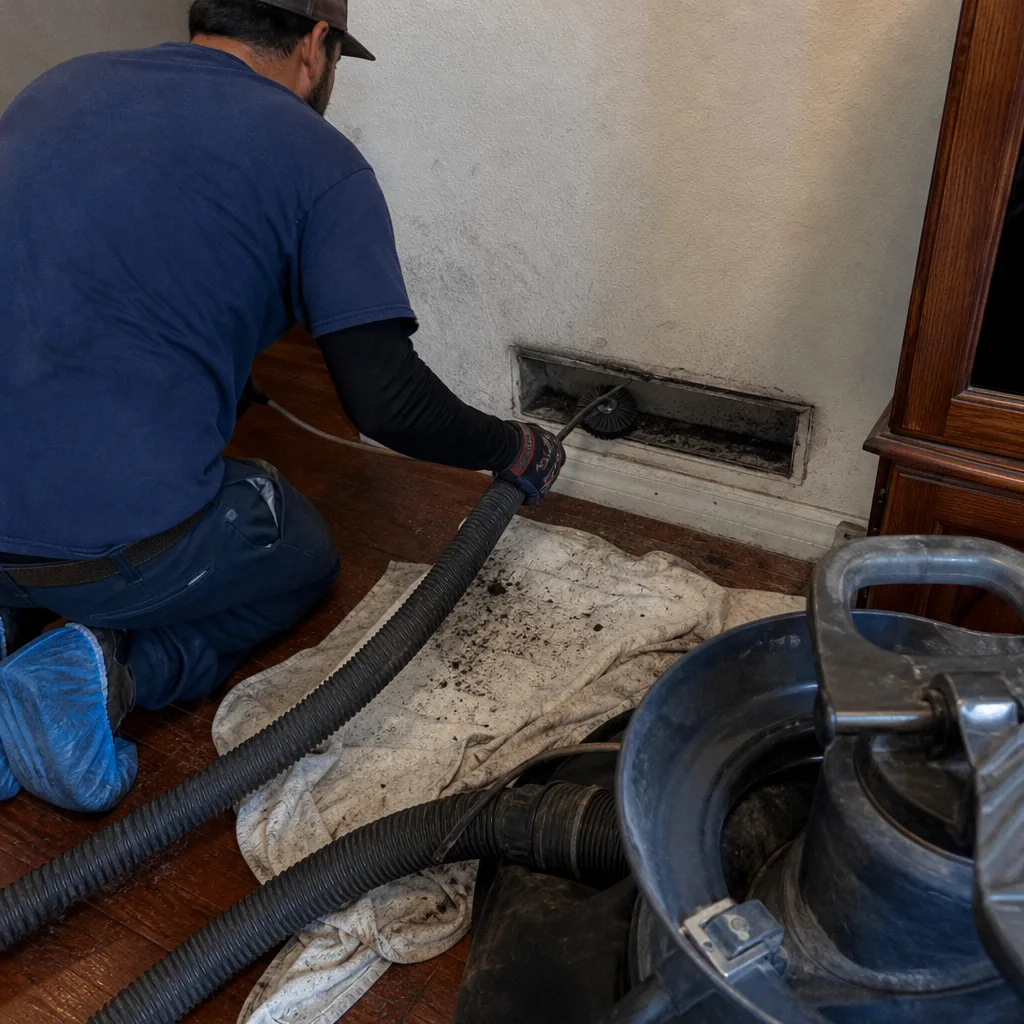 Before
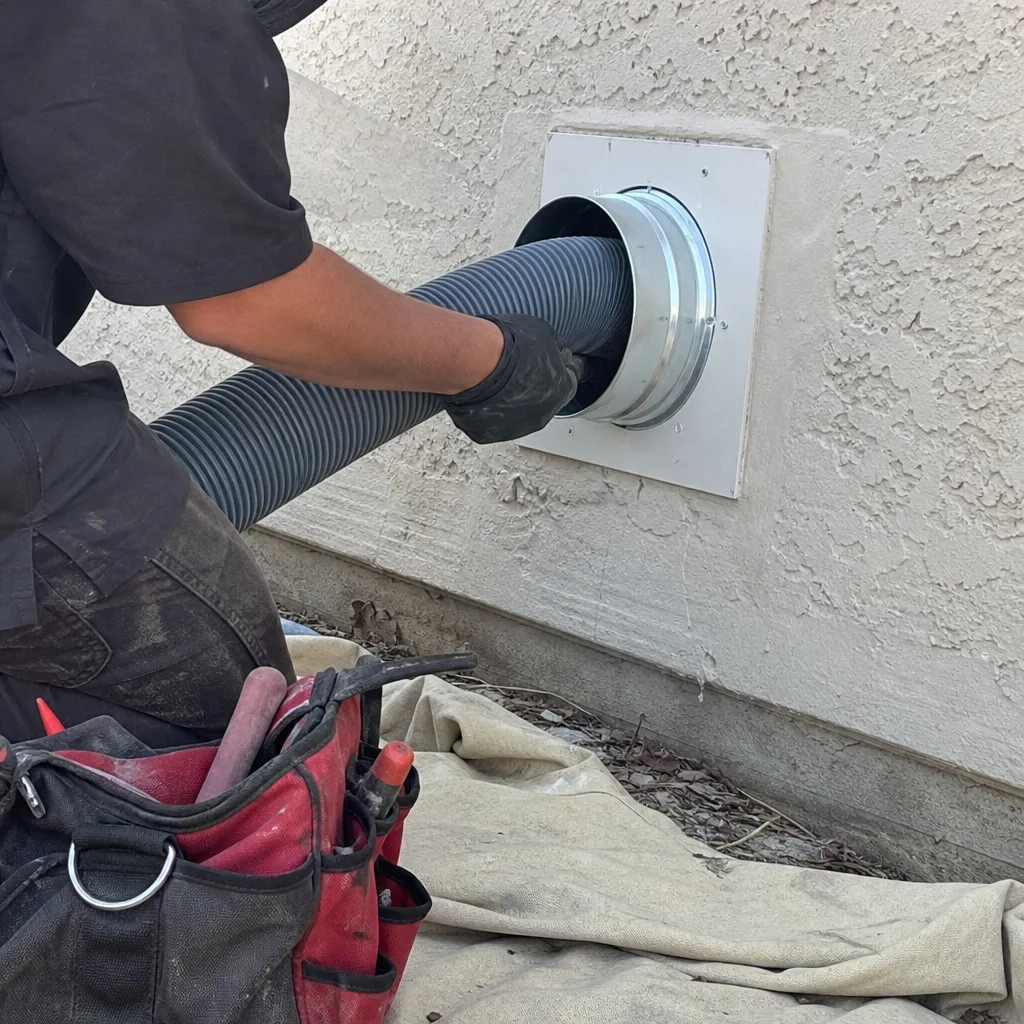 After
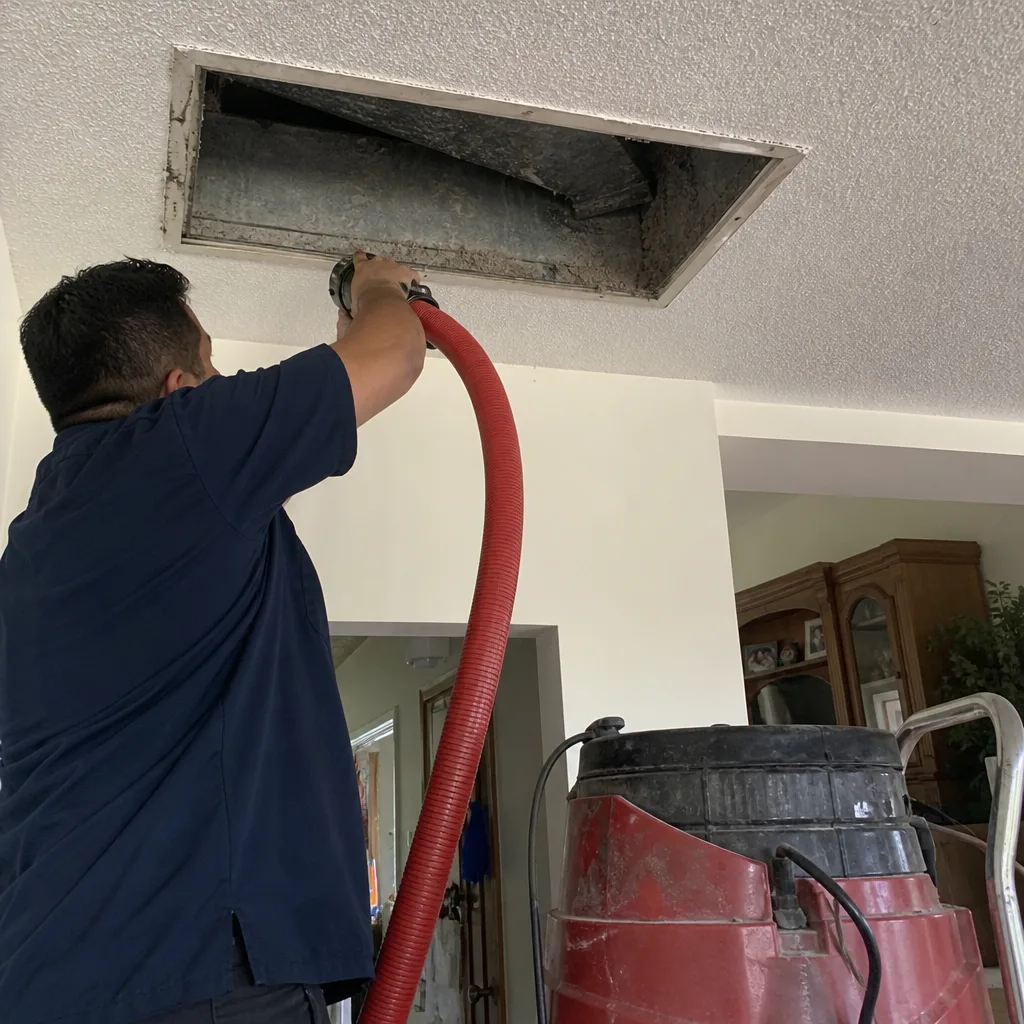 Before
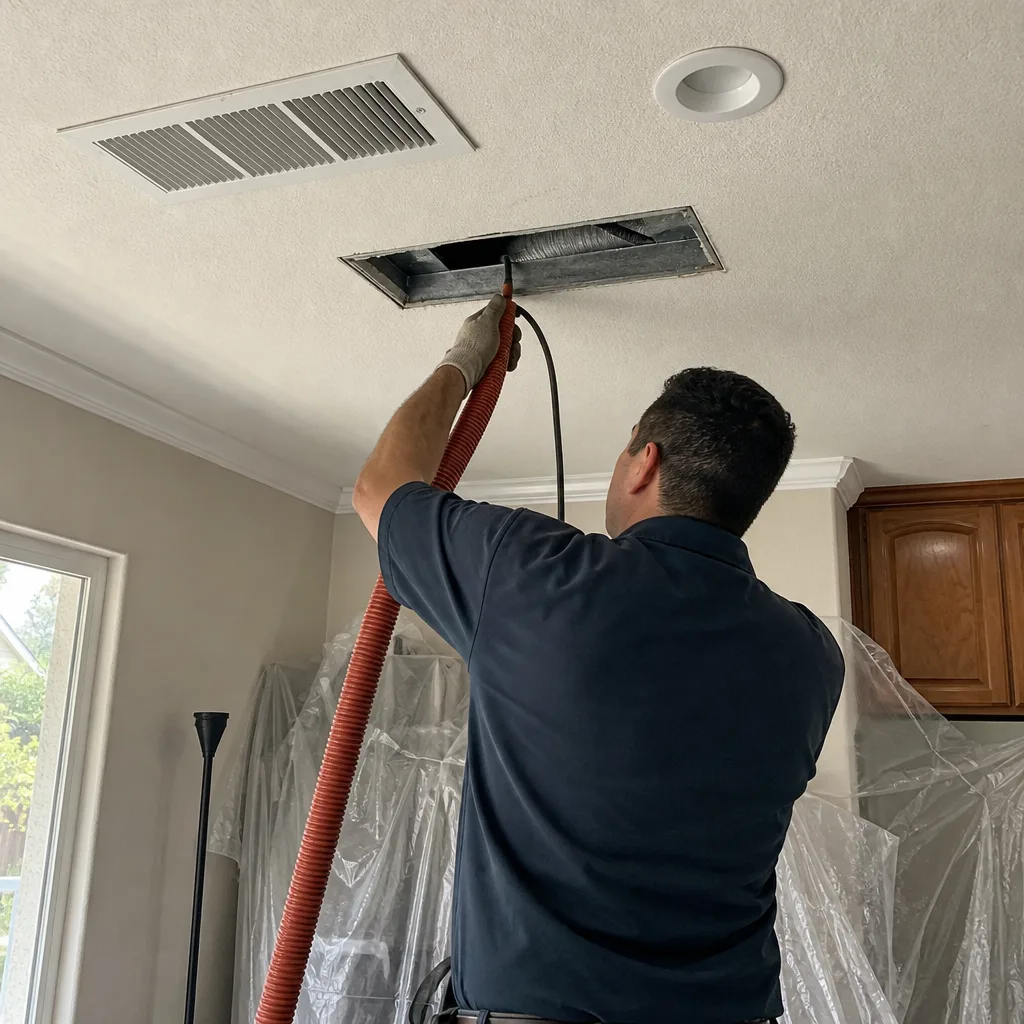 After
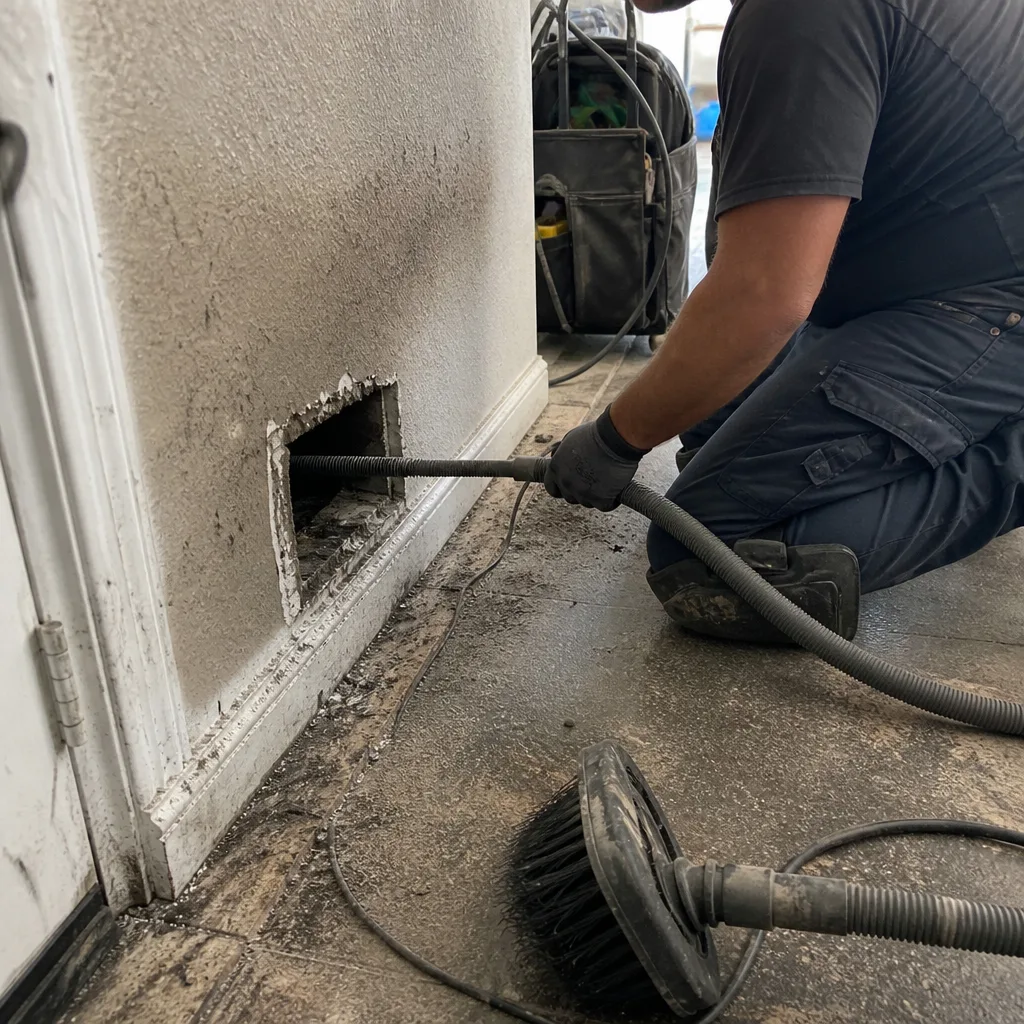 Before
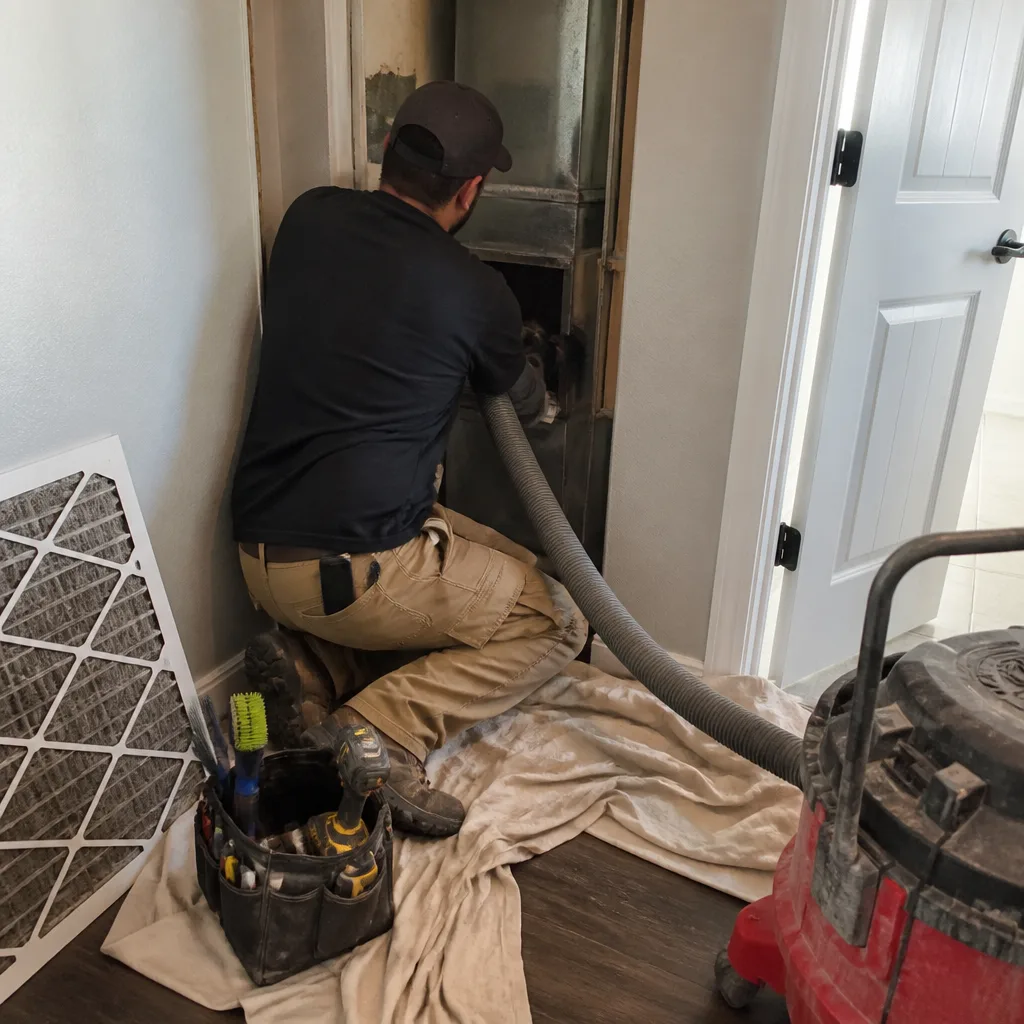 After
When to Call a Professional
Call a professional duct cleaner when you see visible dust accumulating around register covers despite regular filter changes. Call when airflow from supply registers is noticeably weaker in some rooms than others, or when your HVAC system runs constantly without maintaining comfortable temperatures. Call when you move into a newly constructed or recently renovated home in Rancho Cordova, because construction debris in duct systems is common and won’t clear itself. Call when you can’t remember the last time your dryer vent was cleaned, or when the dryer takes longer than 45 minutes to dry a normal load. And call when you notice increased allergy symptoms that improve when you leave the house – that pattern can point to particulate contamination in the duct system. Duct Cleaning Rancho Cordova offers free estimates in Rancho Cordova – call (877) 752-4148 to schedule an assessment.
Frequently Asked Questions
For a typical single-family Rancho Cordova home with ten to fourteen vents, professional duct cleaning using truck-mounted negative-pressure equipment and HEPA containment typically ranges from $450 to $900 for the full system. Homes with multiple HVAC systems, extensive contamination, or additional components (like a heavily fouled evaporator coil requiring direct access) can run higher. Quotes below $300 should prompt the equipment question: at that price, the operator is almost certainly using a portable unit, and the cleaning will be surface-level. Call (877) 752-4148 for an exact quote – estimates are free.
Cheaper quotes reflect cheaper equipment and fewer process steps. A portable-unit operator pays a fraction of the equipment cost, works faster, skips access to the main plenums and coil, and doesn’t run HEPA containment. The customer saves $300 on the invoice and gets a surface clean that leaves most of the system untouched. The math is simple: professional equipment and a complete process cost more to operate, and that cost appears on the invoice. The surprising part is how many $299 duct cleanings turn into $900 professional cleanings a year later, when the homeowner discovers the first pass didn’t actually clean the ducts.
You know because the company provides before-and-after photographs taken at the actual access points to your main supply and return plenums, blower compartment, and evaporator coil. These photos should be of your system, taken at the job site, clearly showing the interior surfaces before and after cleaning. You can also ask to inspect a few feet of duct through an open register with a flashlight – while not conclusive, it adds a second data point. A company that offers visual documentation as a standard deliverable, not a special request, is telling you they expect to be held to their work.
Most Rancho Cordova homes benefit from professional duct cleaning every three to five years, with the shorter interval applying to homes with pets, allergy-sensitive occupants, recent renovation work, or smokers. Homes with high-efficiency whole-home filtration (like an Aprilaire media cabinet) may stretch that interval slightly, but the coil still accumulates debris over time. The three-to-five-year range reflects the reality of Sacramento Valley particulate levels and the six-month cooling season Rancho Cordova experiences every year. If you’ve never had your ducts cleaned and the home is more than ten years old, now is a good benchmark.
Cleaning is the physical removal of accumulated debris from duct surfaces – source removal, in industry terms. Sanitizing is the application of a chemical agent, usually fogged into the system, intended to reduce microbial activity. A proper cleaning always precedes any sanitizing step; introducing chemicals into a system that still contains debris produces chemical-coated dust, not a healthier system. Be wary of companies that lead with sanitizing services. It’s often a way to add value to a cleaning that didn’t remove much. If a company recommends sanitizing, ask why, and ask to see the before-and-after documentation from the cleaning phase first.
Not if you choose a duct cleaning company that treats dryer vent service as a core specialty. Dryer vent cleaning involves accessing the lint trap, disconnecting the vent at the dryer, running a rotary brush through the full vent run, cleaning the exterior termination point, and verifying airflow after reassembly. A company that does this regularly treats it as fire prevention, because that’s what it is – clogged dryer vents are a leading cause of residential fires. A company that offers it only as an add-on may not give it the same technical attention. Call (877) 752-4148 to ask about dryer vent scope and schedule a combined service visit for your Rancho Cordova home.
The Bottom Line
Choosing a duct cleaning company in Rancho Cordova is not a brand decision. For more guides & resources, It’s an equipment and process decision. The right company runs truck-mounted negative-pressure equipment, names the platform they operate (Rotobrush, Nikro, or a commercial equivalent), cleans to the NADCA ACR standard, provides before-and-after documentation, and offers repair and dryer vent services as core specialties, not afterthoughts. Ask the questions. Listen for technical specifics. If the answers are vague, walk away. If the answers are specific, you’ve found a company that respects your intelligence and will earn your call.
Written by the team at Duct Cleaning Rancho Cordova, serving Rancho Cordova since 2013.