
Last updated November 2, 2026
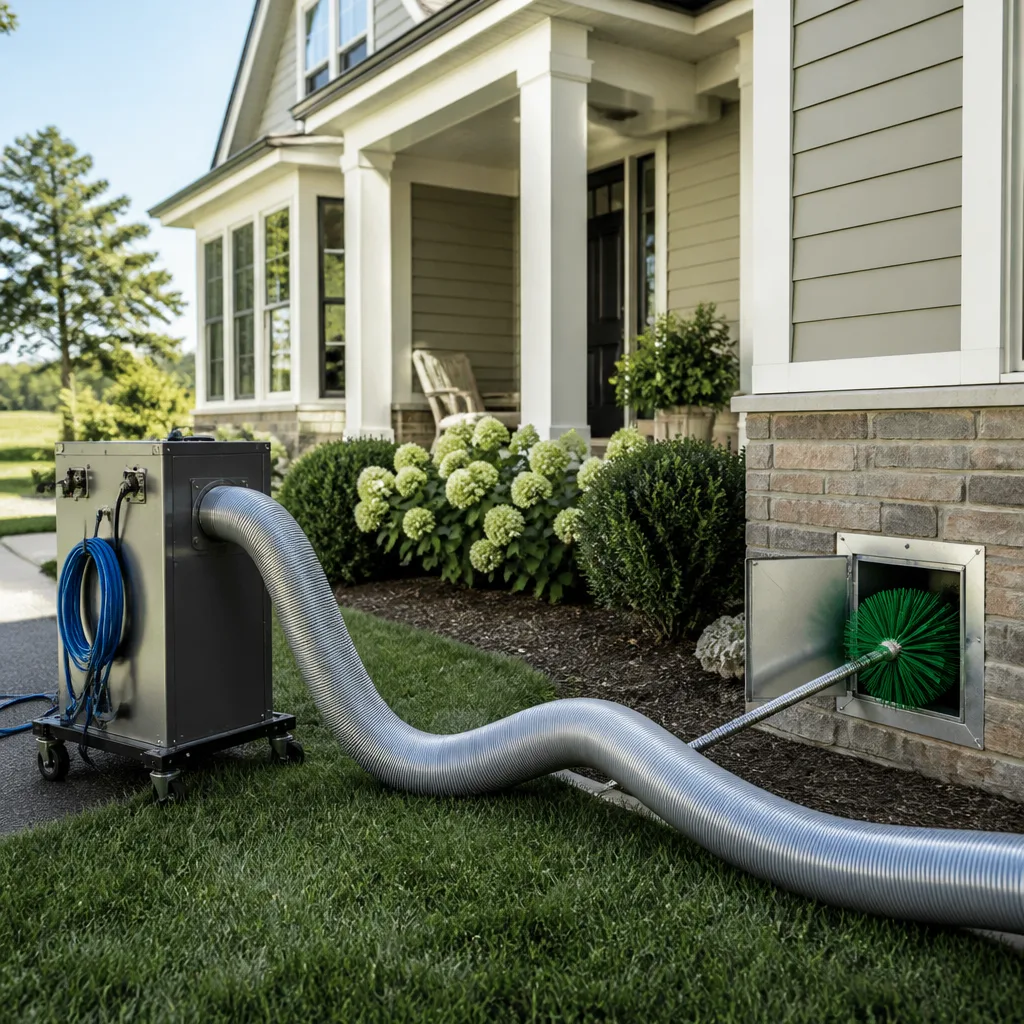 Whole-home duct cleaning
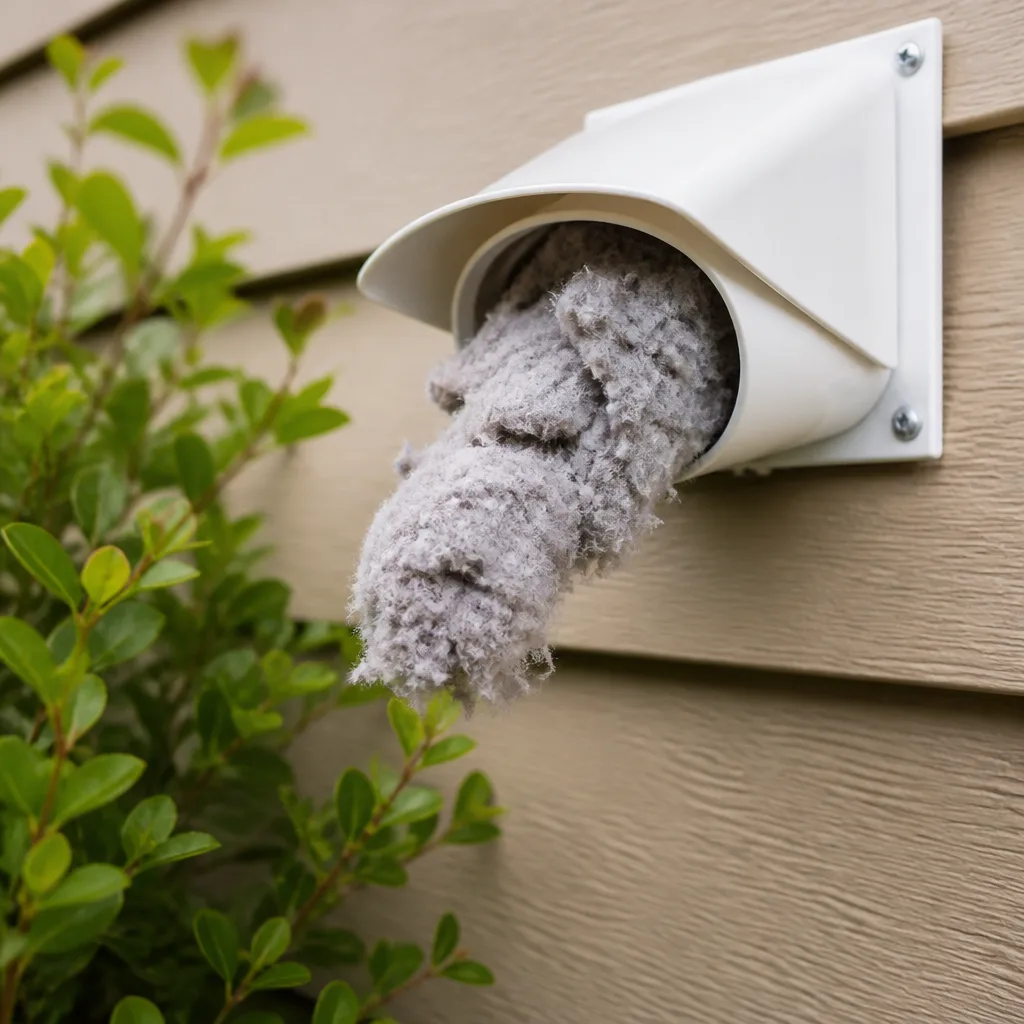 Dryer vent cleaning
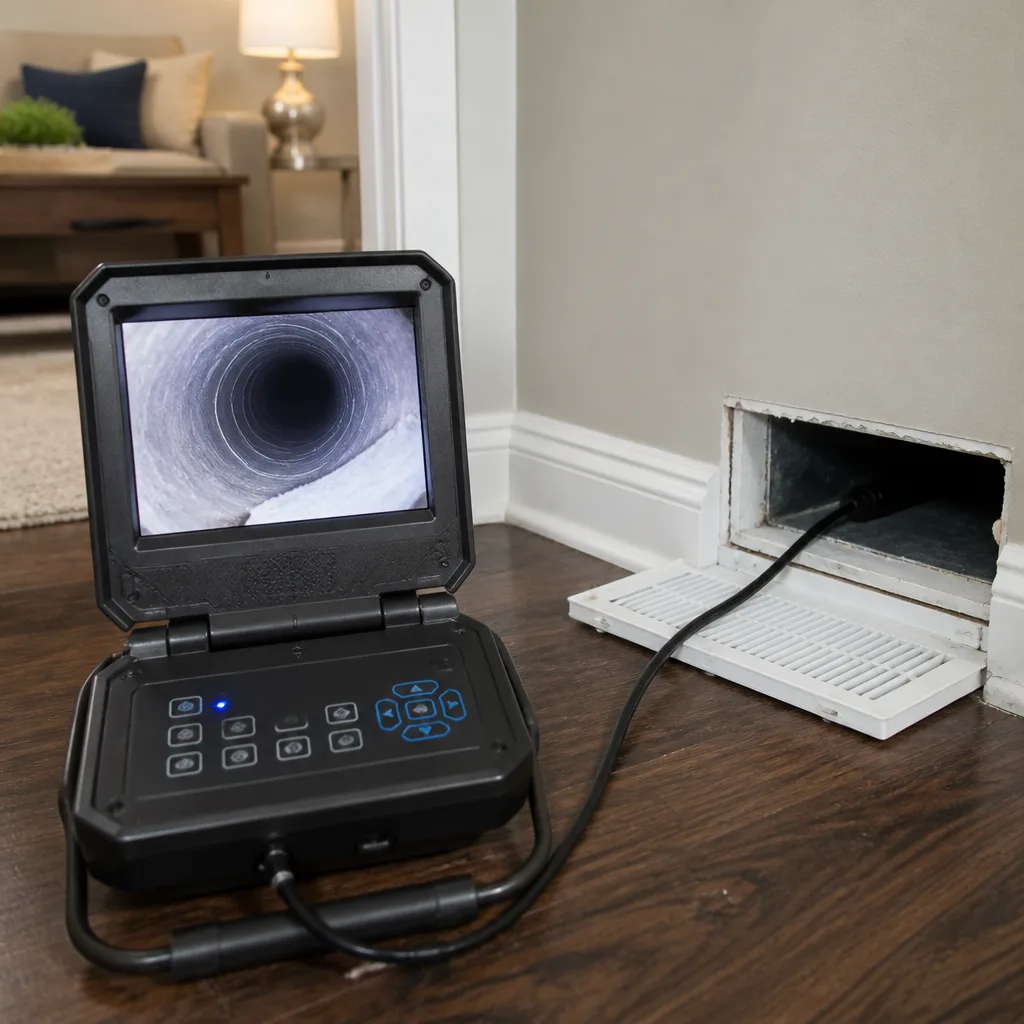 Camera inspection
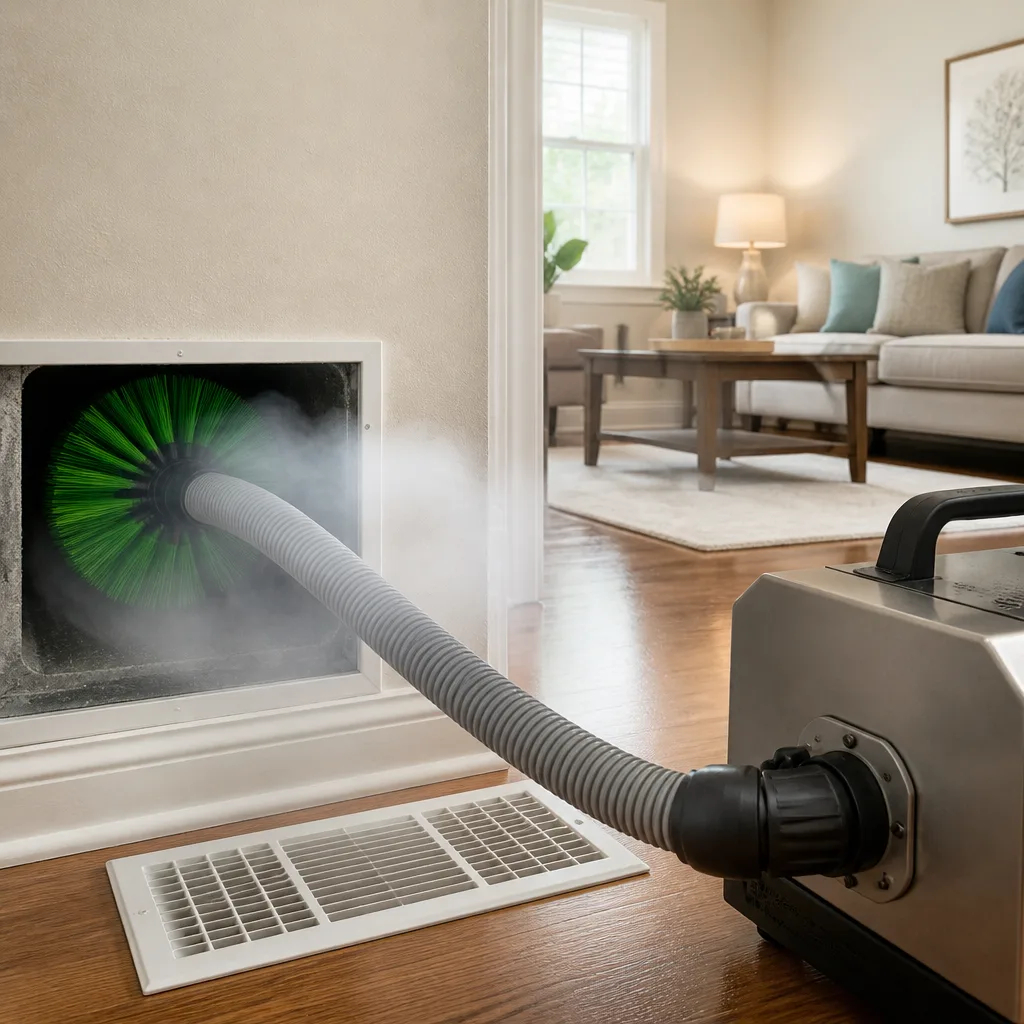 Sanitizing & deodorizing
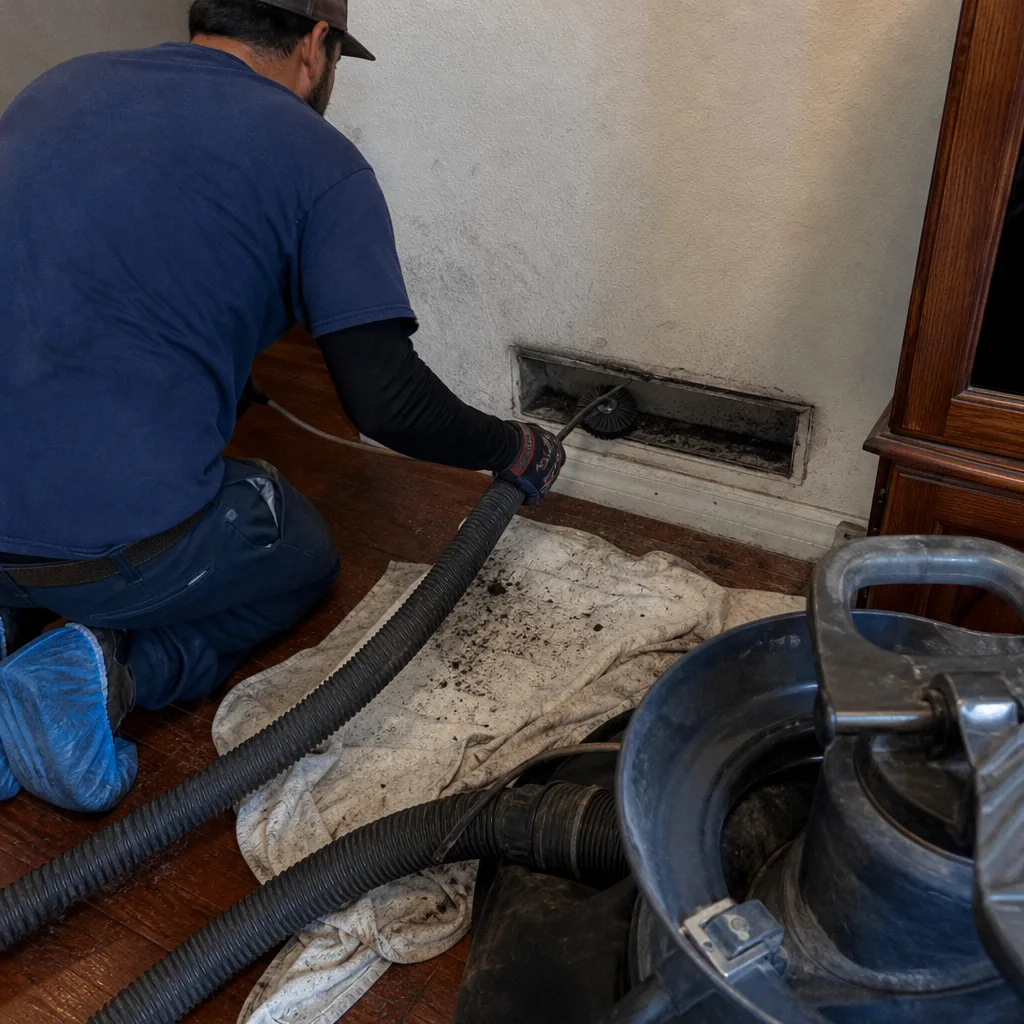
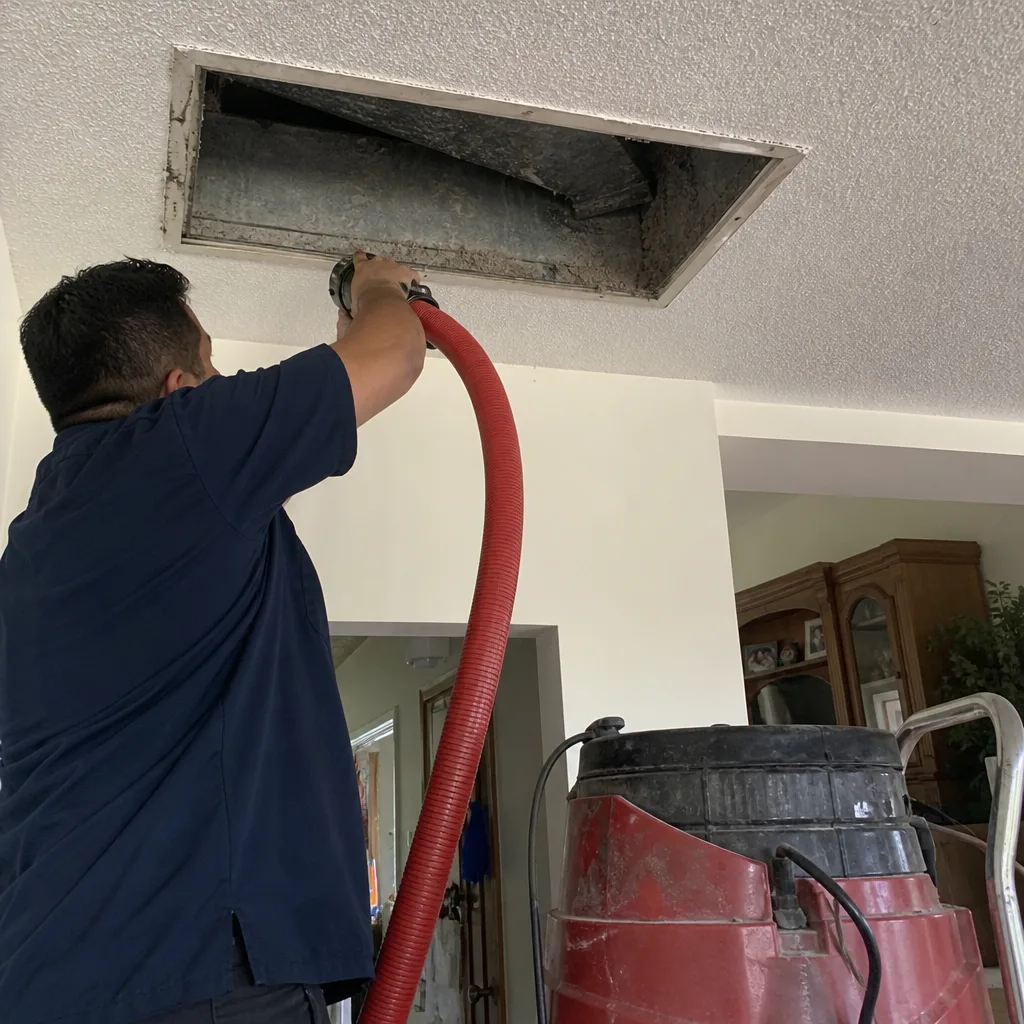
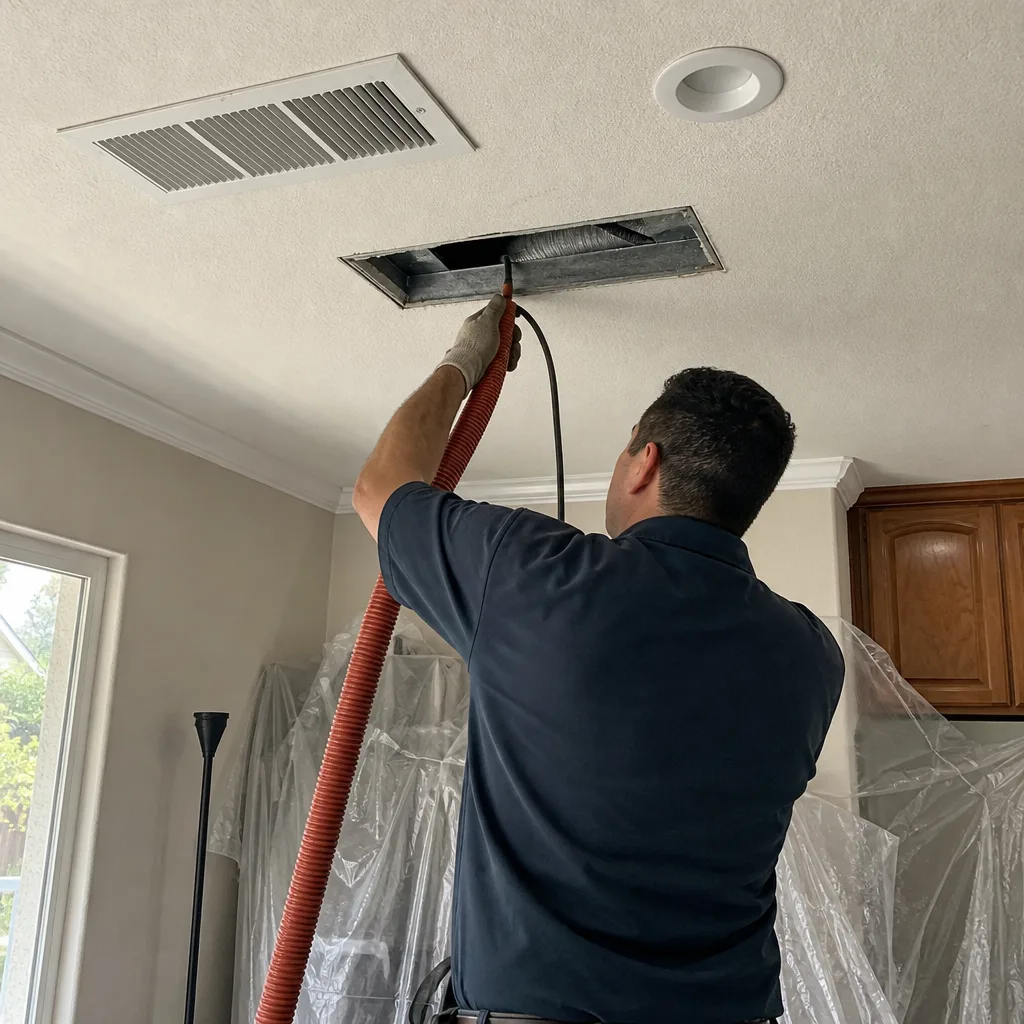
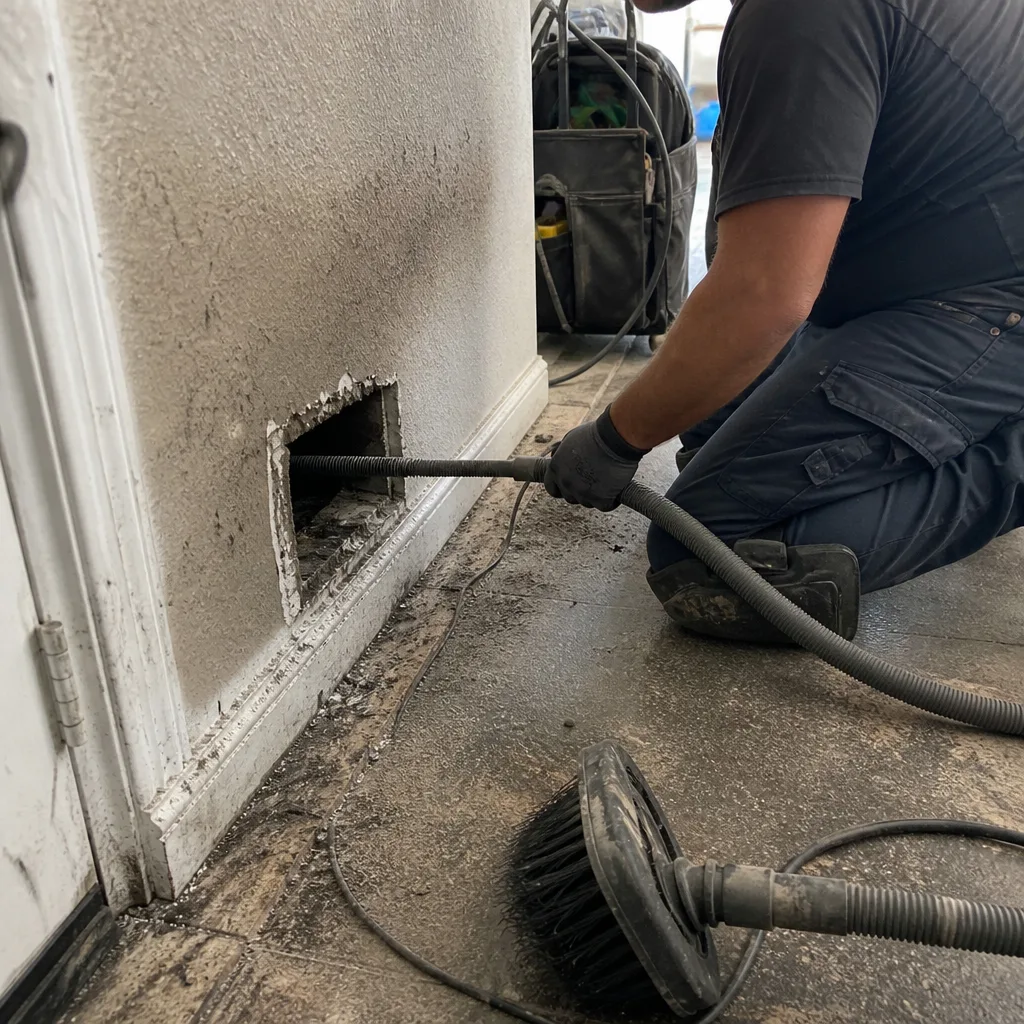
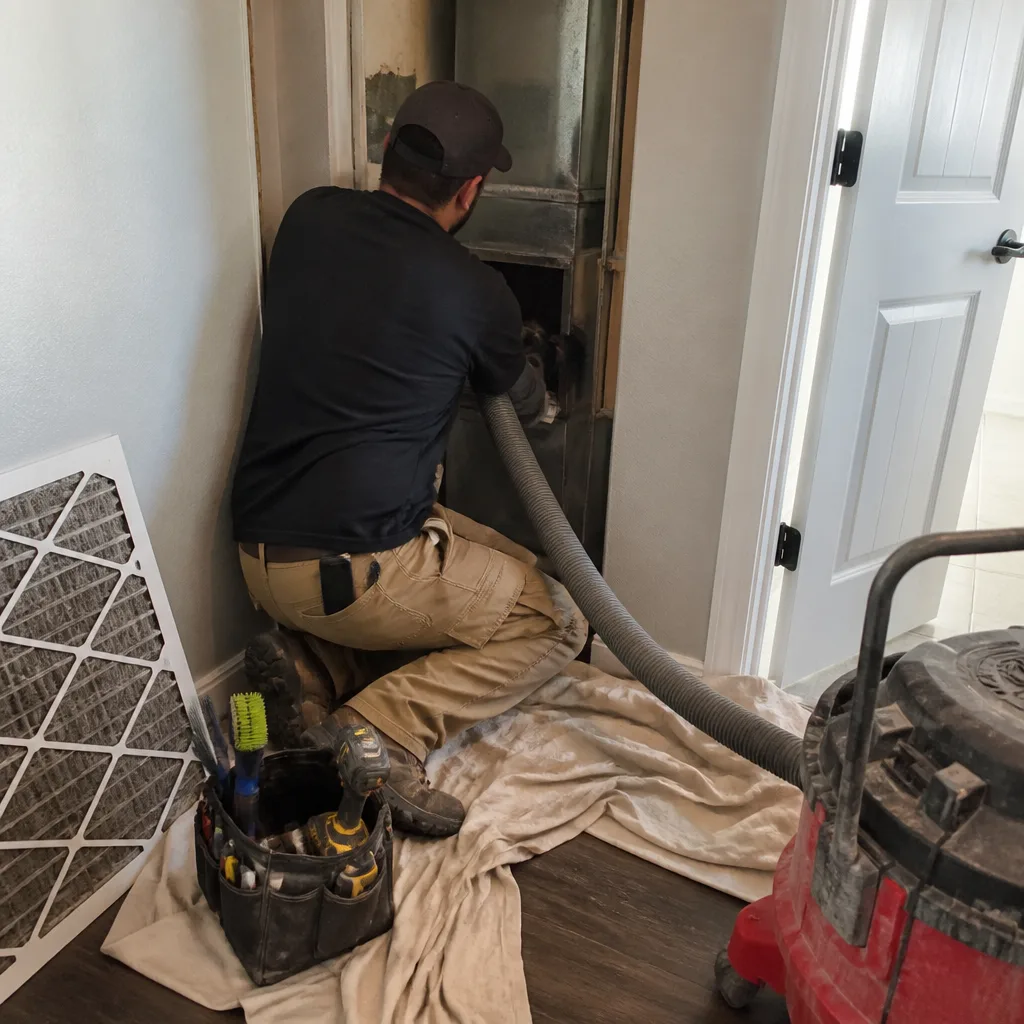
Whole-system duct and dryer vent check with before-and-after photos - you see exactly what came out of your vents
That "$99 whole-house special" is a bait ad - the real number appears once they are in your hallway, or the "clean" is a shop-vac at the register. We photograph the inside of your ducts before and after instead.
Air Duct Cleaning Emergency Preparedness Guide for Rancho Cordova Homes
After the 2020 wildfire season, Sacramento Valley air quality monitors recorded weeks of hazardous AQI readings, and every hour a forced-air system ran during that period pulled smoke particulate into ducts. Most Rancho Cordova homeowners had emergency kits, evacuation plans, and go-bags ready, but almost nobody had a plan for their HVAC system. This guide closes that gap. You’ll learn exactly what to do with your ductwork before, during, and after wildfire smoke events, floods, power outages, and dryer vent emergencies, specific to the conditions we see in Rancho Cordova and the greater Sacramento Valley.
Styles & brands we work with
- Whole-home duct cleaning
- Dryer vent cleaning
- Camera inspection
- Sanitizing & deodorizing
Quick Answer
Rancho Cordova homeowners should run their HVAC fan on “ON” with a MERV-13 filter during active wildfire smoke, schedule our Air Duct Cleaning services within 30 days after the smoke clears if particulate settled in the system, and act within 48-72 hours of any water intrusion to prevent mold establishment in ductwork. Dryer vents suspected of lint ignition require immediate professional inspection before the dryer runs again. Most post-emergency duct issues are preventable with the right protocol and the right equipment.
Table of Contents
- Wildfire Smoke Protocols: What to Do With Your HVAC During an Active Event
- Post-Smoke Assessment: Does Your Ductwork Actually Need Cleaning?
- Flood and Water Intrusion: The 48-72 Hour Window That Matters
- Power Outages and the Mold Conditions They Create
- Documenting Duct Damage for Insurance Claims
- Dryer Vent Emergencies: Suspected Lint Ignition and What to Do
- Building a Duct-System Emergency Preparedness Kit
- Common Mistakes to Avoid
- When to Call a Professional
- Frequently Asked Questions
- The Bottom Line
Wildfire Smoke Protocols: What to Do With Your HVAC During an Active Event
When the AQI in Rancho Cordova climbs past 150, your HVAC system becomes either your best defense or a particulate distribution machine. The difference comes down to three decisions you make in the first hour of a smoke event.
First, set your thermostat fan from “AUTO” to “ON.” This keeps air moving through your filter continuously, even when the system isn’t heating or cooling. Continuous filtration removes more particulate than intermittent operation. Second, upgrade your filter. A standard MERV-8 fiberglass filter catches large dust but lets smoke particulate pass straight through. During wildfire events, a MERV-13 filter, rated to capture particles between 0.3 and 1.0 microns, is the minimum we recommend. Smoke particulate from Sacramento Valley wildfires typically falls in the 0.4 to 0.7 micron range, which is precisely what MERV-13 media is designed to trap. Third, close your outdoor air intake damper if your system has one. Most Rancho Cordova homes built before 2000 don’t, but newer construction often includes a fresh-air intake that pulls unfiltered outdoor air directly into the return plenum.
We’ve worked on homes in the Sunridge and Anatolia neighborhoods where homeowners unknowingly kept their fresh-air dampers open through entire smoke events, pulling hazardous particulate into the duct system for days. If you’re unsure whether your Rancho Cordova home has a fresh-air intake, check the return side of your HVAC system for a small duct run that terminates at an exterior wall.
When to Shut the System Down Entirely
There’s a threshold where running the fan is the wrong call. If the smoke is dense enough that you can smell it indoors, or if your filter is saturated and you can’t replace it, running the blower actively circulates contaminated air through every room. In those conditions, shut the system off, close windows and doors, and use portable HEPA filtration units if you have them. The goal during an acute event is containment: don’t add to the particulate load already entering your ducts.
Filter Upgrade Thresholds by MERV Rating
- MERV-8: Standard fiberglass or pleated. Catches pollen and large dust. Inadequate for wildfire smoke events.
- MERV-11: Catches smaller dust and some smoke particulate. Marginal for AQI under 150.
- MERV-13: The minimum we recommend during active wildfire smoke. Traps 85% or more of particles in the 0.3-1.0 micron range.
- MERV-16 or HEPA-grade media: Highest residential filtration, but many Rancho Cordova HVAC systems lack the static pressure capacity to run these without reducing airflow. Check your system’s specifications before upgrading this far.
Run your system continuously during smoke events with a MERV-13 filter installed, and replace the filter at least monthly while AQI readings remain elevated. A saturated filter is a source of particulate, not a defense against it. For homes that experience multiple smoke seasons, consider having an Air Duct Repair in Rancho Cordova evaluation confirm your return-side filtration is properly sealed and sized.
Post-Smoke Assessment: Does Your Ductwork Actually Need Cleaning?
Not every smoke event warrants duct cleaning. In our experience, maybe one in three Rancho Cordova homes that experience a significant wildfire smoke season show enough duct contamination to justify professional cleaning. The rest recover fine with filter replacement and time. The key is knowing what to look for.
Smoke particulate that entered your ducts settles in three places: on the interior walls of the duct runs, in the return plenum, and on the blower wheel and evaporator coil. What matters is how much settled, and whether re-suspension is occurring. Ducts can hold a surprising amount of particulate without releasing it back into living spaces, because air moves smoothly along the interior surfaces. But if that particulate gets disturbed, whether by a filter change, system maintenance, or simply higher fan speeds, it releases back into your air.
A 4-Step Self-Assessment
- Replace the filter and inspect the old one. If the filter is heavily saturated with dark particulate after a smoke event, some of what it trapped may have already settled in the ductwork upstream. This is a warning sign, not a confirmation.
- Check supply registers. Remove one or two registers, ideally in rooms far from the return. Wipe the interior of the register boot with a clean white cloth. If the cloth comes away dark or greasy, particulate made it past your filter and settled in the supply side.
- Check the return plenum. The return side of your system pulls unfiltered or slightly filtered air from the home. If there’s visible dust or dark residue on the walls of the return plenum, that’s direct evidence of smoke infiltration.
- Run the system and pay attention. After a filter change and a period of normal operation, if you notice a smoke smell returning when the fan runs, or if surfaces in the home accumulate dark dust unusually fast, the ducts are re-suspending trapped particulate.
If you find evidence in two or more of these checks, professional cleaning is warranted. For homes with whole-home air quality systems, this assessment should extend to those components. We routinely service Honeywell and Aprilaire equipment in Rancho Cordova homes, and smoke particulate that bypasses filtration can settle on the media and housing of these systems, reducing their effectiveness even after the main ducts recover.
If you’re not sure whether your system has smoke damage, schedule an Air Duct Cleaning in Rancho Cordova inspection. A professional can look inside the system with a camera and tell you specifically whether cleaning is necessary, or whether you can save that expense for another year.
Flood and Water Intrusion: The 48-72 Hour Window That Matters
Rancho Cordova sits in a floodplain. The American River runs along the city’s northern edge, and significant portions of the city are protected by levee systems. When water intrudes into a home, whether from a levee overtopping, a plumbing failure, or groundwater seepage after heavy Sacramento Valley rain, the duct system becomes a mold incubation chamber if you don’t act fast.
Mold spores need three things to establish: organic material, moisture, and time. The dust and debris that naturally accumulates in any duct system provides the organic material. Standing water or trapped humidity provides the moisture. And the clock starts the moment water enters the system. The window for preventing mold establishment in ductwork is generally 48 to 72 hours. After that, if conditions were favorable, spore germination has begun, and the remediation challenge expands significantly.
What to Do in the First 72 Hours
- Shut the system down immediately. Running the blower during or after water intrusion spreads moisture through the entire duct network, expanding the contamination surface area.
- Remove standing water from visible areas. This is a general remediation task, but it affects your ducts directly: every hour that relative humidity stays above 60% in the duct environment, the risk of mold establishment increases.
- Inspect accessible duct sections. Look at the return plenum, any exposed duct runs in crawlspaces or garages, and the areas around floor registers. Water that entered through slab penetrations or crawlspace flooding often settles in the lowest sections of ductwork.
- Run dehumidification. If you have one, run a dehumidifier in the affected area. The goal is to pull the relative humidity in the air surrounding the ducts below 50% as quickly as possible.
- Schedule a professional duct inspection within the window. A camera inspection can determine whether water entered the duct interior, whether insulation inside the ducts is saturated, and whether cleaning or replacement is necessary.
Flex duct, which is common in Rancho Cordova crawlspace installations, is particularly vulnerable. Its inner liner is porous enough to absorb moisture, and once the fiberglass insulation inside a flex duct gets wet, drying it completely is nearly impossible. In many cases, saturated flex duct sections need replacement rather than cleaning. Rigid metal ductwork is more recoverable, but rust and corrosion become concerns if water sat in the duct for more than a few days.
This is also where the difference between a Duct Cleaning Rancho Cordova home service provider and a general restoration contractor matters. A restoration company will handle the structure; a duct specialist needs to assess and address the duct system specifically, because the two scopes don’t overlap cleanly.
Power Outages and the Mold Conditions They Create
Extended power outages in Rancho Cordova, whether from PG&E public safety power shutoffs or summer heat-related rolling blackouts, create a specific risk profile for duct systems. When the HVAC system is off for an extended period during warm weather, the temperature inside the home climbs and, critically, so does the relative humidity. The ducts, which are normally cooled and dried by conditioned air moving through them, sit in warm, humid air instead.
In Rancho Cordova’s summer climate, where outdoor temperatures routinely exceed 95 degrees and humidity hovers between 30% and 50%, a home with no air conditioning can reach indoor conditions that approach condensation thresholds overnight. This is particularly true in crawlspaces, where the ambient air is already cooler and more humid than the living space above. Ducts in those environments can reach dew point, and condensation forms on the interior surfaces. That condensation, combined with the organic dust already in the ducts, creates mold-friendly conditions within 72 hours.
The practical risk is highest during multi-day outages in July and August. A one-day outage rarely produces enough condensation to matter. A three to five-day outage, where the home never cools below 80 degrees and the crawlspace humidity stays elevated, is a different scenario. After an extended outage, the same 48-72 hour assessment clock that applies to flood events applies here: inspect, dry, and address before mold can establish.
What to Do After an Extended Outage
- Inspect visible duct sections for condensation staining or darkening, particularly in the crawlspace.
- Run the system in fan-only mode for 15-20 minutes before the first heating or cooling cycle to push out any stale, humid air.
- Check the condensate drain line. Dry periods followed by heavy cooling can clog drains, and a backed-up drain pours water directly into the evaporator coil area and the ductwork downstream.
- If you notice a musty smell when the system starts after an outage, don’t ignore it. That smell is microbial activity, and it won’t resolve on its own.
Documenting Duct Damage for Insurance Claims
When wildfire smoke, flood, or other covered events damage your duct system, the quality of your documentation often determines whether your insurance claim pays for cleaning, repair, or replacement. Most Rancho Cordova homeowners don’t know what to ask for when they schedule a duct inspection, and the result is a generic report that doesn’t meet the adjuster’s needs.
A professional duct inspection that’s meant to support an insurance claim should record specific data points, not just a summary statement. The adjuster needs to see evidence, and the right documentation makes the difference between a claim that gets approved and one that gets denied or underpaid.
What a Professional Duct Inspection Should Record
- Date and time of inspection, including how many days elapsed between the event and the inspection.
- Visual evidence from a camera inspection, with still images captured from inside the ductwork showing the contamination, moisture, or damage.
- Specific locations of contamination or damage, referenced to supply and return runs, not just “the ductwork.” Adjusters need to see which sections are affected.
- Type and condition of duct material, including whether flex duct insulation is saturated or metal duct has corrosion.
- Moisture readings from affected sections, taken with a moisture meter, if water intrusion is part of the claim.
- An objective assessment of cleanability, meaning a clear statement of whether the ductwork can be cleaned, needs repair, or needs replacement, with reasoning for each.
- Estimated scope and cost for the recommended work, broken down by section and type.
We’ve worked with homeowners in Rancho Cordova who had legitimate smoke or water damage claims delayed because the inspection report was too vague to support the requested scope of work. The adjuster isn’t going to pay for duct cleaning on the strength of a sentence that says “ductwork is dirty.” They’ll pay when the report shows photos of particulate accumulation in the supply plenum, dated, with a clear recommendation tied to the covered event.
Dryer Vent Emergencies: Suspected Lint Ignition and What to Do
Dryer vent fires are one of the leading causes of residential fire in the United States, and Rancho Cordova homes are not exempt. Lint accumulates in the vent run between the dryer and the exterior termination point, and over time, that accumulation reduces airflow, raises temperatures, and creates the conditions for ignition. When a fire starts in a dryer vent, it often begins inside the vent run where the homeowner can’t see it, and it can smolder for some time before it’s detected.
If you suspect lint ignition has occurred in your dryer vent, meaning you’ve seen smoke, smelled burning, or noticed discoloration around the vent hood or the back of the dryer, the protocol is simple: do not run the dryer again until the vent has been professionally inspected. A dryer vent that has experienced ignition may still look intact from the outside, but the interior surfaces could be damaged, the vent material could be weakened, and continued use creates a repeat-fire risk that’s significantly higher than the original condition.
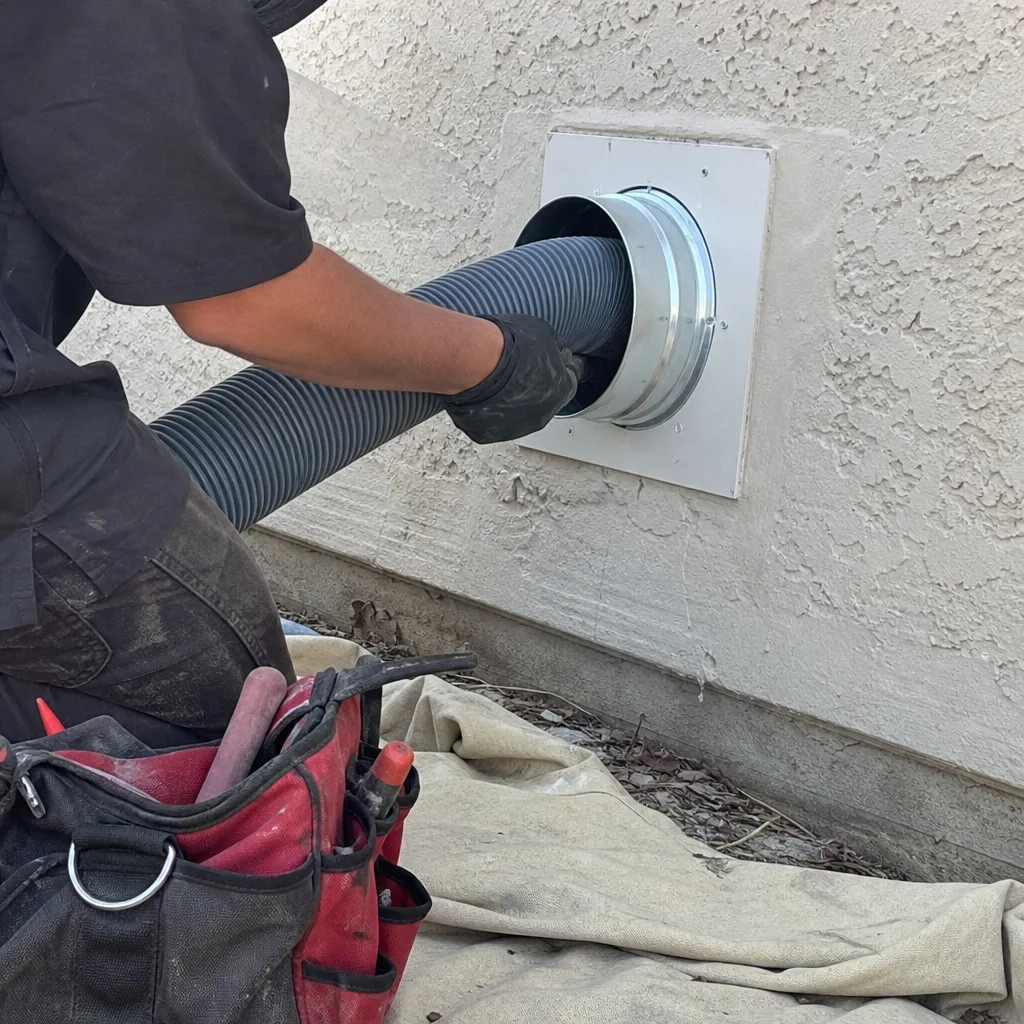
This is also not a scenario where a homeowner should attempt a DIY inspection. The vent run in most Rancho Cordova homes extends through walls, floors, or crawlspaces, and the section where ignition occurred may be completely inaccessible without professional equipment. A professional Dryer Vent Cleaning in Rancho Cordova inspection uses a camera to check the entire vent run, identifies any sections that need repair or replacement, and clears the accumulated lint that contributed to the condition.
We treat dryer vent cleaning as fire prevention, not convenience. That perspective shapes how we approach every vent inspection in Rancho Cordova, from the section-by-section camera documentation to the recommendation of whether a vent run needs repair rather than just cleaning. If your vent has been neglected for years, cleaning alone may not be enough to restore safe operation.
Building a Duct-System Emergency Preparedness Kit
Most Rancho Cordova households have some version of an emergency kit: flashlights, batteries, water, first aid supplies. Almost none include anything for the duct system, and that gap is what turns a recoverable event into an expensive remediation project. Building a duct-system preparedness kit is inexpensive, takes 20 minutes, and puts you ahead of the curve when smoke season starts or a flood warning comes through.
What to Include
- Two spare MERV-13 filters, stored in their original packaging in a dry location. During extended smoke events, filters saturate fast, and having replacements on hand means your system keeps filtering instead of clogging.
- A digital hygrometer for monitoring indoor relative humidity. These cost less than $20 and tell you when your home is approaching condensation territory during a power outage.
- A small flashlight for checking accessible duct sections, return plenums, and register interiors.
- A white cloth or paper towel for the register wipe test described in the post-smoke assessment section.
- Your duct service provider’s phone number, written down, not just stored in a phone that might not survive the event.
- Documentation of your system, including photos of the equipment cabinet, the filter location, and the ductwork in the crawlspace. After an event, these photos give a professional a baseline to compare against.
This kit costs less than $50 to assemble and covers the highest-probability post-emergency scenarios you’ll face in Rancho Cordova: smoke infiltration, water intrusion, and extended power outages.
Common Mistakes to Avoid
- Running the HVAC system during heavy smoke with a standard filter installed. A MERV-8 filter is not a smoke filter. Running your system during a smoke event with a standard filter actively distributes particulate through the home and deposits it in the ducts.
- Assuming flood water never reached the ductwork. In Rancho Cordova crawlspace installations, ductwork often sits close to the ground, and water that “only” flooded the crawlspace may have entered low duct sections. If the crawlspace flooded, the ducts need a professional assessment.
- Drying the home but skipping the ducts. Homeowners understandably focus on carpets, drywall, and flooring after a water event, but wet ducts and wet duct insulation will keep reintroducing moisture and microbial contamination into the home long after the visible surfaces are dry.
- Running the dryer after a suspected lint fire because “it seems fine.” The interior of a vent run can be damaged even when the exterior looks normal. The only safe answer is inspection before use.
- Waiting too long to document damage. The longer you wait after an event to have the duct system inspected, the harder it is to connect the condition to the covered event. Insurance adjusters are legitimately skeptical of claims where the inspection happened weeks or months later.
- Using a shop vac to clean ducts after a smoke event. A shop vac lacks the reach, airflow, and filtration to remove smoke particulate from duct interiors, and it can actually compact particulate into difficult-to-remove deposits. This is a job that requires professional-grade equipment.
When to Call a Professional
Some situations are worth assessing yourself, and some are not. Call a professional when you’ve had water intrusion that may have reached the ducts, when a smoke event has left visible residue in your registers or returned a smoke smell after filter replacement, when you suspect a dryer vent fire, and when the conditions described in this guide are outside your ability to assess objectively. The cost of an inspection is trivial compared to the cost of ignoring a problem until it becomes structural.
Duct Cleaning Rancho Cordova offers free estimates in Rancho Cordova. If you’re dealing with post-emergency duct concerns and want an honest assessment of whether cleaning, repair, or no action is the right call, reach us at (877) 752-4148.
Frequently Asked Questions
Post-smoke duct cleaning in Rancho Cordova typically costs between $400 and $900 for a whole-home system, depending on the size of the home, the number of returns and supplies, and the extent of contamination. If the system also requires repair work, such as sealing or section replacement, the total scope will be higher. Call (877) 752-4148 for an exact quote based on your home’s configuration. Estimates are free.
Run the four-step assessment described above: inspect the used filter, wipe a register interior with a white cloth, check the return plenum for visible residue, and monitor for smoke smell after filter replacement. If two or more checks show evidence of contamination, schedule a professional inspection to confirm the extent.
No. Consumer equipment cannot reach the full length of your duct runs, cannot agitate particulate off the interior surfaces, and cannot filter the exhaust air well enough to prevent redistribution into the home. Professional equipment from companies like Rotobrush and Nikro is designed specifically to agitate, extract, and contain the particulate that consumer tools leave behind.
The window is generally 48 to 72 hours. If water entered the duct system and conditions were favorable for spore germination, mold establishment begins within that timeframe. Acting faster than that window gives you the best chance of avoiding a remediation scenario.
It depends on your policy and the specifics of the event, but many homeowner policies cover duct cleaning and repair when the damage is directly tied to a covered event and properly documented. The key is getting a professional inspection that records the evidence in the format adjusters expect. That documentation is often the factor that determines whether a claim is approved.
Some companies quote low prices because they’re doing less: less time, less agitation, less extraction, and less care. A company that runs a shop vac through your ducts for 45 minutes can quote a number that a professional-grade operation can’t match, because the scope of work is completely different. When you’re deciding between quotes, ask specifically what equipment will be used and what the process includes. Professional systems like Rotobrush and Nikro are the standard for actual duct cleaning; anything significantly cheaper is probably not doing the same job.
The Bottom Line
Rancho Cordova homeowners face specific emergency scenarios – wildfire smoke, flood risk, extended power outages, and dryer vent fires – where the duct system plays a central role in recovery, and you can find more guides & resources on our blog. The difference between a smooth recovery and an expensive remediation project comes down to preparation and timing: having MERV-13 filters on hand, knowing the 48-72 hour window for mold prevention, documenting damage properly, and respecting the fire risk that a neglected dryer vent represents. If you’re facing any of the scenarios in this guide, get a professional assessment. Call Duct Cleaning Rancho Cordova at (877) 752-4148 for a free estimate, and we’ll help you make the right call for your home.
Written by the team at Duct Cleaning Rancho Cordova, serving Rancho Cordova since 2013.
See the difference
 Before
 After
 Before
 After
 Before
 After