
Nikro Air Duct Cleaning in Rancho Cordova: A Homeowner’s Guide
Nikro air duct cleaning refers to duct system cleaning performed with equipment manufactured by Nikro Industries, one of the most respected names in professional source-removal equipment. In Rancho Cordova, where summer attic temperatures routinely exceed 130 degrees and duct runs stretch long across single-story footprints, the difference between a Nikro-equipped contractor and someone running a converted shop vacuum is the difference between cleaning the ducts and simply stirring dust around. If you’d rather not sort through equipment questions on your own, call (877) 752-4148 and we’ll walk you through what’s actually on our truck.
Here’s the uncomfortable truth most homeowners never learn: there is no federal regulation requiring a duct cleaning company to use anything more sophisticated than a wet-dry vacuum and some brushes. The equipment gap between operators is enormous, and you generally can’t see it until the job is finished and the air still smells the same. That’s why knowing the brand on the truck matters more than the logo on the invoice.
Key Takeaways
- Nikro is an equipment manufacturer, not a service company – any contractor can buy or rent Nikro gear, but few do because it costs roughly four to eight times what consumer-grade alternatives run.
- Source-removal cleaning requires negative pressure – Nikro systems create it; shop vacs don’t.
- Rancho Cordova’s climate and home layouts make equipment quality unusually important – long flex runs, attic-mounted systems, and fine summer dust all punish underpowered equipment.
- You can ask to see the equipment before you sign anything – a legitimate contractor will show you what’s in the truck.
What Nikro Industries Actually Is, and Why It Matters for Your Rancho Cordova Home
Nikro Industries manufactures air-moving and filtration equipment built specifically for duct and ventilation systems. They’ve been doing it since the 1960s, starting with industrial negative-air systems and expanding into the residential and commercial duct-cleaning market. The company’s core product line includes negative air machines, HEPA-filtered vacuums, and portable systems designed for source-removal cleaning.
When we talk about source removal, we mean physically extracting accumulated debris from the duct interior rather than loosening it and hoping it flows out through your registers. Proper source removal requires sustained negative pressure, which pulls the dislodged material into a contained filtration system instead of pushing it into your living space. That’s a very different process from what a shop vac does, regardless of how many extension hoses are involved.
In Rancho Cordova, where many homes were built during the 1970s and 1980s construction expansions in Rancho Cordova and Anatolia, duct systems often feature 16-to-22-inch flex runs snaking through attics with minimal insulation separation from the roof deck. That layout means two things: more surface area for dust and pollen to collect, and more resistance against air movement. Equipment designed for garage or basement workshops simply wasn’t built to move air through a 40-foot flex run. The professional-grade machinery that companies like ourselves run, including Nikro and Rotobrush systems, is engineered for exactly that kind of workload.
A contractor running Nikro equipment has made a significant capital commitment. Conversely, a contractor running a “cleaned-up” shop vac conversion hasn’t made that commitment. It’s not a guarantee of quality on its own, but it’s a signal worth noticing. In our experience, the same operators who invest in purpose-built equipment also invest in training, replacement filters, and the behind-the-scenes practices that determine whether the job actually works.
The Equipment Gap: What a Nikro System Does That a Shop Vac Never Will
The differences come down to airflow, filtration, and containment. Let us walk through each one because these are the exact questions an informed Rancho Cordova homeowner should be asking before anyone starts cutting access holes in the ductwork.
Airflow (CFM): Negative air machines from manufacturers like Nikro typically generate hundreds to thousands of cubic feet per minute of airflow, sustained over continuous duty cycles. A consumer shop vac might peak at 150 CFM with a clean filter and a short hose. Attach 30 feet of extension hose and push it through a long flex duct in an attic, and that number collapses. The machine simply cannot maintain the velocity required to lift and transport debris at a meaningful distance. The math catches up with the motor.
Filtration stages: Professional negative air machines use multi-stage filtration, including a pre-filter for larger debris, an intermediate filter for fine particulates, and a HEPA-level final stage. The point isn’t just collecting dust; it’s capturing it so thoroughly that the exhausted air – the air that returns to your home – is cleaner than the air that went in. A shop vac with a paper bag filter doesn’t even approach that standard.
Duct isolation capability: Reputable source-removal cleaning involves sealing off sections of the ductwork and applying negative pressure to that specific zone while agitation tools work the interior surfaces. This ensures debris from the return side doesn’t get blown across the supply side or redistributed throughout the house. It requires equipment that can sustain negative pressure in a zoned section, which is not something a portable vacuum is designed to do.
We’ve walked into homes in Rancho Cordova – most recently off Coloma Road near the Folsom Boulevard corridor – where a previous “cleaning” had left compressor air nozzle marks on the register covers but had never disconnected or isolated a single duct segment. The homeowner paid for a service that was essentially decorative. We pulled an intact dust bridge out of one 14-inch supply trunk that had probably been there since the Clinton administration. The customer asked how that was possible if the ducts had been cleaned two years earlier. The answer is equipment physics, not effort.
Why Rancho Cordova’s Climate and Home Styles Amplify the Equipment Issue
Rancho Cordova sits in a specific microclimate. Summer temperatures regularly climb past 100 degrees for sustained stretches, with low humidity. That means dust is fine, dry, and highly mobile. It also means attic temperatures climb to 130 degrees or higher, which has direct consequences for the materials in your duct system.
First, the heat accelerates the breakdown of flex duct inner liners and the adhesives used at joint connections. Over time, small cracks and separations develop. The dust and debris that settle in your ducts doesn’t just sit there passively; it gets baked into the surface layer.
Second, dry conditions mean that debris pulled into the duct system via air leakage tends to be extremely fine: pollen, construction dust, ash from seasonal fires, and the kind of particulate matter that your central filtration system has to work hard to capture. That same fine dust is also the easiest to aerosolize and redistribute if the wrong equipment is used.
Third, the long flex runs typical of Rancho Cordova homes – particularly in neighborhoods like Sunriver, Capital Village, and the developments along Zinfandel Drive – require sustained suction over significant distance. This isn’t a 10-foot straight run like you might find in a compact vertical unit. These are systems where the return air might travel 50 feet before reaching the air handler. Underpowered equipment just causes the debris to settle back down once the motor overheats or the filter clogs.
This is where Abatement Technologies filtration equipment makes a difference. HEPA-level containment during cleaning means the particulate we dislodge gets captured at the machine rather than redistributed through the registers. It’s a standard borrowed from environmental remediation work – hospital isolation rooms, asbestos abatement, mold containment – where you absolutely cannot afford to have fine particulate escaping into occupied living space. Most Rancho Cordova duct cleaners don’t run that kind of equipment because they don’t need to for the quality of work they’re doing. We think you deserve the higher standard.
What the Job Process Looks Like When Proper Equipment Is Used
If you’ve never watched a professional duct cleaning done properly, you might not know what to expect. Here’s what a source-removal job with professional equipment actually looks like from start to finish, including a few things you can quietly look for if you’re watching the crew work.
- 1
Initial inspection: The technician should inspect the return and supply plenums, note the layout of main trunks and branch runs, and check for obvious issues like collapsed flex, disconnected joints, or visible moisture. This takes 15 to 30 minutes before any cleaning starts.
- 2
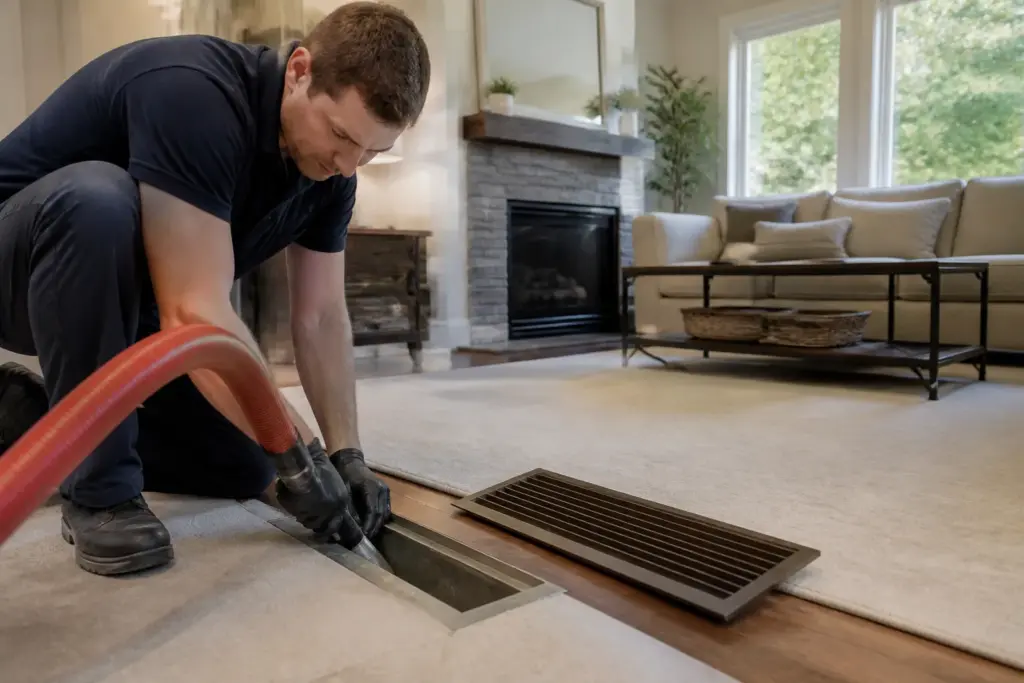
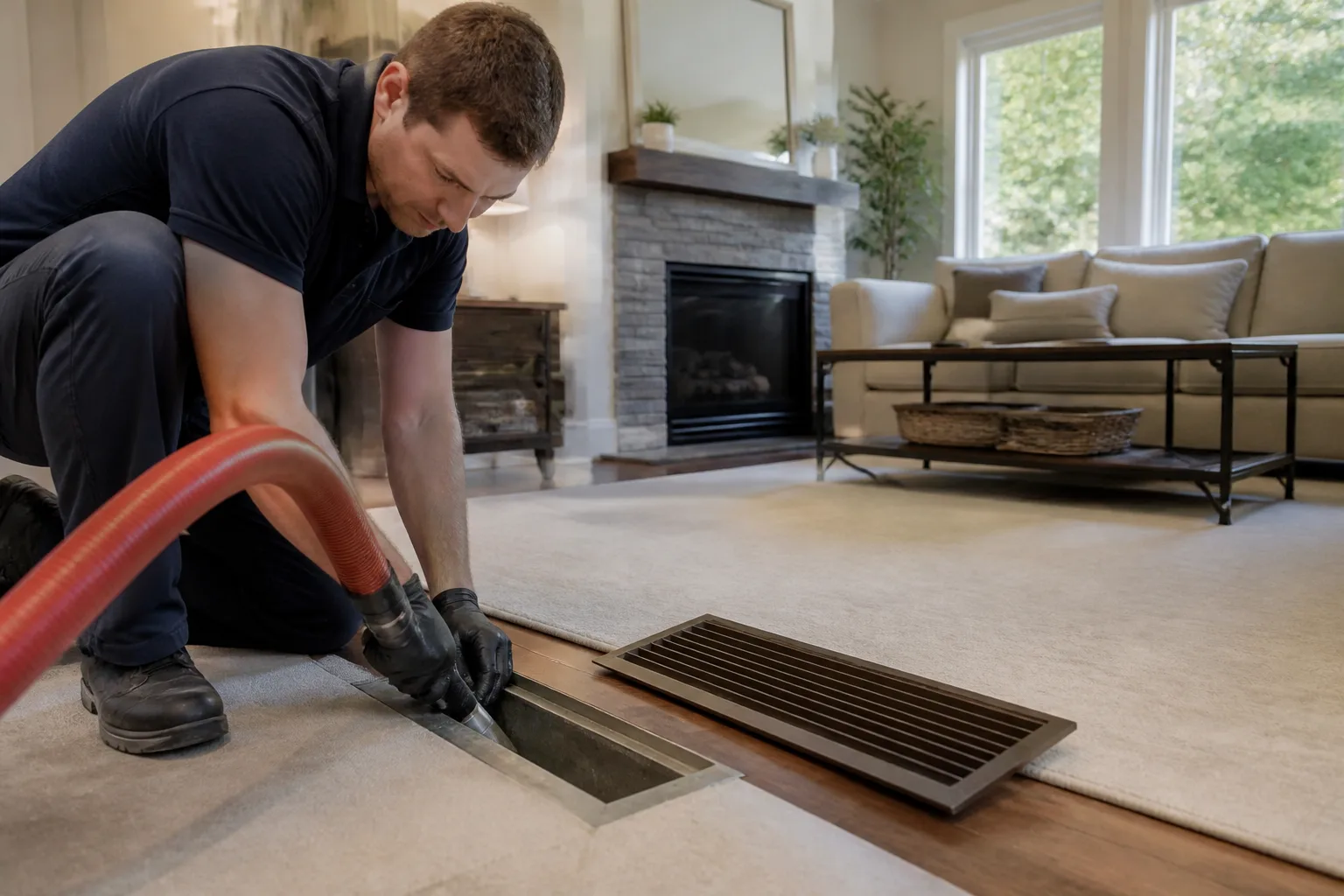
Zone isolation: Sections of the duct system are sealed off using temporary barriers or inflatable bladders. The technician sets up the negative air unit at a strategic access point and verifies that the pressure differential is holding before starting agitation.
- 3
Mechanical agitation: Rotobrush-style rotating brushes or compressed-air agitation tools are run through the ducts. This is the “scrubbing” step – it physically dislodges debris stuck to the duct surfaces. Simultaneously, the negative air unit pulls the dislodged material downstream into its filtration system.
- 4
Systematic progression: The crew works through the system section by section: return drops, return trunk, supply trunk, and supply branches. Each section is cleaned, then temporarily segregated from the next. This isn’t a “blow and go” job; it’s methodical.
- 5
Post-job particulate check: After cleaning, a professional crew should do a visual verification with a scope or camera, checking that the interior surfaces are actually clean and that no debris falls remain in corners or joints. Some companies also run a particulate counter to document the improvement.
- 6
Cleanup and reconnection: All registers, grilles, and access covers are reinstalled. Any guardsman-grade surface protection products used during the work – floor runners, boot covers, corner guards – are removed, and the work areas are left clean.
If the crew is using a Nikro or Rotobrush machine, plan on the whole job taking 4 to 6 hours for a typical Rancho Cordova single-family home. That’s not because anyone is padding the clock; it’s the time required to do the work correctly. If a company quotes 45 minutes for a full duct cleaning, they’re not running source-removal equipment.
How to Visually Identify Professional Equipment Before You Sign Anything
You have every right to see what’s going to be attached to your ducts before you authorize the work. Here’s how to do it without being awkward about it.
When the estimator is at your home for the quote, ask: “Can you show me the equipment you’ll be running?” A legitimate operator will be happy to walk you to the truck and open the doors. Look for these things:
- The negative air machine: This is a box-shaped unit, typically 30 to 50 pounds, with a large-diameter intake port. It will be labeled with the manufacturer name – Nikro, Abatement Technologies, or similar. It will have multi-stage filtration accessible via clips or latches.
- The agitation tool: Rotobrush systems use a self-contained rotating brush on a powered cable reel. Compressed air systems use a large air compressor (usually a tow-behind or truck-mounted unit, not a pancake compressor from the hardware store) with specialized nozzles.
- HEPA filtration stages: Ask to see the filters. A professional system uses a pre-filter, an intermediate filter, and a HEPA-level final filter. If the “filter” is a paper bag you’d find on a shop vac, that’s your answer.
- Duct isolation supplies: These include inflatable bladders, foam plugs, or magnetic sealing panels. They’re less flashy than the equipment, but they’re essential to the process.
The questions to ask go like this: “What’s your process for isolating the return side during cleaning?” “What micron rating is your final filtration stage?” “May I see the filters after the job?” A licensed, professional contractor answers these questions without hesitation. An operator who rented a truck-mount vacuum for the weekend will start hedging.
When to call a pro: if you have a single-family home with more than three registers on a single system, the DIY approach with a rented machine and a YouTube tutorial is going to be a frustrating experience and you’ll likely leave debris in the far reaches of the system. If you have a Honeywell or Aprilaire whole-home filtration or humidity system installed, the interaction between your ductwork and that equipment requires a technician who understands how duct-cleaning processes affect the air handling system as a whole. We train our technicians to work alongside Honeywell and Aprilaire systems, which means we won’t accidentally damage components or introduce debris into that equipment.
Why Equipment Investment Usually Predicts Technician Quality
There’s a pattern we’ve observed over years in this trade, and it holds fairly steady across markets including Rancho Cordova: companies that run professional-grade equipment also tend to run professional-grade operations.
A Nikro negative air machine, even a used one, costs several thousand dollars. A full professional package – negative air unit, Rotobrush agitation system, HEPA filtration, compressor, isolation supplies – represents a $20,000 to $50,000 equipment investment. That’s not money a weekend operator is going to spend. It’s not money a company that treats duct cleaning as a side hustle for their carpet-cleaning route is going to spend.
What that means for you: when you hire a company running this equipment, you’re typically hiring a company that has also invested in training, in replacement filters, in maintenance, and in the boring administrative details like workers’ compensation and liability coverage. None of those things are the visible part of the job, but all of them affect the outcome.
The correlation isn’t perfect, of course. Equipment doesn’t run itself, and a technician with bad habits can ruin a good machine’s results. But it’s one of the most reliable signals available to a homeowner who can’t climb into the attic and watch the work being done. It’s also why we’re so transparent about what’s on our truck: our Rancho Cordova duct cleaning operation runs Nikro and Rotobrush systems alongside Abatement Technologies HEPA filtration, and we’ll show you all of it before we turn the machine on.
The Bottom Line
Nikro Industries is not a household name, but for Rancho Cordova homeowners who care about whether their ducts actually get clean, the brand on the truck matters. Professional source-removal equipment – negative air machines, multi-stage HEPA filtration, mechanical agitation tools, and duct isolation capability – is the only way to physically extract debris from long flex runs, attic-mounted systems, and the fine dry dust that characterizes our local climate.
We recognize this post might invite some comparison shopping, and that’s fine. A homeowner who asks equipment questions is a homeowner we want to work with. But if you’d rather skip the comparison and get a straight answer on what your ducts need, we offer air duct cleaning in Rancho Cordova with the equipment described above, plus air duct repair in Rancho Cordova for systems that need more than a cleanout. We also offer dryer vent cleaning in Rancho Cordova as a dedicated fire-safety service, not an afterthought.
The right equipment, the right process, and a technician who can explain both – that’s what you should expect. If you’re in Rancho Cordova and need help, Duct Cleaning Rancho Cordova offers free estimates – call (877) 752-4148 and we’ll take a look.
Frequently Asked Questions
Ask to see the equipment before work begins. Professional negative air machines and HEPA filtration units are large, clearly branded units – not shop vacuums with extension hoses. A legitimate contractor will open the truck and show you what’s inside. If the crew arrives with a box of small-diameter attachments and a portable vacuum, you’re not getting source-removal cleaning. We show every Rancho Cordova customer exactly what we’ll be running before we start.
Nikro Industries manufactures a range of negative air and vacuum systems, many of which are sized for residential applications. The key attributes are high CFM airflow, multi-stage filtration, and continuous duty capability, which makes the equipment appropriate for the long duct runs and fine particulate common in Rancho Cordova homes. The same principles that industrial negative-air users rely on – containment and sustained pressure – are what residential source removal needs.
The price difference almost always reflects equipment, time, and process. A company running a shop-vac conversion can operate with almost no overhead, but they’re not removing debris from deep in the duct system. Source-removal cleaning takes hours, requires expensive machinery, and uses filters that the company must replace regularly. When you see a dramatic price gap, ask what equipment will be on the job and how long the company expects the work to take. For a transparent quote for your Rancho Cordova home, call (877) 752-4148.
Yes, when performed correctly. Negative pressure pulls debris out of the duct system into a contained filtration unit rather than blowing it through your HVAC equipment or into your living space. The key is proper zone isolation and pressure verification, which is standard practice with professional equipment. If you have a Honeywell or Aprilaire whole-home air quality system attached to your ducts, the technician should be familiar with how those units integrate with the ductwork – we train our team on exactly those interactions.
Written by the team at Duct Cleaning Rancho Cordova, serving Rancho Cordova since 2013.
Need Air Duct Cleaning Help?
Call Duct Cleaning Rancho Cordova - licensed & insured, with free written estimates in Rancho Cordova.
(877) 752-4148